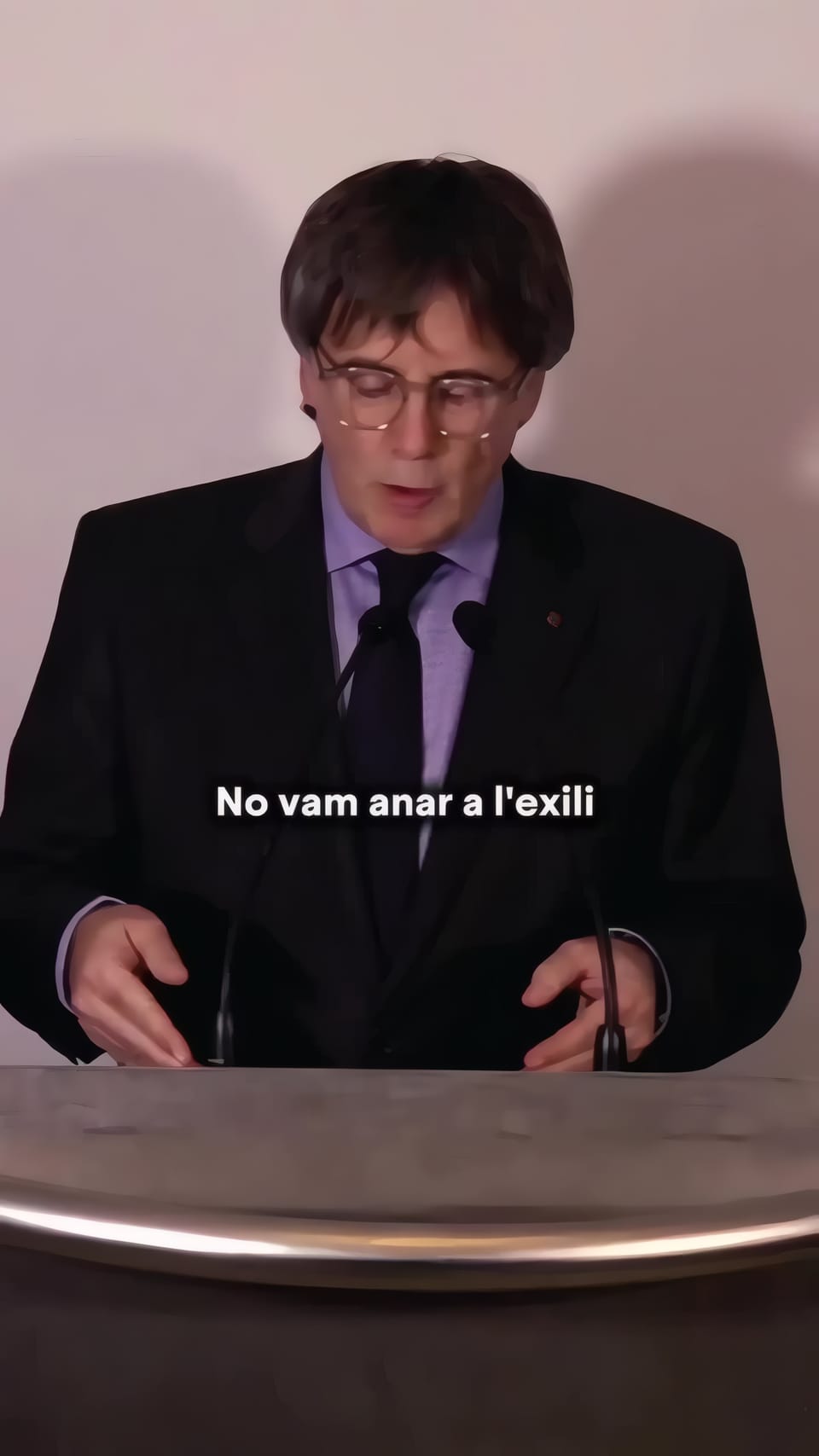
Video: @carlespuigdemont / IG
Amnesty Clears Judicial Path for Puigdemont
A Spanish Supreme Court judge has lifted the arrest warrant for Carles Puigdemont, clearing the way for the former President of the Generalitat to return to Catalonia after nine years in self-imposed exile. The decision follows the Constitutional Court's ruling on the amnesty law, which allows Puigdemont and other exiled figures to return without fear of prosecution for charges linked to the 2017 independence referendum. According to the Generalitat, the amnesty law marks a "fundamental correction" to what it describes as unjust legal repression following the events of 1 October 2017, when Spanish police intervened to stop the referendum. The law applies to Puigdemont, Marta Rovira, Toni Comín, and Ruben Wagensberg, ending their status as exiles.
Return Timing Tied to November Elections
While the judicial path is now clear, the exact date of Puigdemont’s return remains uncertain. Multiple sources indicate he is likely to wait until after the general elections on 29 November 2026, so his return does not become subsumed within the national campaign. His comeback coincides with a critical moment for Junts, the party he continues to lead from abroad. Recent polling data from an Ipsos survey for La Vanguardia, conducted between 23 September and 1 October 2026, shows Junts collapsing from 35 to 16 parliamentary seats, falling behind both ERC and Vox. The same poll projects Aliança Catalana rising to 30 seats, tying with the PSC as the largest party in Catalonia.
The amnesty law is a victory for the free Catalonia that we advocate.
Junts leaders view Puigdemont’s return as a potential catalyst to reorganise the party, unify its fractured structure, and halt its electoral decline. His physical presence could re-energise the party’s base ahead of the 2027 municipal elections and the 2028 Catalan parliamentary vote.
Uncertain Role in Parliament and Leadership
One key question is whether Puigdemont will take a seat in the Catalan Parliament and directly challenge Salvador Illa, the current President of the Generalitat and leader of the PSC. While some within Junts believe he should lead the opposition and confront Illa during parliamentary sessions, the decision rests solely with Puigdemont. It is also unclear how he will relate to the current government. His return could trigger direct confrontation or open a new phase of dialogue. Similarly, it remains undecided whether he will stand as Junts’ candidate in the 2028 Catalan elections. If he steps back, the party lacks a clear successor capable of countering both Illa and Aliança Catalana’s rising influence. The amnesty, therefore, does not just affect one man’s return, it reshapes the political landscape of Catalonia at a time of deep fragmentation among pro-independence and centrist forces.
Primary sources: govern.cat, Centre d'Estudis d'Opinió (CEO). Reported by larazon.es, El Independiente @elindepcom, france24.com, brusselssignal.eu, abc.es, inspain.news, elnacional.cat, jurist.org, Martí Odriozola i Marcé, que.es, en.ara.cat, La Razón Cataluña.