Democratic Memory Law Reaches Final Agreement
PSC-Units, Junts, ERC, Comuns and CUP have finalised the text of Catalonia's Democratic Memory Law, paving the way for its approval in the coming weeks. The law establishes a sanctioning regime for acts of glorification of Francoism and damage to memory sites, with fines ranging from €200 for minor infractions to €150,000 for very serious ones. The legislation covers the period from the Second Republic to the first democratic elections to the Catalan Parliament on 20 March 1980. It unifies existing laws on democratic memory, including the 2007 Democratic Memorial Law, the 2009 Law on Mass Graves and the 2017 Law on Legal Reparation for Victims of Francoism.
Removal of Francoist Symbols and Fines
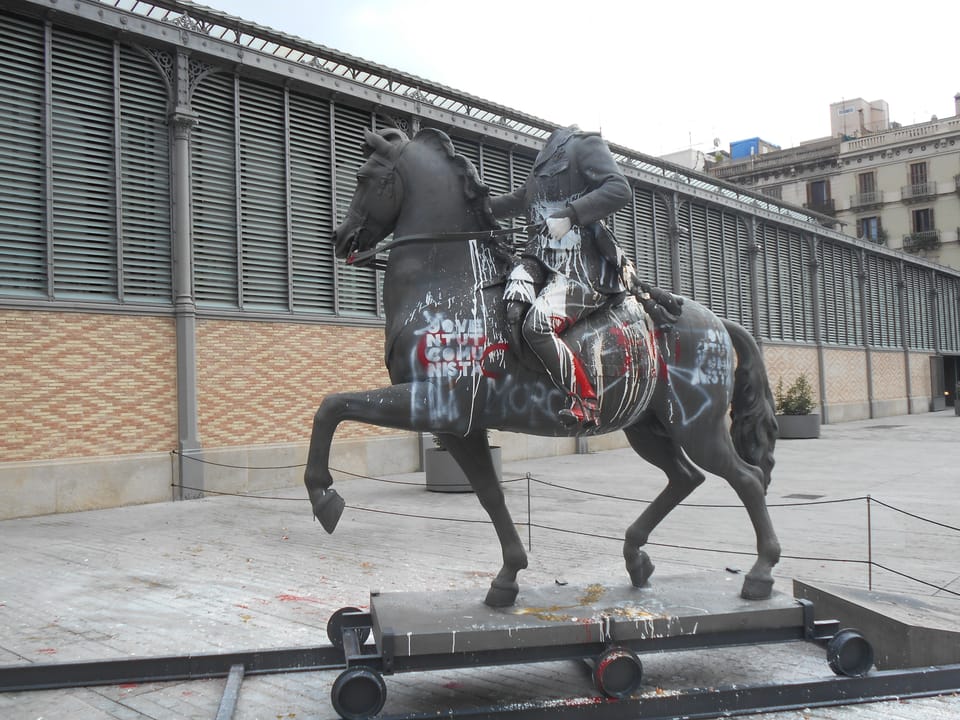
Under the agreement, public authorities have two years from the law’s entry into force to remove Francoist symbols from public spaces. However, the monument in Tortosa (Tarragona) must be removed within one year due to prior preparatory work, according to La Vanguardia. The law also defines protected 'democratic memory spaces' and landscapes, and introduces penalties for damaging mass graves or promoting Francoist ideology. The Catalan government may bring public interest actions in relevant cases.
This law updates, completes and in some cases merges existing legislation, based on the principles of truth, reparation, justice and guarantee of non-repetition.
Ramon Espadaler, Minister for Justice and Democratic Quality, presented the bill in parliament, stating it fulfils a long-standing democratic commitment.
Gender Perspective and Education
The law incorporates a gender perspective and mandates the inclusion of democratic memory in school curricula from primary education onwards. A special provision addresses victims of the Patronato de la Mujer, extending recognition to 1985 due to the prolonged impact of its activities. A technical memory commission will prepare a detailed report to support reparations, including recommendations for victim recognition and institutional accountability.
Next Steps and Possible Delay
The Chamber's Commission for Justice and Democratic Quality is expected to approve the final opinion this Thursday. The full plenary session is scheduled for next week to vote on the law. However, opposition parties PP, Vox and AC may challenge the law by referring it to the Consell de Garanties Estatutàries (CGE), which would delay final approval. The Board of Spokespersons confirmed the vote will be on next week’s agenda, following publication of the committee report in the Official Gazette of the Parliament of Catalonia (BOPC).
Despite joint support for the law, Junts declined to join a unified press appearance, stating it is not the version they would have promoted independently.
Reported by europapress.es, Europa Press, Parlament de Catalunya, lavanguardia.com, Europa Press Barcelona.