Choosing where to live in Barcelona with children is rarely about finding the prettiest street. For most families, the real priorities are practical: reliable transport, nearby schools and nurseries, parks, manageable rent or mortgage costs, and a day-to-day rhythm that does not feel exhausting. Barcelona is compact, which helps, but neighbourhoods still differ sharply in noise levels, housing stock, green space and school access.
As a rule, families tend to do best in areas with larger flats, less late-night tourism, and easy access to playgrounds or big parks. If you want a short version, Sant Gervasi, Les Corts, Poblenou, Gràcia and parts of Sant Andreu are the most consistently family-friendly options. The best fit depends on whether you value space, budget, international schools, beach access or a more local atmosphere.
What families should prioritise in Barcelona
Before focusing on one district, think about your weekly routine. A neighbourhood can look ideal on a weekend visit and still be awkward for school runs or commuting. In Barcelona, a ten-minute difference in journey time matters because many parents move around on foot, by metro or by bus rather than by car.
School catchment and admissions deserve early attention. Public schools, state-subsidised concertadas and private or international schools all follow different systems, and demand can be high in popular family areas. If schooling is your main factor, start with the school list and work backwards to the neighbourhood rather than the other way round.
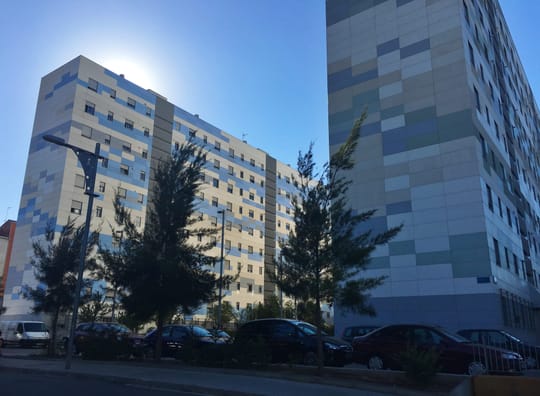
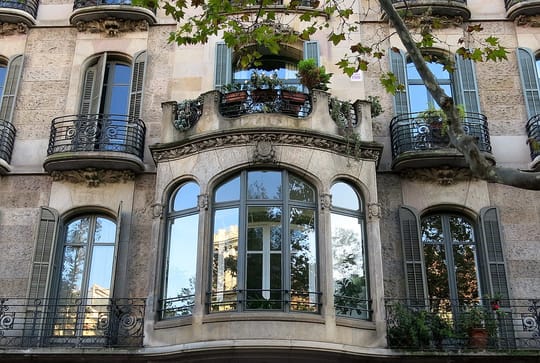
Housing type matters too. In central districts, beautiful older flats can mean small lifts, no lift at all, little storage and more street noise. In newer or less central areas, you are more likely to find larger homes, buildings with communal spaces and easier buggy access. For reference, family-sized rentals in the most sought-after districts often sit well above €1,800 per month, and in premium zones can rise well past €2,500, especially for three-bedroom homes. More value is usually found in Sant Andreu, Horta-Guinardó and some parts of Les Corts or Sant Martí.
Sarrià-Sant Gervasi and Les Corts: space, schools, calm
If budget allows, Sarrià-Sant Gervasi is one of the strongest all-round choices for families. It feels residential, greener than central Barcelona, and notably calmer at night. Sarrià itself has a village atmosphere, while Sant Gervasi combines elegant housing, everyday shops and a high concentration of schools. It is especially attractive for families looking at private or international education, though this convenience comes at a price.
Transport is solid rather than flashy. The FGC lines are key here, with stations linking the area efficiently to Plaça Catalunya and other parts of the city. Buses are also important, especially for school routes. The main trade-off is cost. This is among Barcelona's pricier districts, both for renting and buying, and some streets are hilly, which can affect daily life with small children.
Les Corts is often overlooked, but it is one of the most practical places to raise a family. It has a residential feel, larger flats than many central areas, and straightforward links on Metro Line 3, trams and buses. L'Illa Diagonal and the wider commercial area make errands easy, and the district is generally orderly and less chaotic than Ciutat Vella or Eixample. It lacks the romantic image of Gràcia or El Born, but for many families it simply works.
Gràcia and Eixample: central, walkable, but choose carefully
Gràcia remains popular with families because it combines centrality with a strong neighbourhood identity. The pedestrian-friendly squares, local shops and community feel suit parents who want daily life on foot. There are plenty of playgrounds tucked into small squares, and Parc Güell and the slopes above the district add access to more open space.
That said, Gràcia is not uniformly easy with children. Some flats are small, older and expensive for the space offered. Streets around the busiest squares can be noisy, especially in summer and during Festa Major. The sweet spot is often the upper part of Vila de Gràcia or Camp d'en Grassot, where you keep the atmosphere but lose some of the late-night disturbance.
Eixample can also be very family-friendly if you choose the right section. The district's grid layout, broad pavements and excellent public transport make day-to-day movement simple. Schools, medical services and supermarkets are easy to reach, and many blocks now benefit from superilla traffic-calming measures or upgraded public space. For families who want central convenience, Dreta de l'Eixample or Nova Esquerra can work well.
The main caution in Eixample is noise and air quality on major roads. A flat on a quieter interior street or facing a courtyard can make a huge difference. Prices are also high, and truly large family flats are competitive. It is one of the best districts for households who prioritise being able to walk almost everywhere.
Poblenou and Sant Martí: modern family living near the sea
Poblenou has become one of Barcelona's standout family areas. It offers a rare combination in the city: broader streets, newer housing stock, proximity to the beach, and a growing supply of family-oriented cafés, playgrounds and services. Rambla del Poblenou gives the neighbourhood a local high street feel, and nearby parks and seafront spaces are a major advantage for children.
Transport is good, especially on Metro Line 4 and the tram network, though some journeys to western Barcelona are slower than they look on a map. Families who work remotely or in the 22@ district often find Poblenou particularly convenient. Housing is not cheap, but compared with prime central neighbourhoods, you may get more space or newer amenities for the money.
Elsewhere in Sant Martí, areas such as Diagonal Mar or parts of El Clot can also suit families. Diagonal Mar offers modern buildings and proximity to large parks, but it can feel more planned than neighbourly. El Clot is better for those wanting a more traditional local atmosphere with strong transport connections, including Metro Lines 1 and 2, Rodalies and buses.
Sant Andreu and Horta-Guinardó: better value, more local life
For families who want more space without stretching to the city's top price brackets, Sant Andreu deserves serious attention. Sant Andreu de Palomar in particular has a strong community feel, walkable streets, local shops and a noticeably less hectic rhythm than the centre. It is well connected by Metro Line 1, Rodalies and buses, making commuting manageable while keeping a more residential environment.
Housing here can offer better value than Gràcia, Eixample or Sarrià, especially for larger flats. The area also tends to feel more authentically local, which some international families love and others find less immediately convenient if they want an English-speaking bubble. For long-term family life, that local character is often a strength.
Horta-Guinardó is another district worth considering, especially near Horta, Baix Guinardó or around Parc del Guinardó. It offers access to green space, quieter streets and, in some pockets, more affordable family housing. Metro coverage is decent, including Lines 3, 4 and 5 in different parts of the district, but journey times can be longer and the terrain can be steep. It suits families who prioritise calm and space over a highly central location.
For most families moving to Barcelona, the best approach is to shortlist two or three neighbourhoods and test them at school-run time, early evening and weekends. Visit the nearest playground, check the walk to the metro with a buggy, and look at where the nearest CAP health centre, supermarket and school actually are. In Barcelona, family life is shaped less by postcard beauty than by whether the neighbourhood makes ordinary days simple. The right area is the one that gives you enough space, enough calm and an easy enough routine to enjoy the city with children.