The Barcelona travelcard that suits you comes down to three questions: do you commute, do you qualify for the youth pass, and do you live in zone 1 or further out. There are a handful of passes, one smartcard, and one airport gotcha that catches almost everyone in their first month. Here is the working version, with the current 2026 fares.
The basics: zones and integration
Barcelona's transport authority is the ATM, which sets fares across seven concentric zones. The city itself plus all the obvious suburbs (L'Hospitalet, Badalona, Santa Coloma, Cornellà, Esplugues) sits in zone 1. Sitges is zone 3. Girona is outside the network entirely.
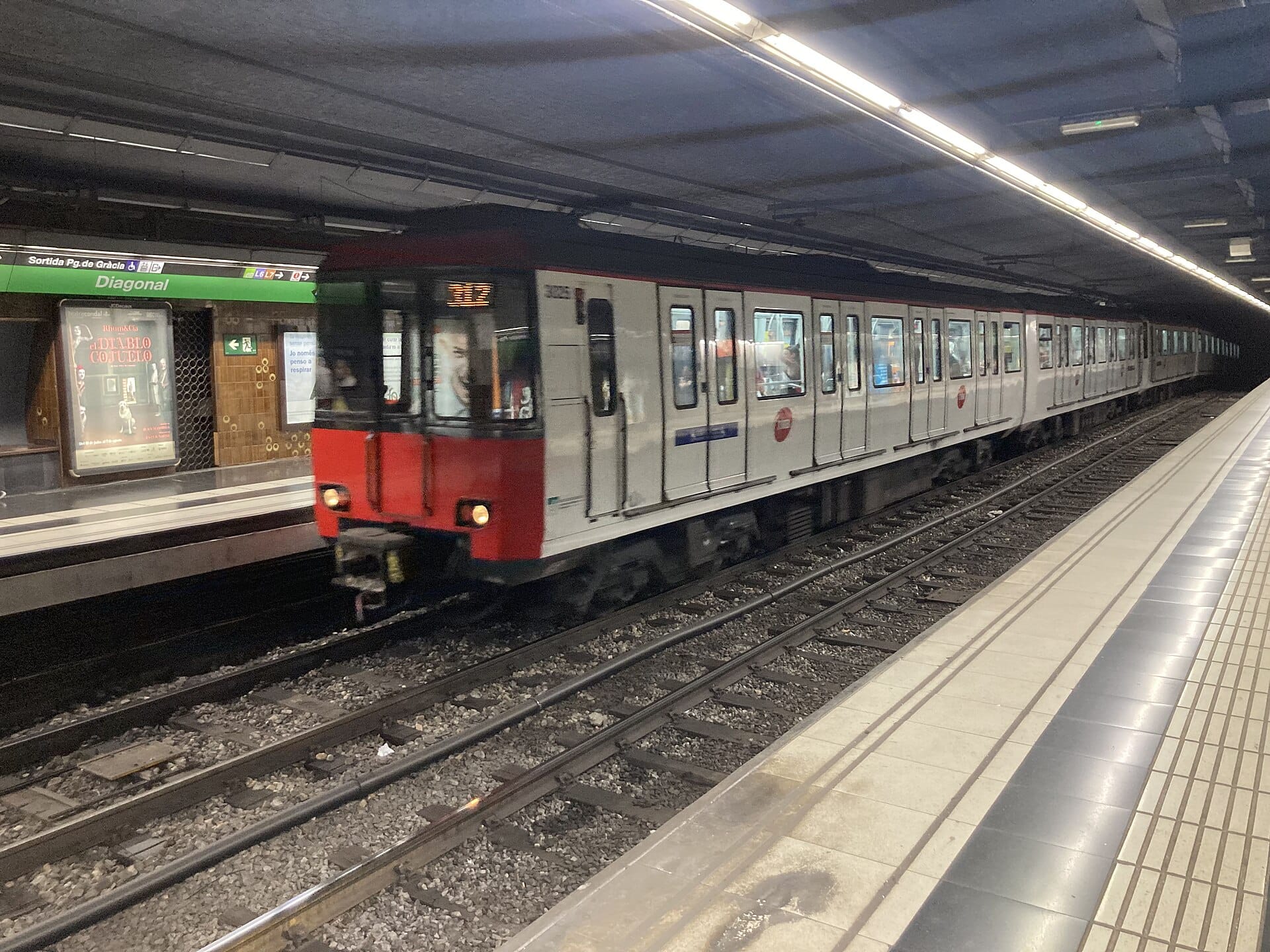
Within a zone-1 ticket you can change between metro, bus, tram, FGC and Rodalies as much as you like inside roughly 75 minutes from your first tap, and it counts as a single integrated journey. Tap once when you start, tap again on the bus or the connecting metro, the counter does not move. As one long-time member of Barcelona's English-speaking community put it, you can walk or take the metro from Plaça Universitat to Plaça Espanya, then take the 46 bus from there, "and it all counts as a single ticket". The single most useful thing to internalise about the Barcelona fare system: a "journey" is the whole connected trip, not each leg.
The exception, predictably, is the airport. The Aeroport T1 and T2 stations on metro L9 Sud are not valid with a standard travelcard, so you need a separate Bitllet Aeroport fare. The Hola Barcelona tourist pass does cover the airport; a normal T-Casual does not.
T-Casual: the occasional pass
T-Casual replaced the old T-10 in 2020. Ten journeys on a single-person ticket, so two of you cannot ride on it at once, but it is not registered to a named person and will sit happily on an anonymous T-Mobilitat card. It stays valid until the next fare change, which in practice runs a couple of months into the following year rather than stopping on 31 December. Zone 1 sits at €13.00 in 2026 (€25.50 for two zones).
If you are a tourist staying four nights and planning a couple of metro hops a day, T-Casual is the right call. If you are new in town and hoping to "just buy a few singles", do the maths first: a single ticket is €2.90, and a T-Casual brings the per-trip price down to €1.30. The consensus in Barcelona's English-speaking community is blunt on this point: paying single fares is "a waste of money". The single is one of the worst-value options in the city.
T-Usual: the commuter pass
T-Usual is 30 days of unlimited travel from first use, and this is the pass that genuinely is personal and non-transferable: it is registered to you, and you are meant to carry your ID whenever you use it. Zone 1 sits at €22.80 in 2026, held down by a 50% government discount on the headline price. The break-even against T-Casual is now low: somewhere around 18 journeys a month, well under one round-trip a day on a five-day week.
If you commute on the metro, take the tram to a class twice a week, and use a bus on a weekend to visit a friend in Poblenou, you are comfortably past break-even. Buy T-Usual and stop counting. At €22.80 the mental load of tracking each journey is more expensive than any difference between T-Usual and T-Casual. T-Usual also includes the airport stations, which T-Casual does not.
T-Jove: the youth pass
Easily the best deal in the whole system, if you qualify.
T-Jove is 90 days of unlimited travel across all seven zones for €45.50 in 2026, the same 50% discount applied. Yes, all seven zones (so it covers Sitges, Vilanova, Castelldefels, parts of the Pyrenees foothills), for a quarter, for roughly the price of two months of T-Usual.
The eligibility cut-off in 2026 is under-30: anyone younger than 30 can buy it. You need to register for a T-Mobilitat card with a photo first, so budget a half hour at a TMB customer-service point. The tmb.cat fares page carries the current version if the rules shift again.
The tourist pass and the others
The Hola Barcelona tourist travel card is the airport-inclusive option for short stays: unlimited metro and bus (plus the airport metro link) for a fixed window. In 2026 it runs €18.70 for 48 hours, €27.30 for 72 hours, €35.60 for 96 hours and €43.60 for 120 hours, with roughly 10% off if you buy online in advance. The consensus in Barcelona's English-speaking community is sceptical of it: for many short trips a couple of single-day tickets work out cheaper, and one member flatly called it "the biggest scam". Run the numbers against your actual itinerary before buying. If you are doing two or three metro hops a day, a few T-Casual journeys often beat it.
Beyond those, the catalogue includes T-Dia (a single-day unlimited card, €12.00 in zone 1), T-Familiar (a shared multi-person card, €11.50 in zone 1, useful for groups travelling together) and T-Grup (a 70-trip multi-user card, €91.00 in zone 1). Most residents stick with T-Casual or T-Usual; the rest are for specific situations.
T-Mobilitat: the smartcard rollout
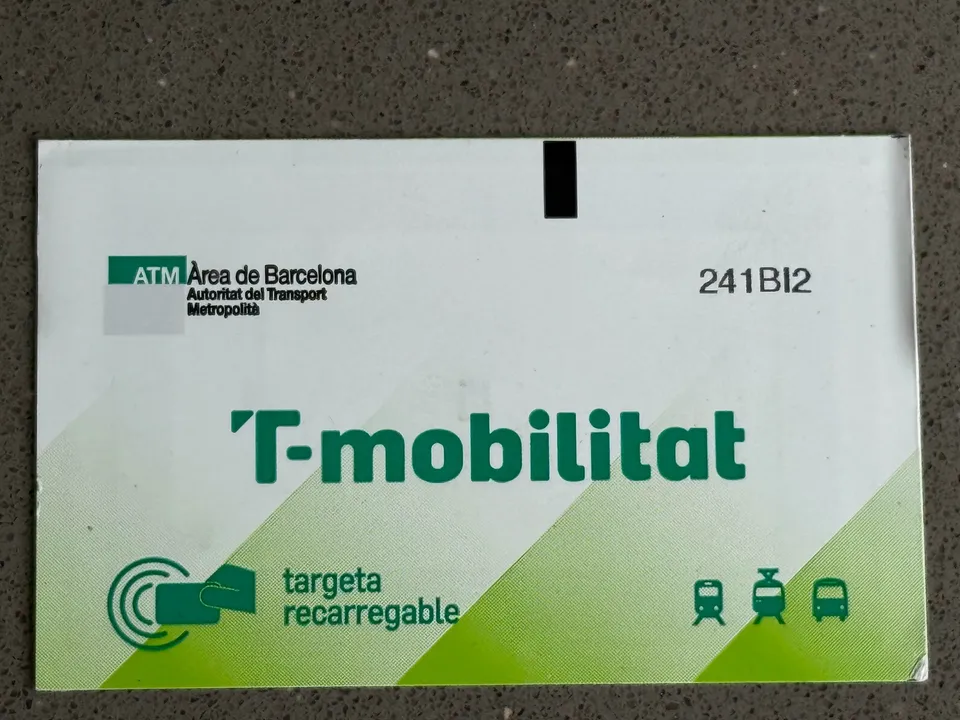
T-Mobilitat is the contactless plastic card that has replaced the old paper magnetic tickets across almost the entire network. You register once, link your name and a photo to the card, then load whatever pass you want onto it through the T-Mobilitat app or at a vending machine. Lose the card and TMB can replace it with the balance intact, which the old paper tickets could not do.
The registration process is slow. Bring your NIE or TIE and budget half an hour at a Punt T-Mobilitat. The consensus in Barcelona's English-speaking community is to book an appointment at a TMB info point (Sagrada Família is a popular one) rather than chancing a walk-in, since the points fill up days in advance. Once the card is active, top-ups take about 30 seconds.
The airport gotcha and other small print
Three things newcomers consistently get wrong.
L9 Sud at the airport does not take T-Casual. Buy the dedicated airport single (€5.90 in 2026) or use the Hola Barcelona tourist pass, which does include the airport link. The Aerobus is a separate service again, with its own fare.
Sitges is zone 3. A zone-1 T-Casual will not get you there even on the same Rodalies line that works for inner zones. You buy a separate Rodalies ticket for anywhere outside zone 1 unless your travelcard is a multi-zone pass.
Girona, Tarragona, Lleida are outside the integrated system entirely. Renfe long-distance ticket, separate purchase.
For day-to-day life in zones 1 and 2, the integrated travelcard genuinely works. Plan around the exceptions before you board.
Where to buy
Vending machines at every metro station, the TMB app, the T-Mobilitat app, or in person at the customer-service points at Universitat, Diagonal, Sagrada Família and La Sagrera. The app is fastest if you have already registered a T-Mobilitat card. The machines accept cash, which the app obviously does not, and remain useful when the app is down for maintenance (which still happens more often than it should).
Pick one pass, stick with it for the month, and you will work out within two trips whether you have chosen the right tier. The decision is easier than the website makes it look.
Are you a Barcelona resident?
Working out which travelcard fits your week is the kind of everyday Barcelona question that gets answered fastest by people who already live here. Our Barcelona English Speakers community has 4,000+ residents across 20+ free, moderated groups, swapping the small practical tips on transport, neighbourhoods and settling in that no fares page will ever tell you.