A career switch into Barcelona's product-tech scene without a computer-science degree is achievable but slower and lower-paid in year one than bootcamp marketing pages suggest, according to recruiters, alumni and salary surveys reviewed by Barna.News.
The route matters beyond the individual career-changers: Barcelona's product-engineering sector employed roughly 28,000 people across some 1,800 startups by the close of 2024, according to the Barcelona Digital Talent "Decade of Tech" 2024 report, and the talent pipeline now leans heavily on retrained workers from hospitality, teaching, sales and customer-support roles. For families weighing a move into the sector, for landlords in Poblenou and 22@, and for the Ajuntament's own digital-skills programmes run via Barcelona Activa, the trajectory of this cohort shapes who can afford to stay in the city.
People in the Barcelona English-speaker community have made the switch from hospitality, teaching, sales and customer support. The path is real. It is also longer than the brochures suggest, and the wrong first job will trap you. Here is the playbook, sourced where possible to primary documents and named organisations.
Yes, it is genuinely possible
Two patterns recur in interviews with bootcamp alumni and recruiters at Manfred, the Spanish developer-recruitment platform whose annual report tracks junior salary ranges across Catalonia.
The first: bootcamp, then junior developer role, then mid-level after two years. This is the most common route and the fastest to a first salary. The second: self-taught study combined with a free placement programme (for example Factoría F5, a non-profit code school running publicly funded bootcamps in Catalonia), leading to a junior developer role. This is slower and cheaper, and works if you are disciplined and have six to nine months of runway.
The route that does not work, repeatedly, is reading a JavaScript book on the side of a full-time hospitality job and hoping someone will hire you off a static portfolio. Hiring managers at Barcelona product companies tell us they want evidence: deployed projects (live applications running on a public URL), open-source commits (code contributions visible on GitHub or GitLab), and pull requests (proposed code changes that other engineers have reviewed and merged). Without a job that already has you coding daily, you need a forcing function.
Bootcamps: what the brochures cost, and what they do not say
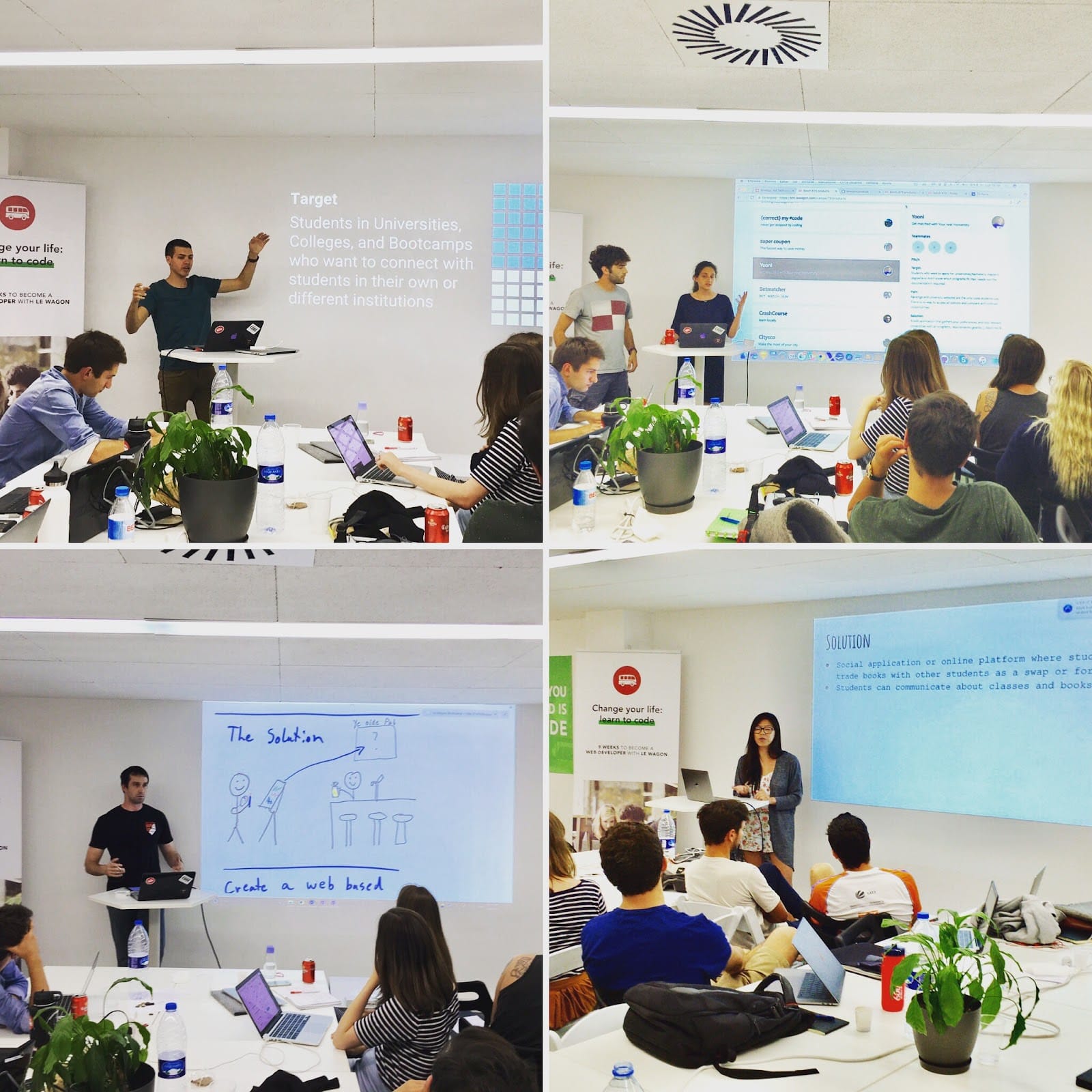
Three routes dominate locally: the two private bootcamps named most often in the BCNEng community Slack, and the publicly funded vocational track.
| Programme | Price (2026) | Length | Best for | Catch |
|---|---|---|---|---|
| Ironhack Barcelona | €8,500 full-time web dev (see official pricing) | 9 weeks intensive or 24 weeks part-time | Career-changers wanting a structured curriculum and financing options | Published placement rate counts any tech-adjacent job within 180 days; ask for the engineer-at-product-company subset |
| Le Wagon Barcelona (course page) | €7,900 full-time web dev (see tuition page) | 9 weeks intensive | Building a network: alumni Slack is itself a recruiting channel | Smaller data-science cohort than competitors; check current schedule |
| Public FP DAW/DAM at Generalitat de Catalunya FP | Around €360 per year in public matrícula fees (see Generalitat enrolment portal) | 2 academic years | Anyone with time who wants a formally recognised qualification under the Spanish education system | Mostly taught in Spanish; placement depends on initiative, not career services |
The public route deserves a flag: DAW (Desarrollo de Aplicaciones Web, web application development) and DAM (Desarrollo de Aplicaciones Multiplataforma, multiplatform application development) are recognised "ciclos formativos de grado superior" under the Spanish Ministerio de Educación, Formación Profesional y Deportes, and curriculum specifications for Catalonia are published by the Departament d'Educació i Formació Professional of the Generalitat. The title is valid for civil-service positions and for further study across Spain.
Best for: a private bootcamp if you have savings, urgency, and want a peer cohort and a recruiter network in 9 weeks.
Avoid if: you cannot front €8,000, in which case FP DAW or a publicly funded code school is the rational choice, even though it takes longer.
The first job: what to take and what to refuse
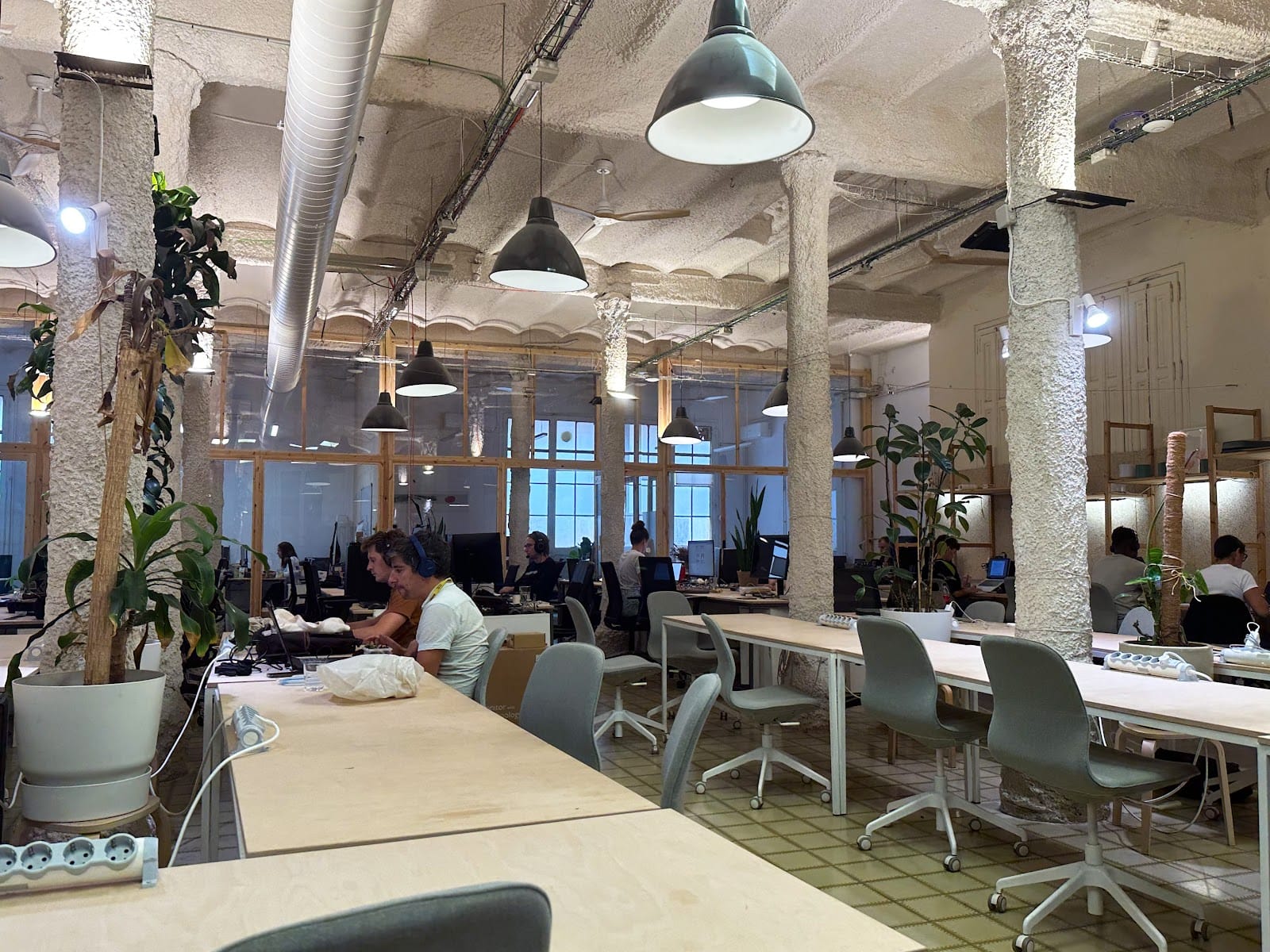
Three rules emerge consistently from interviews with senior engineers and hiring managers in the BCNEng community.
First: take a developer role even if it pays less. A junior backend role at €18,000 likely beats a manual-QA seat at €22,000 for what year three looks like. The 2024 Manfred Spanish Tech Job Market report places junior backend developers in Barcelona at a median around €27,000, with bootcamp graduates clustered nearer the lower end in their first six months.
Second: be cautious about manual QA as "a route into development". Multiple alumni report getting stuck. Conversion rates from manual QA into developer roles are uneven across employers and appear to sit roughly around 50 per cent at some Barcelona companies and lower elsewhere, though this figure comes from community anecdote rather than a published dataset and should be treated as a directional estimate. Automated QA and SDET (Software Development Engineer in Test) roles are different: that is engineering work and pays accordingly.
Third: pick a company that ships. A first role where you deploy code (push your changes to a live production environment) every week will teach you more than two years at a place where releases happen quarterly behind a process you do not understand.
On pay, the picture for first developer jobs in 2026 looks roughly like this, drawing on the Manfred report cited above, the Michael Page Spain technology salary study, and the Barcelona Digital Talent figures: a bootcamp graduate with no prior tech experience typically starts in the €18,000 to €25,000 band. By month six, many sit above €30,000. By year two, €45,000 is a realistic target at a mid-sized product company. If you remain on €22,000 after eighteen months at the same employer, that is the signal to move. These ranges are indicative; outcomes vary by company size, stack and language requirement.
What to learn after the bootcamp ends
Bootcamps cover the basics. Year one is where you find out what you do not know. The pattern that works, according to senior engineers running mentoring circles through BCNEng Slack:
One small side project, deployed live, every two months. Real users, even if it is only three friends. One deployment failure teaches more than ten tutorials.
Read other people's pull requests at your day job. Open-source repositories (public codebases on platforms like GitHub) work too. Taste for "how this should be written" comes from reading code, not from writing it.
Find a mentor. Often free through the bootcamp alumni network or BCNEng Slack. A weekly thirty-minute call with someone six years ahead of you compounds across years.
On stacks: the technologies that hire most reliably in Barcelona's product scene remain the workhorses. TypeScript (a strongly typed version of JavaScript), React (a front-end JavaScript library, now governed by the React Foundation under the Linux Foundation rather than by Meta), Node.js (JavaScript on the server), Python and SQL all dominate the Manfred 2024 demand tables. AI engineering is hiring fast in 2026; treat it as an addition to solid software engineering fundamentals, not a replacement.
Where to find the first role
BCNEng Slack for community-surfaced roles. Manfred for curated listings and the annual salary report. LinkedIn entry-level filters for the long tail. Le Wagon and Ironhack alumni Slacks if you are a graduate of either. The Ajuntament's Barcelona Activa digital-skills itinerary also lists publicly subsidised pathways and employer matchings for residents registered on the padró.
Bootcamp career-services teams will pitch their partner companies first. Apply elsewhere too. Their incentive is any placement, not the right one for you.
Language: how much Spanish do you actually need?
For most product-company developer roles in Barcelona, English is enough. Standups, code reviews, design documents and hiring loops typically run in English at the larger product companies surveyed in the Barcelona Digital Talent report. Café Spanish arrives through life rather than work.
For agency work, customer-support engineering and anything Spanish-customer-facing, conversational Spanish helps and missing it will limit your options. Note that paperwork around the move (NIE/TIE foreign-identity number, padró registration at your Oficina d'Atenció Ciutadana, healthcare enrolment at your local CAP, the Centre d'Atenció Primària run by CatSalut) is easier with at least functional Catalan or Spanish. Plan to learn anyway; it changes how you experience the city outside work.
What most people miss
The first eighteen months are when you are most likely to quit.
The bootcamp high fades, the work is hard, the salary is lower than your last role, and impostor syndrome typically arrives around month four. Stick. The pay curve appears to steepen from around month twelve onwards in the Manfred figures referenced earlier, although individual trajectories vary widely. Career-changers in the BCNEng community who made it through tend to say the same thing: year three is when the move starts looking obvious, and year one often feels like a mistake.
Build a working relationship with your day-one tech lead. Ask for code review on your output, ask what they would have done differently, ask to pair on one hard problem each week. The seniors who help you survive year one are the same people who recommend you for your second job. The whole thing compounds in human relationships, not in tutorials.
Why this matters beyond the career-changer
For neighbours and policymakers: the wage trajectory documented above (roughly €20,000 in year one, around €45,000 by year three) shapes household formation in 22@, Poblenou and El Clot, the districts where new tech employers cluster. It also feeds the Ajuntament's stated Barcelona Digital City strategy, which targets retraining residents into the sector rather than relying solely on international recruitment. For schools, that means demand for Spanish-language FP DAW/DAM places at public institutes is likely to keep rising; for transport planners and TMB, more commuters between the Besòs corner and central offices; for landlords, continued pressure on one-bedroom rents along the L4 metro. The career switch is a personal project. The aggregate of those switches is a city-scale shift.
Get this in your inbox
Breaking into Barcelona's product-tech scene is as much about who you know as what you build, and the right introductions shorten year one. Bizcelona is the city's business community for founders, freelancers and senior professionals, an invite-only network where career-changers, hiring managers and engineers swap honest advice on salaries, first roles and getting unstuck. Worth a look if you are making the move.