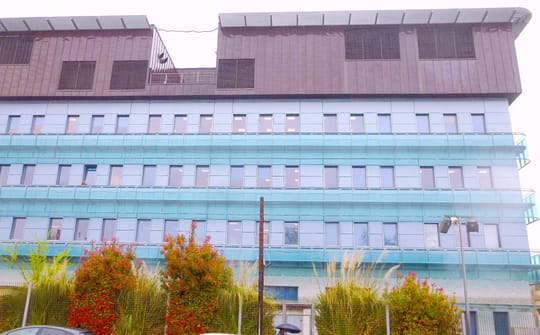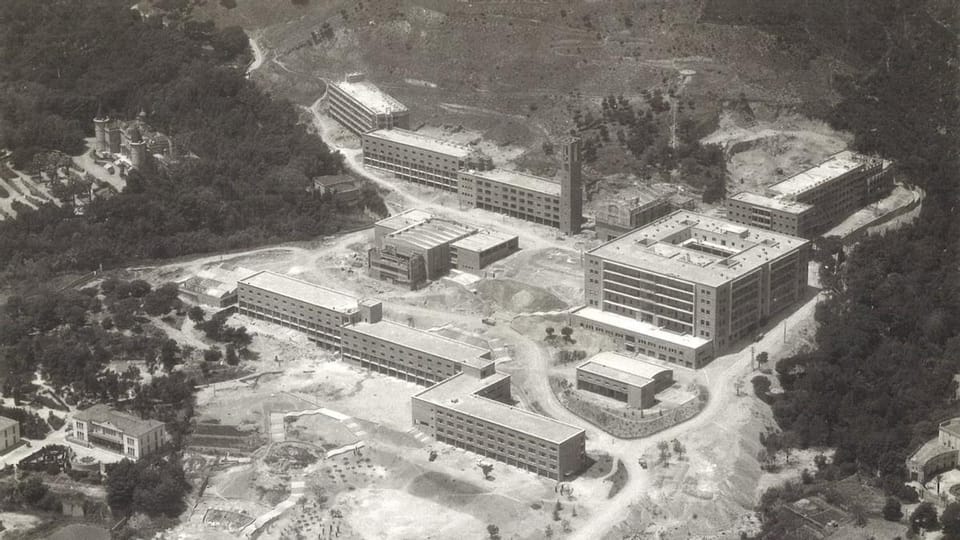
Barcelona's Campus Mundet, a vibrant university hub today, conceals a complex and often painful history, including its use as a Francoist concentration camp during the post-Civil War period.
El Periódico Barcelona reported on the site's hidden past. Thousands of war prisoners were confined there, enduring severe repression from the Francoist regime. This occurred between 1939 and 1940, in the context of the harsh crackdown against defenders of the Republic.
Horta's Concentration Camp
Historians estimate approximately 115,000 individuals passed through the Horta concentration camp. Authorities then assigned these prisoners to forced labour. Some faced transfer to other regime prisons, while others were eventually released. Their fates were decided from Mundet, with destinations including the Model Prison or centres like Sant Elies, Cànem, and Palau de les Missions.
The site, where the Llevant Building now stands, was fortified with barbed wire. It also featured offices and guard posts. Interrogators used the underground areas for the most severe questioning, according to historical accounts.
A Palace's Wartime Transformation
Before its grim period as a camp, the Mundet grounds held a different identity. The Les Heures Palace, built in the late 19th century, belonged to the wealthy Gallart family. In the 1930s, the Horta district, nestled at the foot of the Collserola mountain range, remained a tranquil, affluent residential area of Barcelona.
However, the Spanish Civil War dramatically altered this peace. The conservative Gallart family, sympathetic to Francoism, abandoned Barcelona. The Government of Catalonia then seized the palace. In 1938, it became the residence for Lluís Companys, the President of the Government of Catalonia. He had relocated after a bombing forced him from his home on Catalonia Rambla.
During this same period, workers constructed an air-raid shelter beneath the palace's rear garden. This narrow, austere 53-metre gallery followed the natural slope of the terrain.
From Orphanage to University
In 1957, the Anna Gironella de Mundet Homes opened on the site. These were more commonly known as Mundet Homes. The generosity of entrepreneurs Artur Mundet and Anna Gironella Llovet, known for their charitable work in Mexico, made this possible. Up to 1,000 vulnerable children lived there, many of them orphans or from low-income families. For decades, this space functioned as a social and humanitarian reception centre for minors.
This welfare function shaped the site's identity before its academic transformation. The Provincial Council recognised the Mundets' donation. They awarded Anna Gironella the Gold Medal of the Province. Artur Mundet received an honorary provincial deputy title. Both were inducted into the Civil Order of Beneficence.
Academic life began in 1995. The University of Barcelona (UB) moved its studies in Pedagogy, Psychology, and Teacher Training to Mundet. Today, over 10,000 students, faculty, and staff visit the campus daily. Campus Mundet is known for its open spaces, integrated with nature, and its own forest. Parts of the original orphanage structure remain visible.
Preserving Historical Memory
In 2014, the University of Barcelona, alongside the Provincial Council of Barcelona and the Democratic Memorial of the Government of Catalonia, installed a democratic memory monolith. They also placed informative panels at the Llevant Building and Les Heures Palace. These serve as visible reminders of the site's complex and often difficult past, ensuring its history is not forgotten by current and future generations.
Sign up for our new entrepreneurs community Bizcelona, now accepting our second wave of applicants.
Originally published by El Periódico Barcelona. Read original article.