If you are about to buy a flat in Catalonia, the price on the listing is not the price you will pay. Add 12 to 15 per cent for taxes, notary and registry, then add the deposit your bank will not cover: as a non-resident, expect to put down 30 to 40 per cent of the purchase price in cash before signing. On a €400,000 flat that is roughly €170,000 to €220,000 out of pocket before you have keys. Get this wrong and you either lose a deal at the last minute or inherit someone else's €25,000 problem. This guide walks through every line of that bill, what Spanish banks will actually lend you, and the exact moments where a real-estate lawyer is the difference between a clean sale and a six-figure mess.
The figures below were checked in May 2026 against the Generalitat (the Catalan regional government) tax tables, the Agència Tributària de Catalunya schedules, and the most recent Banco de España mortgage release. Get a fresh quote from a gestoría (an administrative-services firm that handles tax and registry paperwork) or lawyer before you make an offer, since rates move with each Generalitat budget and each Ajuntament (Barcelona city council) fiscal update.
What you actually pay on top of the price
For a second-hand flat, which is the most common case in Barcelona, the cost stack looks roughly like this on a €400,000 purchase.
| Cost | Typical amount | Source |
|---|---|---|
| ITP (Impuesto de Transmisiones Patrimoniales, the property transfer tax) | ~€40,000 (10%) | Agència Tributària de Catalunya |
| Notary fees | ~€1,000 | Real Decreto 1426/1989 aranceles notariales |
| Property Registry fees | €400–€700 | Colegio de Registradores |
| Gestoría filing fees | €300–€600 | Market quotes |
| Lawyer (optional) | €2,000–€4,000 (0.5–1%) | ICAB referral fees |
| Mortgage survey and arrangement | €500–€1,500 | Bank, framework set by Ley 5/2019 |
ITP is the headline tax on second-hand purchases. The Agència Tributària de Catalunya sets it on a rising scale: 10 per cent up to €600,000, 11 per cent on the band up to €900,000, 12 per cent up to €1.5m, and 13 per cent above that. Since 27 June 2025 a flat 20 per cent rate applies instead when the buyer is a gran tenidor, broadly anyone holding more than 10 homes in Catalonia, more than 1,500 m² of residential floor space, or five or more homes inside a declared tight-market zone, and also when anyone buys a whole residential building, with a carve-out for an individual buying a building of up to four flats to live in. A reduced 5 per cent rate applies to a primary residence bought by someone 35 or under, or by a large family, provided the buyer's own taxable income does not exceed €36,000 for that tax year. The threshold is assessed per buyer, not combined: a couple buying jointly can each qualify individually even if their combined income is well above €36,000, and if you are buying in unequal shares, each person's own share can be taxed at a different rate, 5 per cent on the share of whoever is under the threshold, 10 per cent on the share of whoever is not.
For a brand-new flat sold by a developer, ITP is replaced by IVA (Impuesto sobre el Valor Añadido, Spain's VAT) at 10 per cent on residential property under Agencia Tributaria (AEAT) rules, plus AJD (Actos Jurídicos Documentados, the stamp duty levied on the notarial deed). The Catalan AJD rate on new-build residential deeds is currently 1.5 per cent, per the Agència Tributària de Catalunya. Total tax burden lands close to a resale, sometimes a touch higher.
One cost on this list that is not actually yours: plusvalía municipal, the local tax on the increase in land value during the seller's ownership, is the seller's bill under Ajuntament de Barcelona rules. It is worth knowing about anyway, because in a hot market sellers sometimes try to push it onto the buyer in the contract. Read every clause carefully before you sign.
The deposit and what the bank will lend

Spanish banks lend up to 80 per cent of the lower of asking price and the bank's own valuation to a Spanish resident with stable income, and 60 to 70 per cent to non-residents, according to mortgage data published by the Banco de España. That means you need 20 per cent of the price in cash if resident, 30 to 40 per cent if non-resident, plus 12 to 15 per cent in fees, plus a buffer.
On a €400,000 flat that is roughly €80,000 of deposit plus €55,000 in fees for a resident, around €135,000 of cash before you have keys, and €120,000 to €160,000 of deposit as a non-resident, so €175,000 to €215,000.
A few things on financing. Spanish banks will lend to non-residents but expect more documentation: home-country tax returns, employment contract, six months of bank statements, pension proof. Brokers who specialise in non-resident mortgages tend to negotiate better spreads than walking into a branch yourself; they charge a fee, but the lower rate usually offsets it.
Fixed-rate mortgages have been the default in Spain since 2022, per Banco de España mortgage statistics. Variable rates pegged to Euribor (the Euro Interbank Offered Rate, the daily benchmark at which eurozone banks lend to each other, published by the European Money Markets Institute) still exist but are less common.
Before arranging viewings in earnest, ask a bank or a broker for an indicative mortgage approval. The oferta vinculante, under Ley 5/2019 reguladora de los contratos de crédito inmobiliario, comes further down the line: it is the FEIN, the binding offer attached to a particular loan and property, and you must receive it no fewer than ten days before signing.
When a lawyer is genuinely worth it
A notary in Spain authenticates the sale. They are not your lawyer. The Consejo General del Notariado is explicit on the line: the notary certifies the deed is legally valid, they do not investigate whether the flat has problems.
A real-estate lawyer earns their fee in any of these situations.
Hire a lawyer if: you are a foreign buyer with no Spanish-speaking advisor on your side; the flat might have squatters (okupas); the ownership is unusual (inheritance with multiple heirs, sitting tenant, off-plan from a developer); the seller has an outstanding mortgage to cancel at signing; or you are worried about unpaid community debt.
Avoid the lawyer if: the flat is a clean resale from a single owner, vacant, with no community debts and no mortgage to cancel, and you have a Catalan-speaking gestoría you trust. The notary plus a good gestoría will cover it.
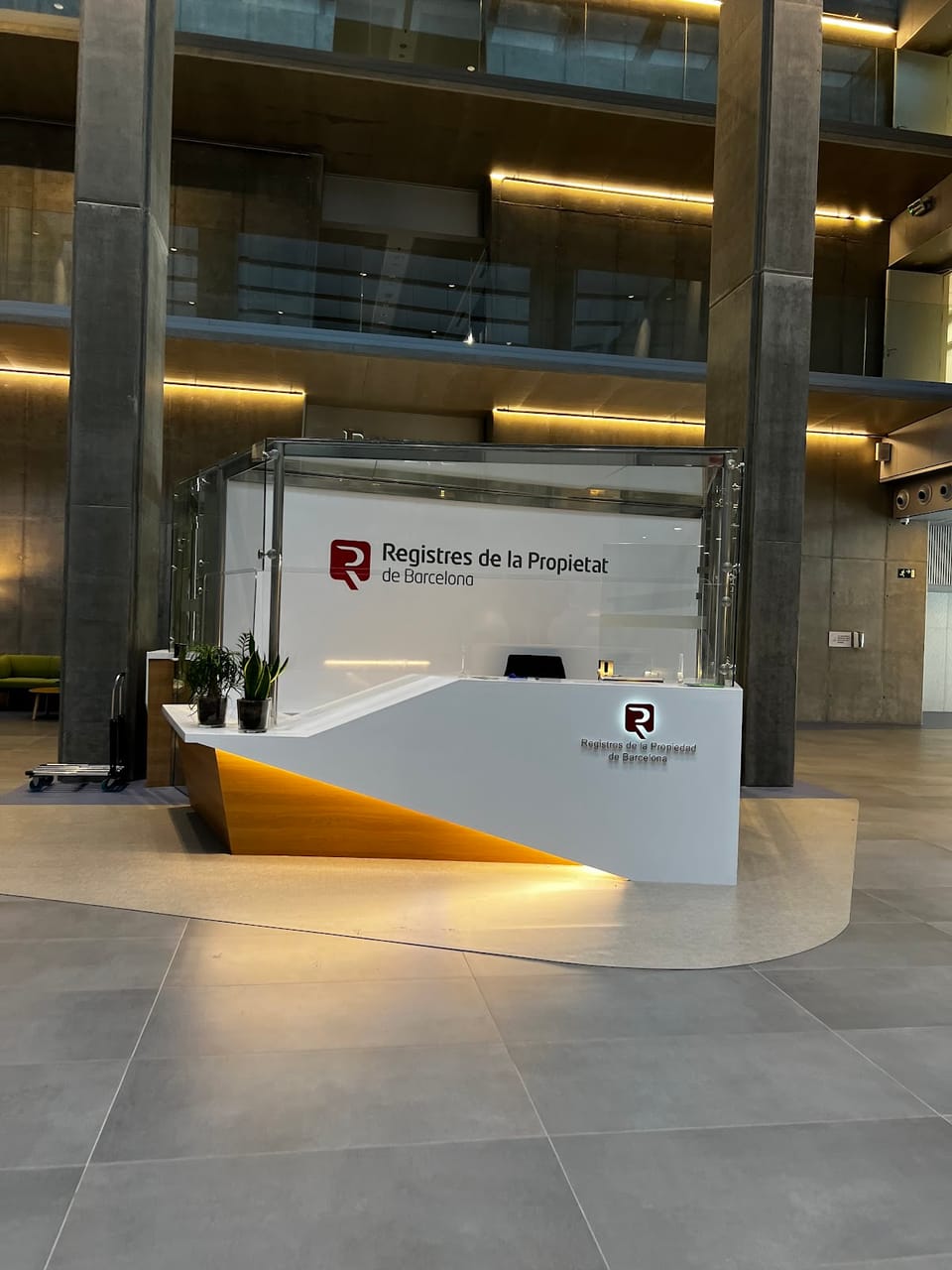
For a squatter or occupancy check, your lawyer pulls a nota simple (a one-page summary from the property registry listing owners, mortgages and encumbrances) from the Registro de la Propiedad, runs a community-debt check, and physically verifies occupancy in the days before signing.
For community debt, the rule under Ley de Propiedad Horizontal is that unpaid community fees stick to the flat, not the seller. Your nota simple plus a certificate from the administrador de fincas (the licensed property manager who runs the building) is the protection.
For anything off the clean-resale template, the 0.5 to 1 per cent lawyer fee is cheap insurance.
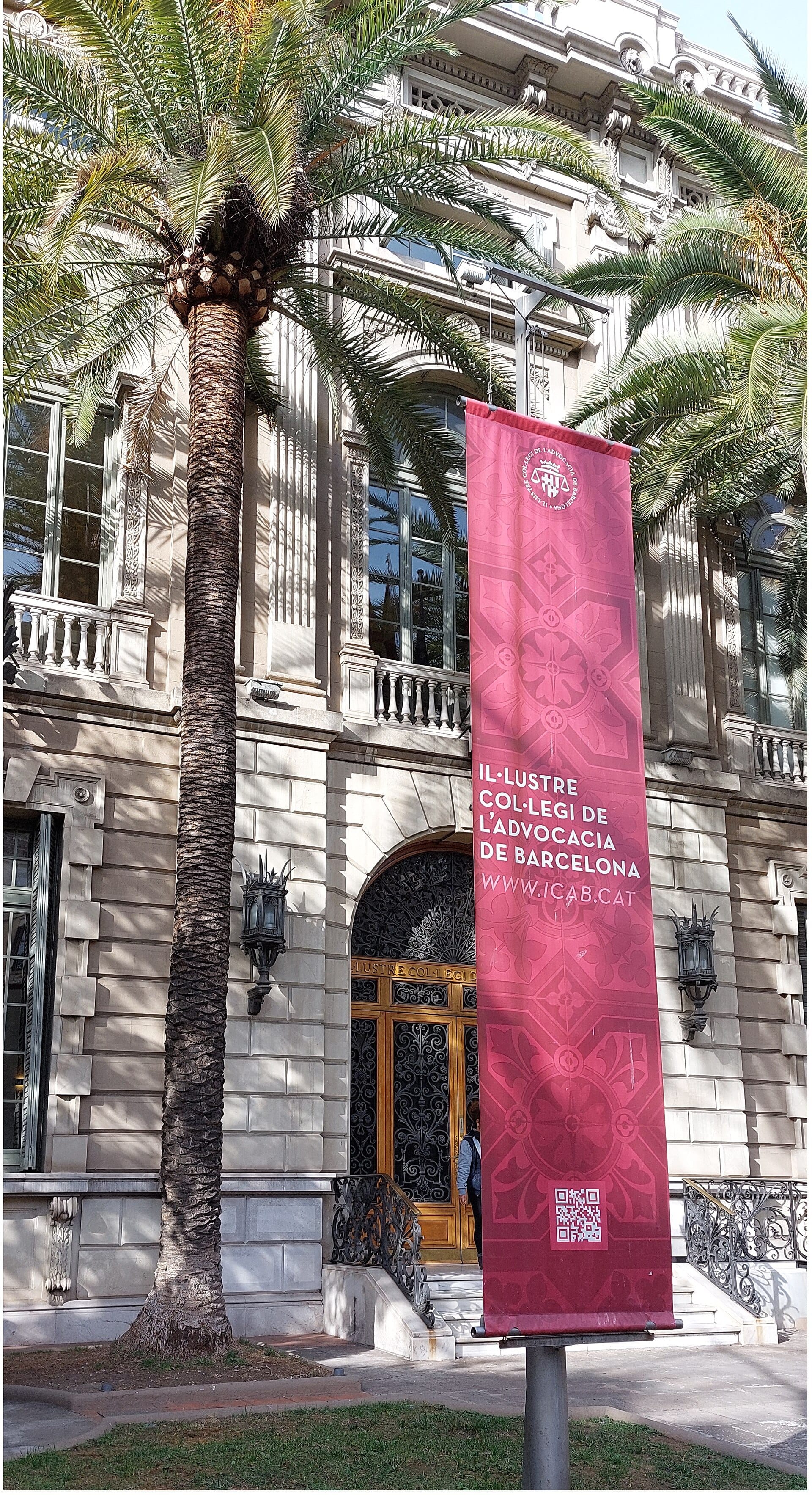
The directory at ICAB (Il·lustre Col·legi de l'Advocacia de Barcelona, the Barcelona Bar Association) lists registered real-estate lawyers. Ask for a fee proposal in writing before engaging.
Which reader are you?
The right move is not the same for everyone. Six scenarios that cover most of the people who land on this page.
The newcomer who just got here. Less than a year in Barcelona, on a foreign or recently transferred contract, no NIE history.
Best for: renting first for at least 12 months. You need a Spanish credit footprint, a NIE (Número de Identidad de Extranjero, the foreigner ID number every transaction touches), and time to learn which barrio you actually want to live in. Buying inside year one is almost always wrong.
Avoid if: nothing here makes buying urgent. Wait.
The long-term resident finally buying. Five-plus years in Spain, stable income, has an NIE and tax history.
Best for: a resale flat with a Spanish mortgage at 80 per cent loan-to-value. Get indicative approval before viewing, use a gestoría, and only add a lawyer if anything in the file is non-standard.
Avoid if: you have not run a side-by-side rent versus mortgage calculation on your actual flat. Do that first.
The non-resident investor. Buying a rental unit while living abroad, treating it as a euro-denominated asset.
Best for: hiring a lawyer end-to-end, budgeting 50 per cent cash (Spanish banks typically cap loan-to-value at 50 per cent for a non-resident buying as an investment rather than a home), and checking whether the building sits inside a "zone de mercat residencial tensionat" before underwriting any rental yield. Capital gains and non-resident income tax both apply, filed via the AEAT. The golden-visa route closed in April 2025 under Ley Orgánica 1/2025, so a property purchase no longer comes with residency. A local buyer's agent such as Barcelona Home Hunter works the buyer's side specifically: filtering listings, arranging viewings, flagging risks and negotiating on your behalf, useful when you cannot fly over for every viewing. Radiant Estates is a Barcelona-based alternative that focuses specifically on due diligence, catching document gaps, contract errors and pricing traps before you sign, typically for a fraction of a full lawyer's fee.
Avoid if: your model only works at uncapped market rent. Catalan rent rules will bite.
The family upsizing. Already renting in Barcelona, second child on the way, looking for three bedrooms and a school catchment.
Best for: resale in Sant Gervasi, Sarrià, Les Corts or Poblenou where three-bed stock exists, with a lawyer because three-bed flats often come with inheritance complications. Check the school zoning at the Departament d'Educació preinscripció pages before you bid: catchment can shift the right address by two streets.
Avoid if: you would be stretching the budget to the point where any pending derrama would derail you. Walk away.
The single buyer or couple, no kids. One or two incomes, looking for a one or two-bed in Eixample, Gràcia, Sant Antoni or Poble-sec.
Best for: a clean resale, gestoría plus notary, skip the lawyer to save €3,000. Buy with a seven-year horizon minimum or do not buy.
Avoid if: your job is portable and you genuinely might move countries. The transaction cost on the way out is the killer.
The under-35 first-time buyer. Catalan resident, primary residence, under the income cap.
Best for: the reduced 5 per cent ITP rate published by the Agència Tributària de Catalunya, which cuts the headline 10 per cent by more than half. Confirm eligibility with a gestoría in writing before you sign the arras (the 10 per cent down-payment contract that locks the deal); the relief is claimed at the moment of paying ITP, not retroactively.
Avoid if: the flat exceeds the per-square-metre cap or your income exceeds the threshold. The relief vanishes.
Rent versus buy in Barcelona, briefly
This question gets asked twice a month in the Barcelona English-speaker community and the answer depends on which side of the Eixample you are standing on.
A rough heuristic: if you are sure you will be in Barcelona at least seven years, buying tends to come out ahead, even before any price appreciation. If your horizon is two or three years, buying makes you no money and exposes you to transaction costs on both sides; the seller typically pays an estate-agent commission of 3 to 5 per cent plus IVA, and a non-resident seller may owe capital gains tax to the AEAT. Convention in Barcelona is that the seller pays the agency fee, though some listings now try to push a buyer-side fee onto the purchaser, so confirm who pays before you make an offer.
The complication is the Catalan rent cap. Under Ley 12/2023 por el derecho a la vivienda, as applied across the "zones de mercat residencial tensionat" declared by the Generalitat housing department (covering all ten Barcelona districts), rent on a renewing contract is capped to the previous tenant's rent adjusted by a state-published index. It does not cap your mortgage. So if you are already in a stable rental at a reasonable number, "rent only goes up" is less true here than in London or Paris.
Best for buying: stable seven-plus year horizon, cash deposit ready, paying a Barcelona rental premium because you moved in recently and your rent is not protected.
Avoid if: horizon under five years, deposit isn't liquid, or your current rent is already capped well below market under the 2023 housing law.
Run the numbers honestly. Compare a Spanish mortgage calculator's monthly figure to the rent for a comparable flat. Add the fees, the deposit, the opportunity cost of capital tied up. Decide on actual numbers, not vibes.
What most first-time buyers regret skipping
The second viewing, in the morning.
Flats look different at 8am than at 4pm. Light, noise, neighbours, building staff, the smell of the stairwell. Go twice before you sign anything; the second visit at the opposite end of the day catches what the first one missed.
The other thing worth checking is the building's accounts. Ask for the last two annual community meeting minutes (actas) and any pending derrama (a special assessment voted by the community to cover capital works) the building has approved. Lift refurbishment, façade work and structural repairs all get charged across the community on a per-quota basis under the Ley de Propiedad Horizontal; signing without checking can saddle you with a €5,000 to €25,000 bill in your first year that the seller knew about and you did not.
Decision matrix: what to do tomorrow morning
If you read nothing else, take this table to your coffee tomorrow and act on the row that matches you.
| Your situation | Lawyer? | Cash needed (on €400k) | Next concrete step |
|---|---|---|---|
| Newcomer, under 12 months in Spain | Do not buy yet | n/a | Rent on a one-year padró-registered contract, get NIE, build Spanish bank history |
| Long-term resident, clean resale | Optional, gestoría is fine | ~€175k | Request indicative approval from two banks before viewing |
| Non-resident investor | Yes, end-to-end | ~€255k (50% + fees) | Engage an ICAB-registered real-estate lawyer before signing arras |
| Family with kids, three-bed | Yes | ~€175k+ | Check school catchment via Departament d'Educació, then view |
| Single or couple, two-bed in central Barcelona | Skip if clean resale | ~€175k | Confirm seven-year horizon, run rent versus buy on the actual flat |
| Under-35, Catalan resident, primary residence | Optional | ~€155k (reduced ITP) | Get the reduced-ITP eligibility confirmed by a gestoría in writing |
| Off-plan from developer, inheritance, or okupa risk | Yes, non-negotiable | ~€175k+ plus reserves | Lawyer pulls nota simple and verifies occupancy before any payment |
The pattern that runs through all of it: the cheapest mistake is a delayed purchase. The most expensive mistake is signing arras on a flat with a problem you did not check for. Time costs nothing. The lawyer fee is a rounding error against a community debt or an okupa. Cash buffer is what lets you walk away from a flat that fails a second viewing.
Get the oferta vinculante. Pull the nota simple. Read the actas. Visit twice. Then decide.
Sources
- Agencia Tributaria de Catalunya: ITP tariffs and rates
- Agencia Tributaria (AEAT): IVA or ITP on a property purchase
- BOE: Real Decreto 1426/1989 (notary fee schedule)
- BOE: Real Decreto 1427/1989 (property registrar fee schedule)
- BOE: Ley 5/2019 reguladora de los contratos de credito inmobiliario
- BOE: Ley Organica 1/2025 (ends the golden-visa regime)
- BOE: Ley 12/2023 por el derecho a la vivienda
- BOE: Ley 49/1960 sobre propiedad horizontal
- Banco de Espana: Financial Stability Report, Spring 2026
- ICAB: Il·lustre Col·legi de l'Advocacia de Barcelona, registered real-estate lawyer directory
Get this in your inbox
Buying a flat here throws up a hundred small questions, from which barrio to trust to whether you really need a lawyer. The fastest way to get straight answers is from people who have just done it. The Barcelona English Speakers community brings together 4,000+ residents across 20+ free, moderated WhatsApp groups on flat-hunting, neighbourhoods and daily life. Come and ask before you sign anything.
If you are renting first, we also cover renting without getting scammed and how to get a deposit back through Incasòl.