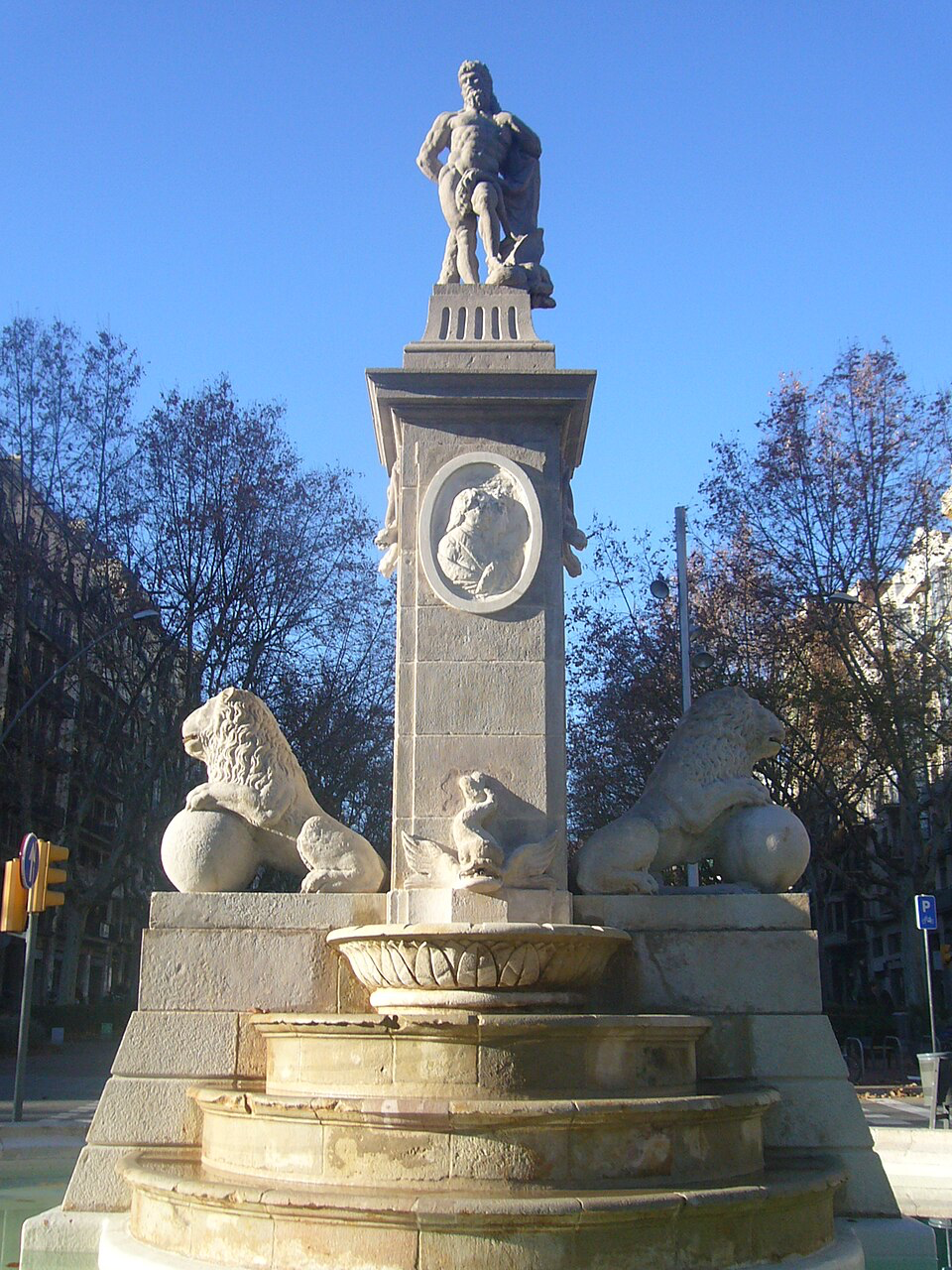
Barcelona's oldest ornamental fountain, the Font d'Hèrcules, is flowing again at its current home on Passeig de Sant Joan. This historic monument, first placed in 1797, has resumed operation after a period of drought. It stands at the intersection with Carrer de Còrsega in the Gràcia district.
The fountain was originally inaugurated in 1802. This event coincided with a visit from Spanish King Carlos IV and María Luisa de Borbón Parma. Its initial placement was on the Passeig de la Esplanada. This area is now roughly between Passeig Picasso and the Mercat del Born.
A Monument's Journey Through Barcelona
The Font d'Hèrcules is known as a "travelling monument." It has changed locations multiple times over its history. After its original site was urbanised, the fountain moved. It found a new spot near the current Passeig de Lluís Companys. There, it became part of the gardens for the future Palau de les Belles Arts.
In 1928, the fountain made its final move. It arrived at its present location in the Camp d'en Grassot i Gràcia Nova neighbourhood. The sculptor Salvador Gurri and stonemason Josep Moret created the piece. They used stone from Montjuïc for its construction.
Hercules and Royal Portraits
The fountain features a naked statue of Hercules. He leans on a club, with the Nemean Lion's skin on his left arm. The pedestal includes an oval medallion. This medallion shows portraits of Carlos IV and María Luisa de Borbón Parma. Two lions flank the pedestal. The entire structure rests on a stone base within a circular pond.
The Font d'Hèrcules has undergone two restorations. Workers refurbished it in 1987 and again in 2010. After recent drought conditions, the fountain's pond is now full of water. However, its jets do not always function.
Other Moving Monuments in the City
Barcelona has other monuments that have changed locations. The famous Botero's Cat, now on the Rambla del Raval, is in its fourth spot. Similarly, the Monument to Doctor Robert currently stands in Plaça Tetuan. It was first in Plaça Universitat, then removed, and later returned to Tetuan. It is important not to confuse this Font d'Hèrcules with another. Antoni Gaudí designed a fountain of the same name. That one is located in the gardens of the Palau Reial de Pedralbes.
The Font d'Hèrcules continues to serve as a significant historical landmark. Its journey across Barcelona reflects the city's evolving urban space. Its return to operation ensures residents and visitors can again appreciate this unique piece of public art.
Sign up for our new entrepreneurs community Bizcelona, now accepting our second wave of applicants.
Originally published by El Nacional. Read original article.