Pizza is the most argued-about food in any Barcelona expat group. The Italians who live here have strong opinions and have been quietly drilling holes in the worse pizzerias for a decade. The good news: the city now has a handful of places that an Italian will actually eat at without making a face. Here is where they are, what style they do, and which one to pick when you cannot decide.
How this list was built
Two years of eating pizza in Barcelona as a resident, six or more visits to each place across weekdays, weekends and lunch shifts, plus the loud, opinionated consensus of Italian friends, coworkers and neighbours. Where a pizzeria claims a Neapolitan style, I cross-checked it against the AVPN (Associazione Verace Pizza Napoletana) certified pizzerias list, the Naples-based body that audits "00" flour, San Marzano tomatoes, dough hydration, wood-oven temperatures (around 430–485°C) and 60–90 second cook times. NAP holds active AVPN certification in Barcelona; the others on this list earn their place on dough quality, sourcing and consistency over repeat visits, not on a badge. Prices are from menus seen in May 2026 and may drift through the summer.
The Neapolitan benchmarks
Sartoria Panatieri is the one most Italian residents name first. Two locations, one in Gràcia and one in Eixample, a focus on local sourdough and house-fermented dough, and a constantly rotating list of seasonal toppings that keep regulars coming back. Reservations are needed, with a few days of lead time at weekends. Pizzas land at €14 to €18 and are worth every euro.
Frankie Gallo Cha Cha Cha in Raval is the louder, younger, more music-driven one. The crust is properly leoparded (the brown blisters that show a well-fermented dough), the room is small and gets full by 8.30pm, and the wine list does the job. Walk-ins are possible if you eat at 7 or after 10. Most residents who eat here regularly end up at the bar rather than at a table.
NAP Napoletana is the chain to know. Multiple branches across the city, proper Neapolitan dough that has held its AVPN certification through recent years, and the most reliable cheap-good pizza option in town. A margherita runs around €9 to €11. Not the best in town, but the most consistent: the dough is the same on a Tuesday at 2pm and a Friday at 10pm.
Pummarola is small, family-run and beloved. The dough is excellent, the room is a few tables, and they take their time with each pizza. Reservations sensible. If you want a single quiet pizza date, this is the one.
The Roman-style gap, and the one near Sagrada Família
A note on Roman-style: Barcelona currently has no standout pizza al taglio specialist. The thin, crispy, by-the-slice format remains under-represented here, and the reheated display slices around the tourist core do not count. If thin and crispy matters more to you than a puffy crust, the contemporary style below is the nearest thing the city does well.
Can Pizza is the bigger contemporary-Italian operation, and its Passatge de Simó branch is a sensible bet if you are coming from a Sagrada Família visit and do not want to walk 20 minutes for dinner. Style is closer to a long-fermentation contemporary Neapolitan than a strict pizza tradizionale. Pizzas around €13 to €17.
If you are hunting near Sagrada Família specifically, the Passatge de Simó branch of Can Pizza is the resident default. Plenty of other "Italian" places around there do tourist pizza at tourist prices. Not worth the walk.
The pizzerias, side by side
| Pizzeria | Style | Price (margherita) | Best for | Catch |
|---|---|---|---|---|
| Sartoria Panatieri | Neapolitan, seasonal | €14–18 | Special occasions, dough nerds | Book 3–7 days ahead |
| Frankie Gallo Cha Cha Cha | Neapolitan, loud room | €12–16 | Late dinner, wine, walk-ins at the bar | Tiny room, fills by 8.30pm |
| NAP Napoletana | Neapolitan, AVPN-certified | €9–11 | Groups, weekday dinner, kids | Chain feel, not the peak |
| Pummarola | Neapolitan, family-run | €11–14 | Quiet date, two people | A handful of tables, slow service by design |
| Can Pizza Sagrada Família | Contemporary / long-fermentation | €13–17 | Post-Sagrada-Família dinner, families | Bigger operation, less intimate |
How to pick when you cannot decide
A few simple ways to choose.
Best for a big group on a weekday, want it sorted in 90 minutes: NAP. Walk-ins, fast service, good enough always.
Avoid if you want a memorable date or a kitchen showing off.
Best for date night, will book ahead: Pummarola or Sartoria Panatieri.
Avoid if you are turning up at 9pm on a Friday without a reservation.
Best for late, hungry, want a glass of wine and a loud room: Frankie Gallo.
Avoid if you are trying to have a long, quiet conversation.
Best for Sagrada Família after a tour, kids in tow: Can Pizza Sagrada Família.
Avoid if you want a small room or a chef-driven menu.
If you live in Sant Antoni you have Pummarola on Ronda de Sant Pau on the doorstep, and NAP Molino on Avinguda del Paral·lel is the next nearest. From Poblenou neither is a local walk, so it is a metro ride or a Glovo delivery. Most of the Italian-themed restaurants advertising "wood-fired" without naming a pizzaiolo or showing a published menu are not the move.
Reservations, language and getting there
Most places above take bookings through TheFork (the rebranded El Tenedor, the standard restaurant-booking platform in Spain) or their own Instagram DMs. Phone bookings work in Spanish, Catalan or, at the resident-facing places, English. If you are still learning the language, TheFork is the path of least resistance and often lists restaurant promotions of 20 to 50 percent off the food bill at off-peak slots. Yums are a separate thing: loyalty points you collect on bookings and swap for fixed-euro vouchers.
Catalan dinner timing trips up most arrivals. Kitchens open around 8 to 8.30pm and the room fills by 9.30. Booking the 7.30pm slot at a small place often gets you a table the locals would not take, which is a feature, not a bug. For lunch, most places serve from roughly 1pm to 4pm.
Getting there: Sartoria, Can Pizza and most of Eixample sit on TMB (Transports Metropolitans de Barcelona, the city's metro and bus operator) lines L1, L3, L4 and L5; Frankie Gallo is a three-minute walk from L3 Liceu; NAP branches cluster near L4 Jaume I, L4 Barceloneta and L2 or L3 Paral·lel. Bicing bike-share works well for the Eixample and Raval pizzerias once you have an annual subscription (€50 a year for residents with NIE, the foreigner ID number, or DNI, the Spanish national ID).
Notes for specific segments
If you have kids. NAP and Can Pizza Sagrada Família are the easy answers: room for a buggy, fast service, and a menu that copes with a picky six-year-old. The Catalan school calendar published by the Generalitat (Catalonia's regional government) education department sets the family-dining bottlenecks: book ahead the week before Setmana Santa (Holy Week, the school Easter break), the school Christmas break, and the first weekend after summer term ends in late June, when every family in Eixample is suddenly eating out at 8pm.
If you are a student or on a tight budget. The NAP weekday lunch menu is the value play. Several pizzerias run a menú del migdia (the Catalan midday set menu, usually €13 to €16 for a starter, pizza and a drink) that does not appear on the dinner card. Ask at the door.
If you are a freelancer or remote worker. Lunchtime pizza is the city's most under-used weapon. Sartoria Panatieri's Provença site, Frankie Gallo and Can Pizza all run a quieter lunch service: no queue, same dough, half the wait. If you can step away from a laptop at 1.30pm on a Tuesday, do it. Most kitchens take card, and you can ask for the factura simplificada (a simplified VAT invoice with the 10 percent IVA itemised) if you plan to deduct the meal through an autónomo (self-employed sole-trader) account.
If you have just moved and are still renting. Pizzerias in Eixample, Sant Antoni and El Born double as flat-hunting recon. A 90-minute dinner at Pummarola on Ronda de Sant Pau or NAP Antic near Jaume I tells you what those neighbourhoods feel like at 9pm on a Wednesday more honestly than a midday viewing. The Generalitat housing portal publishes the official rent reference index for each district if you want a price-per-m² reality check before the second glass of wine.
If you run a small business. All the places above split a bill cleanly and most accept Bizum (the Spanish bank-to-bank payment app, used here the way a Brit uses Monzo or an American uses Venmo) for group tabs. NAP and Can Pizza are the easiest for a client lunch where the brief is "fast, good, no surprises".
A note on price
Good pizza in Barcelona costs more than you would expect and less than London. A pair of pizzas, a bottle of wine and a tip will land you somewhere between €45 and €65 in 2026. The €25 "tourist menu pizza plus sangria" near La Boqueria is not a discount. It is a worse pizza for the same money you would pay at a real one.
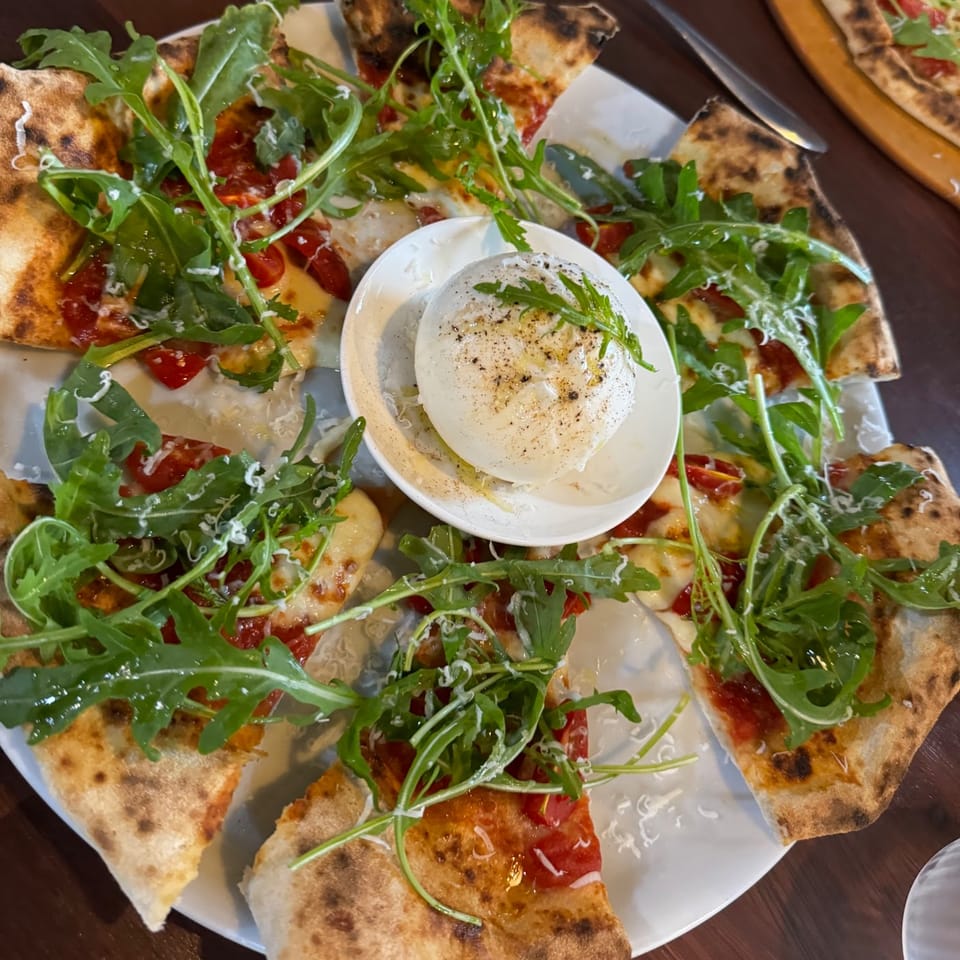
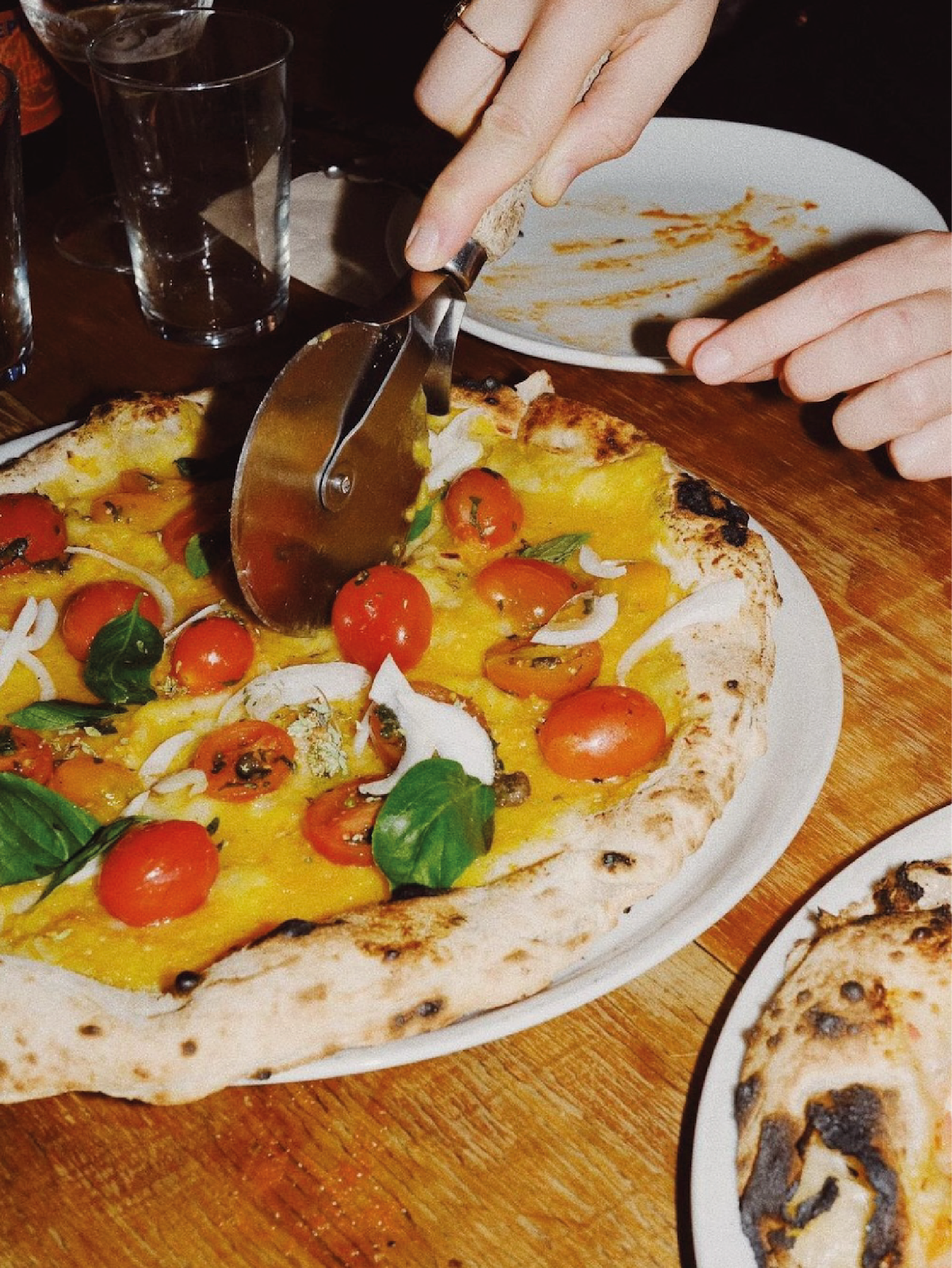
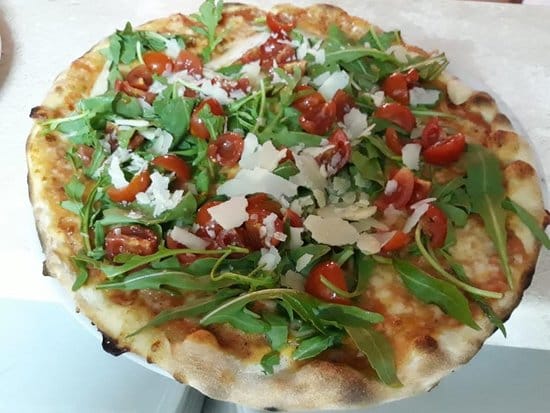
A working test for whether the dough is good. If the dough has clearly proved properly, the crust will have brown blisters (the leoparding), the centre will be slightly wet, and the cheese will pool in patches rather than blanketing the surface uniformly. If your pizza arrives uniformly orange with a flat dry crust, the dough was made that morning and pressed into shape rather than fermented. Eat it, finish your wine, and do not go back.
The styles, in plain English
Pizza in Barcelona splits into three broad styles, and the argument is mostly about which one belongs at the top of the list.
Neapolitan (Sartoria, Frankie Gallo, NAP, Pummarola) is the classic round pizza with a puffy crust, blistered from the wood oven, soft centre, eaten with a knife and fork or folded in quarters and held in one hand. Cooked very fast at high temperature. The benchmark for most Italian residents.
Roman is rectangular and thinner, crisp throughout, sold by the slice or whole. Cooked at a lower temperature for longer. Better for sharing and easier to eat standing up, but Barcelona currently lacks a specialist worth naming, so it sits this guide out.
Contemporary or pizza moderna (Can Pizza, some of Sartoria's specials) is a long-fermentation hybrid: high-hydration dough, longer rises, more open crumb, often with non-traditional toppings. The category Italian purists complain about most, and the one that has done the most to raise the Barcelona average over the last five years.
What most people miss
The best pizza is rarely the headline pizza.
The chefs at Sartoria Panatieri and Frankie Gallo know what they are doing; the seasonal specials are usually where the kitchen is showing off, and they are often the best plate on the table. Order one margherita to check the dough, then order whatever they are putting on the board that week.
Lunchtime pizza is also under-used in this city. Several of the places above run a quieter lunch service, no queue, same dough, half the wait. If you can get out at 1.30pm on a Tuesday, do it.
Key takeaways
One place to default to: NAP. Walk in, eat well, leave inside an hour.
One place to book ahead: Sartoria Panatieri, then order the special, not the margherita.
One thing to check on the plate: leoparded crust, slightly wet centre, patchy cheese. Anything else is bread with topping.
One thing to skip: any "wood-fired" Italian within 200m of La Rambla, Passeig de Gràcia or Sagrada Família that cannot name its pizzaiolo.
One language note: ask for the menú del migdia at lunch and you usually save €5 to €10 a head versus the same kitchen at dinner.
Founder or freelancer in Barcelona?
Arguing over the best margherita in town is exactly the kind of thing that fills our Barcelona English Speakers community. It is the largest WhatsApp group for English-speaking residents here, with 4,000+ members across more than 20 free, moderated topic groups covering food, neighbourhoods, flat-hunting and meetups. Come and swap your own pizza shortlist, and find people to share a table with.