The Looming Threat of a Major Earthquake
Scientists agree it is not a question of if, but when, a destructive earthquake will hit Spain. Recent tremors in Granada, a 4.8 magnitude quake followed by another days later, have reignited concern among seismologists. "The clock is ticking, it's getting closer, and it will happen one way or another," says Patricio Venegas Aravena, an earthquake specialist at Loyola Andalucía University. Juan Vicente Cantavella, director of the National Seismic Network, confirms that historical patterns show significant quakes exceeding magnitude 6 have occurred across the peninsula. The last major one struck Arenas del Rey in Granada in 1884, killing hundreds. Since then, no comparable event has occurred, leading experts like Belén Benito from the Polytechnic University of Madrid to state: "We are in extra time."
Accumulating Tectonic Pressure
The African and Eurasian tectonic plates continue converging at a rate of 2–4 millimetres per year in southern Spain’s Betic zone. Over decades, this builds up deformation energy along fault lines. Pablo Silva, professor at the University of Salamanca, explains: "The more time passes, the more deformation accumulates, and the larger the earthquake will be." Small quakes do not reduce this risk. As Cantavella notes, millions of minor tremors would be needed to release the energy of a single large event. GPS measurements now allow researchers to estimate how stressed faults are, offering insight into potential rupture timelines, similar to models used before Chile’s 2010 earthquake.
High-Risk Zones Across Spain
The most vulnerable areas include the south and southeast of the Iberian Peninsula, the Pyrenees, and the Gulf of Cádiz, where subduction zones pose tsunami risks reminiscent of the 1755 Lisbon disaster. Though earthquakes above magnitude 7 are unlikely, shallower quakes can still cause massive damage. Venegas highlights Valencia as particularly concerning. Despite a history of strong seismic activity, no major quake has occurred there for about 300 years, meaning stress may have built significantly. "Those areas that accumulate more energy are the ones that need more attention," he says.
Simulations Reveal Catastrophic Potential
Pablo Silva’s team simulated the impact of past quakes using modern data. If the 1829 Torrevieja earthquake (magnitude ~6.5) were to occur today during peak tourism season, ground acceleration could reach 0.81g, far exceeding Spain’s current regulatory limit of 0.55g.
"And for Torrevieja, we get a gigantic disaster,"
Their model estimates between 11,000 and 28,000 fatalities due to widespread collapse of older coastal buildings and critical infrastructure failures. In contrast, a repeat of the 1884 Arenas del Rey quake would cause less devastation because the affected rural area has seen little urban development.
Outdated Building Codes and Regulatory Gaps
Spain still enforces NCSE-02, its anti-seismic building code from 2002, while delaying adoption of Eurocode 8, the updated European standard. The proposed NCSR-22 replacement remains unapproved. Worse, in 2024 the government disbanded the Permanent Commission for Earthquake-Resistant Standards without establishing a successor body. Miguel Ángel Rodríguez-Pascua from IGME-CSIC stresses that existing seismic hazard maps are outdated and based on insurance needs, not safety planning. He advocates for a complete national active fault mapping project, similar to efforts in Turkey.
"The fact that there are blank areas on the current map does not mean there are no active faults, but rather that they have not been studied,"
This uncertainty hampers local risk assessments and emergency preparedness.
Vulnerable Infrastructure and Urban Planning
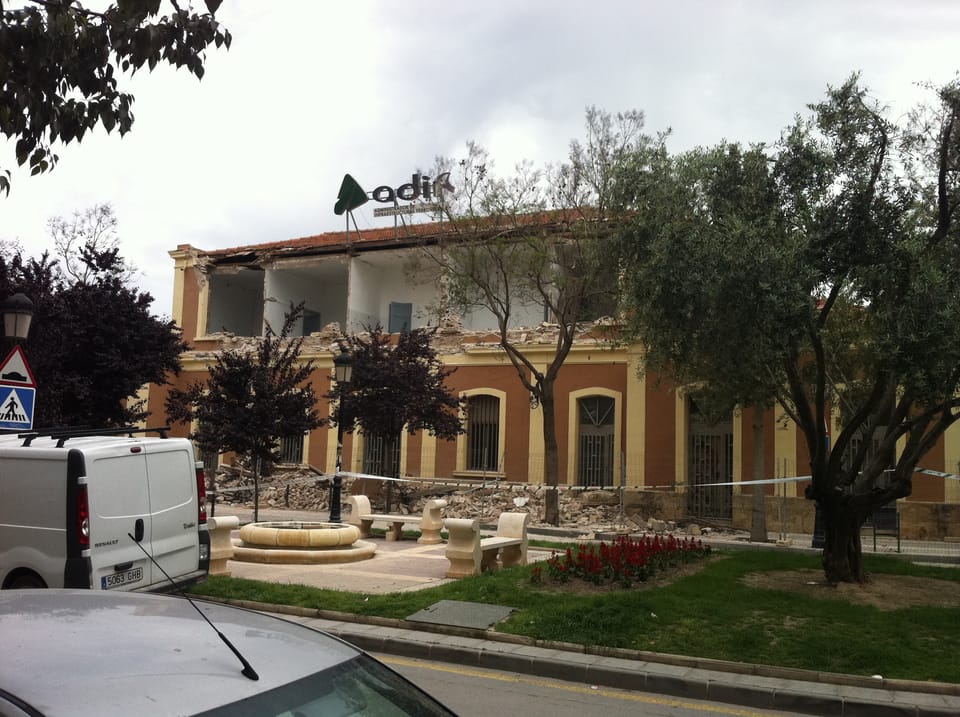
Much of Spain’s coastal housing stock dates from the 1970s and 1980s, before modern seismic regulations. These masonry structures, especially in tourist zones from the Mar Menor to Santa Pola, are highly vulnerable. Belén Benito warns rehabilitation is not happening. María Ortuño from the University of Barcelona points out that even where foundations meet standards, external features like cornices and balconies often fail during shaking, accounting for many deaths in Lorca in 2011. Venegas calls for urgent reinforcement of schools and hospitals with diagonal metal beams. "We don't know how these constructions might respond to a shallow earthquake," he says.
Preparing Citizens and Institutions
Catalonia leads with its SISMICAT plan, which evaluates essential buildings’ vulnerability. Elsewhere, only isolated studies exist, after Lorca, or in Granada, Murcia and Málaga. Most municipalities lack systematic reviews of fire stations, city halls, or schools. Ortuño insists: "When you have to build something, you cannot build based on probabilities. Your structure has to withstand them all." A new Civil Protection Emergency Training Plan aims to educate schoolchildren in self-protection measures. As Rodríguez Pascua notes, "What saves lives is knowing what to do." Children sharing knowledge at home multiplies the effect.
"Citizens have the right to have that information,"
Experts now urge public awareness campaigns that inform without inciting panic. With population density and aging infrastructure increasing risk, action must come before the next big shake.
Reported by eldiario.es.