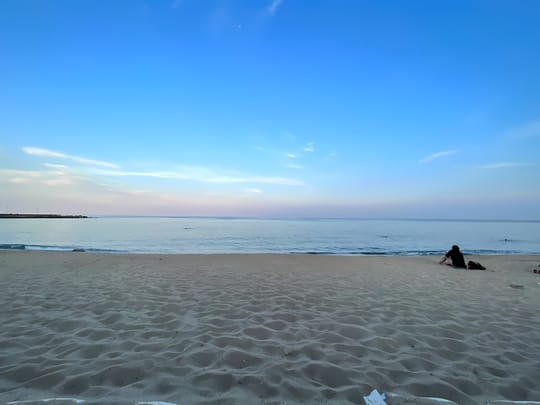
Thirty-three people have died from drowning in Catalonia since the start of the bathing season, with beaches, rivers and pools all recording fatalities. The figure, compiled by mid-season, has prompted renewed calls for improved water safety measures, especially for young foreign nationals, who are disproportionately affected.
A study led by Eneko Barbería of the Institute of Legal Medicine and Forensic Sciences of Catalonia analysed 39 drowning deaths of minors under 18 between 2019 and 2023. It found that 56.4% of the victims were foreign nationals, despite this group making up only 15.7% of the local population. A quarter of the minors who died were of African origin.
The high proportion of children of non-Spanish nationality reflects sociocultural and gender inequalities in access to safer aquatic environments and in the acquisition of aquatic skills.
The research, published in the Revista Española de Medicina Legal, attributes the disparity to limited access to swimming lessons and water safety education, particularly in lower-income communities. Spanish minors were more likely to drown in pools, while foreign minors faced greater risk in natural waters such as the sea and rivers, a pattern researchers say reflects broader social inequalities.
Swimming Skills Do Not Equal Sea Survival
Thais Casadevall, an open water swimming specialist, warns that knowing how to swim in a pool does not guarantee safety in open water. Unpredictable currents, waves and sudden wind changes make sea swimming far more dangerous. Some of her students, she says, can swim long distances in controlled environments but struggle in the sea due to fear or lack of experience.
Prevention Requires Systemic Change
Ramsés Martí, an aquatic safety expert, calls for a shift in swimming instruction, from sport-based training to survival-focused education. This includes teaching children to understand beach flag systems and the risks of floating devices in deep water.
The Spanish Association of Pediatrics stresses that 59% of drowning victims under 18 were younger than six. Even small volumes of water, such as in a bucket or portable pool, can be fatal for toddlers. Experts recommend constant supervision around any body of water.
Recent tragedies, including the drowning of three boys aged 12 and 13 at Tarragona's Arrabassada beach, have highlighted the urgency. Despite lifeguard presence and green flag conditions indicating safe swimming, risky behaviours such as jumping from rocks continue.
Authorities and health professionals are urging greater integration of water safety into public health outreach. The study recommends involving pediatricians and nurses in promoting water safety advice to families, especially those with limited access to formal swimming instruction.
As migration and social inequality continue to shape risk patterns, experts say Catalonia's findings may prompt other Spanish regions to reassess prevention strategies. Equal access to swimming lessons and practical water safety knowledge is essential to reducing future fatalities.
Reported by russpain.com, booksci.cn, scielo.isciii.es, Catalan News, ARA, Cesc Maideu, elsevier.es.