
Festa Major del Poblenou 2026: dates and what to expect
Last updated 30 October 2026
This year's festa has finished. The Festa Major del Poblenou ran 10 to 20 September 2026. The programme below is kept as a record of what was on, and this page is updated when next year's dates are confirmed. Next up is Christmas in Barcelona, 28 November 2026 to 6 January 2027.
The Festa Major del Poblenou 2026 ran from Thursday 10 September to Sunday 20 September. A fortnight of festa in the old industrial quarter, run by an unusual density of century-old societies and athenaeums, and opened by a cercavila that puts every colla in the barri on the street at once.
What it is
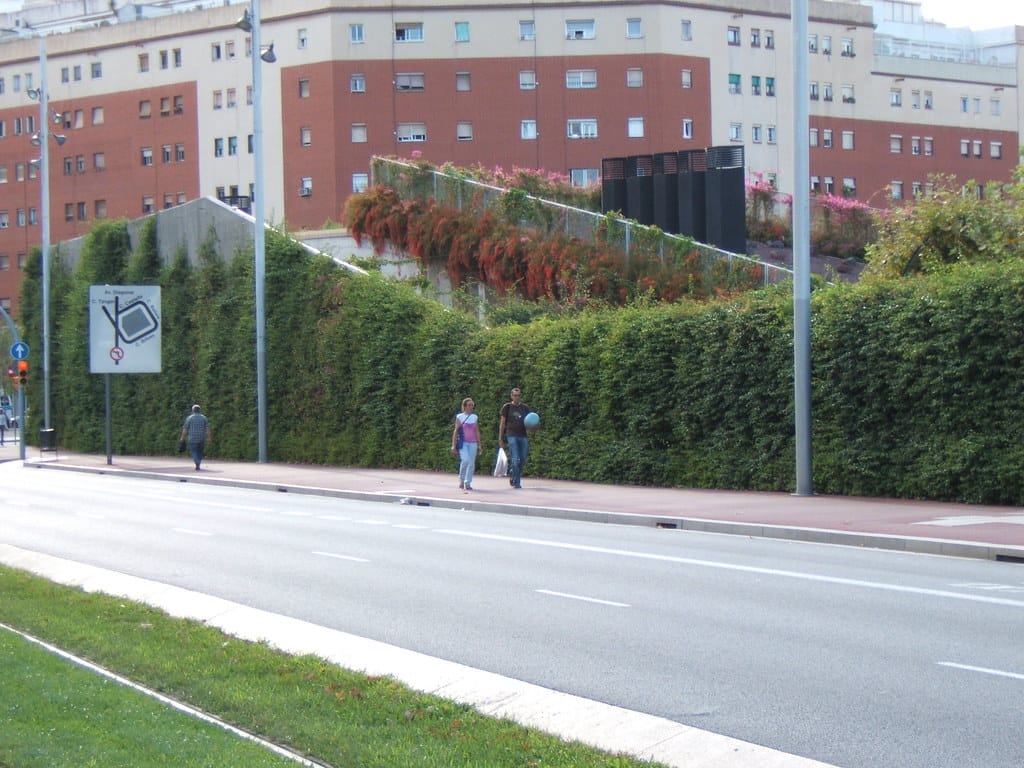
Poblenou spent most of its history at a distance from the rest of Barcelona. It was the industrial quarter, the Catalan Manchester, a working and artisan neighbourhood far enough from the centre to develop a character of its own and keep it. The clearest evidence is what it still has: an unusual density of centenary societies, circles, casinos and athenaeums, the kind of member-run institutions that most of the city has lost.
Those bodies are what run the festa. When it comes round, effectively every entity in the barri takes on part of the programme, and the result is one of the broadest festes in Barcelona: music, art, dance and sport, spread over roughly two weeks. The cultural colles do not confine themselves to the fire and giants they exist for, either. They also put on communal meals, children's workshops and sports championships.
Bernat and Maria
The giants of Poblenou have a better story than most. Bernat and Maria were bought in 1953 by three of the barri's parishes so that they could take part in the Corpus procession. They represent a medieval royal couple, they are the work of the imaginaire Domènec Umbert, and they were bought at El Ingenio, the festive-figure shop in the old city.
When the Corpus procession stopped being held in 1965 they were put into storage in the església de Santa Maria del Taulat, and there they stayed for fifteen years until the Colla Gegantera del Poblenou brought them back out in 1980. They have been at the centre of the festa ever since.
Why this one is worth the trip
The opening cercavila is the single best introduction to Catalan festive culture available in the city, because it puts the whole cast on the street at once: the Colla de Diables del Poblenou, the Colla del Drac del Poblenou, the Colla Gegantera del Poblenou and the Colla Castellera Jove de Barcelona all take part, and it runs before the pregó rather than after it.
The other reason is scale without crush. Poblenou is large, flat and gridded, its festa runs for a fortnight rather than a long weekend, and its Rambla gives the programme a natural spine. If Gràcia is the festa you queue to see, this is the one you can walk into.
Where it is
Poblenou spent most of its history at a distance from the rest of the city and kept a character of its own, visible in the centenary societies, circles and athenaeums that still run the festa between them.
Metro: Poblenou (L4), Llacuna (L4).
The programme, day by day
The full programme is not published yet. The Festa Major del Poblenou programme is set by the street commissions and released by the organisers a few weeks before the festa, and it reaches the city's open event feed only after that. As of 30 October 2026 it had not.
Rather than guess the times from last year, this page lists only what is confirmed for 2026. The day-by-day listing appears here automatically once the programme lands, the same feed that powers our What's On in Barcelona pages.
What the city's feed already carries for this festa: Teatre "Torcidxs", de Las Nenas Theatre (24 October, 19:30).
Practical
Getting there. Metro Poblenou on L4 puts you on the Rambla del Poblenou, which is the spine of the festa; Llacuna, also L4, is better for the western end. The barri is flat, gridded and walkable, and the tram along Diagonal is a reasonable alternative if you are coming from that side.
What it costs. Nothing for the street programme. Concerts, parades, fire acts and children's activities are free. The communal meals put on by the colles and the entities usually charge a modest amount and normally need signing up for in advance, which is worth checking once the programme is published.
It runs for about a fortnight. That is longer than most neighbourhood festes in Barcelona, and it means the programme is genuinely spread out rather than concentrated into one weekend. Do not assume you have missed it because you were not there for the opening.
Correfoc rules, as everywhere. Cotton clothing with long sleeves, closed shoes, a hat if you have one, and keep your mouth closed. Poblenou's streets are wide by Barcelona standards, so there is more room here than in the old city, but the same rules apply.
The Rambla is not the whole festa. A good part of the programme happens inside the athenaeums, the societies and the civic centres rather than on the street. Those are the places the barri actually organises itself from, and several of them open their doors during the festa.
Combine it with the barri itself. Poblenou has the best surviving industrial architecture in Barcelona and a beach at the end of it. If you are coming out for an evening act, come early and walk.
Where to check the programme
Programmes are published late and change. These are the sources we track, and we re-check them twice a day.
- Cultura Popularthe council's record of the festa and its history
- betevéthe city broadcaster's programme page, usually first with dates
- festamajorpoblenou.orgthe Coordinadora d'Entitats del Poblenou, who run it
The rest of the calendar
Still to come
- Christmas in Barcelona28 November 2026 to 6 January 2027To confirm
- New Year's Eve in Barcelona31 December 2026
- Three Kings in Barcelona5 to 6 January 2027
Already held this year
- Festa Major del Poble-sec17 to 26 July 2026
- Festes de Sant Roc12 to 16 August 2026
- Festa Major de Gràcia15 to 21 August 2026
- Festa Major de Sants22 to 30 August 2026
- Festa Major de la Bordeta2 to 12 September 2026
- Festa Major de Vallcarca3 to 10 September 2026
- Festa Major d'Horta4 to 13 September 2026
- Festa Major del Farró5 to 13 September 2026
- Festa Major de Vallvidrera10 to 20 September 2026
- Diada Nacional de Catalunya11 September 2026
- Festa Major de Verdun15 to 20 September 2026
- La Mercè23 to 27 September 2026
- Festa Major de la Barceloneta25 September to 4 October 2026
The complete festa majors guide has the full 2026 calendar, and What's On in Barcelona covers everything else in the city this week.
Some ticket links are affiliate links: Barna.News may earn a small commission if you buy through them, at no extra cost to you.