
Festa Major de Gràcia 2026: dates, programme and what to expect
Last updated 27 October 2026
This year's festa has finished. The Festa Major de Gràcia ran 15 to 21 August 2026. The programme below is kept as a record of what was on, and this page is updated when next year's dates are confirmed. Next up is Christmas in Barcelona, 28 November 2026 to 6 January 2027.
The Festa Major de Gràcia 2026 ran from Saturday 15 August to Friday 21 August. Twenty-three streets and squares are entering this year's decorated-streets competition, and the district puts the programme at more than 900 activities across the week. Almost all of it is free.
What it is
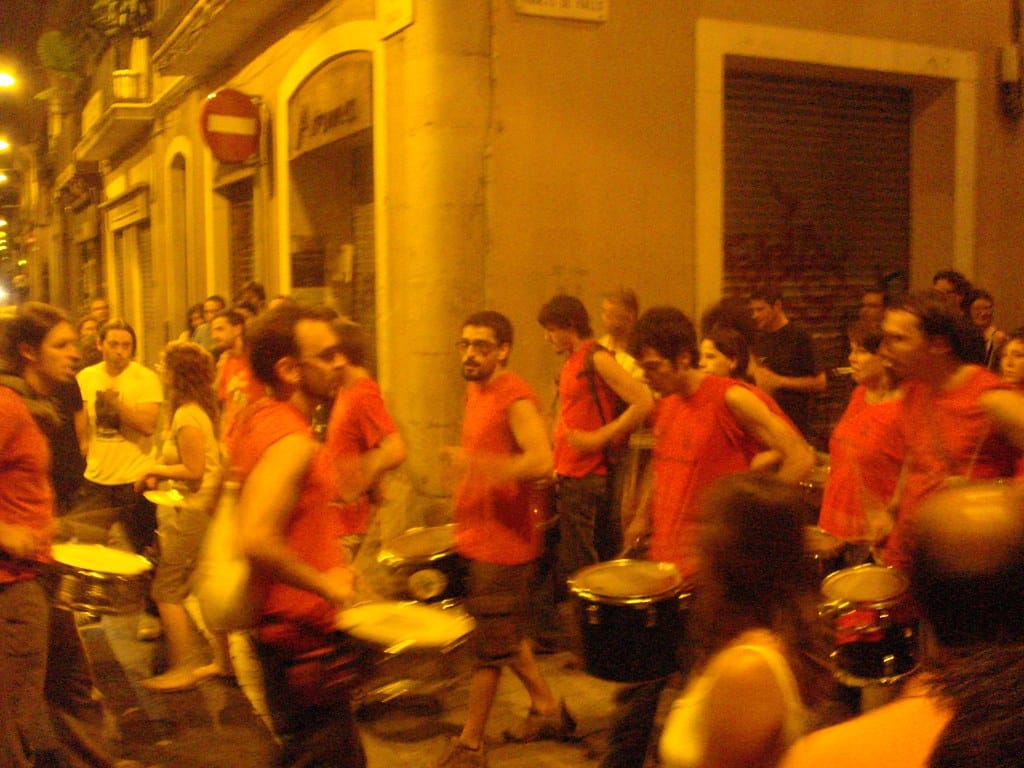
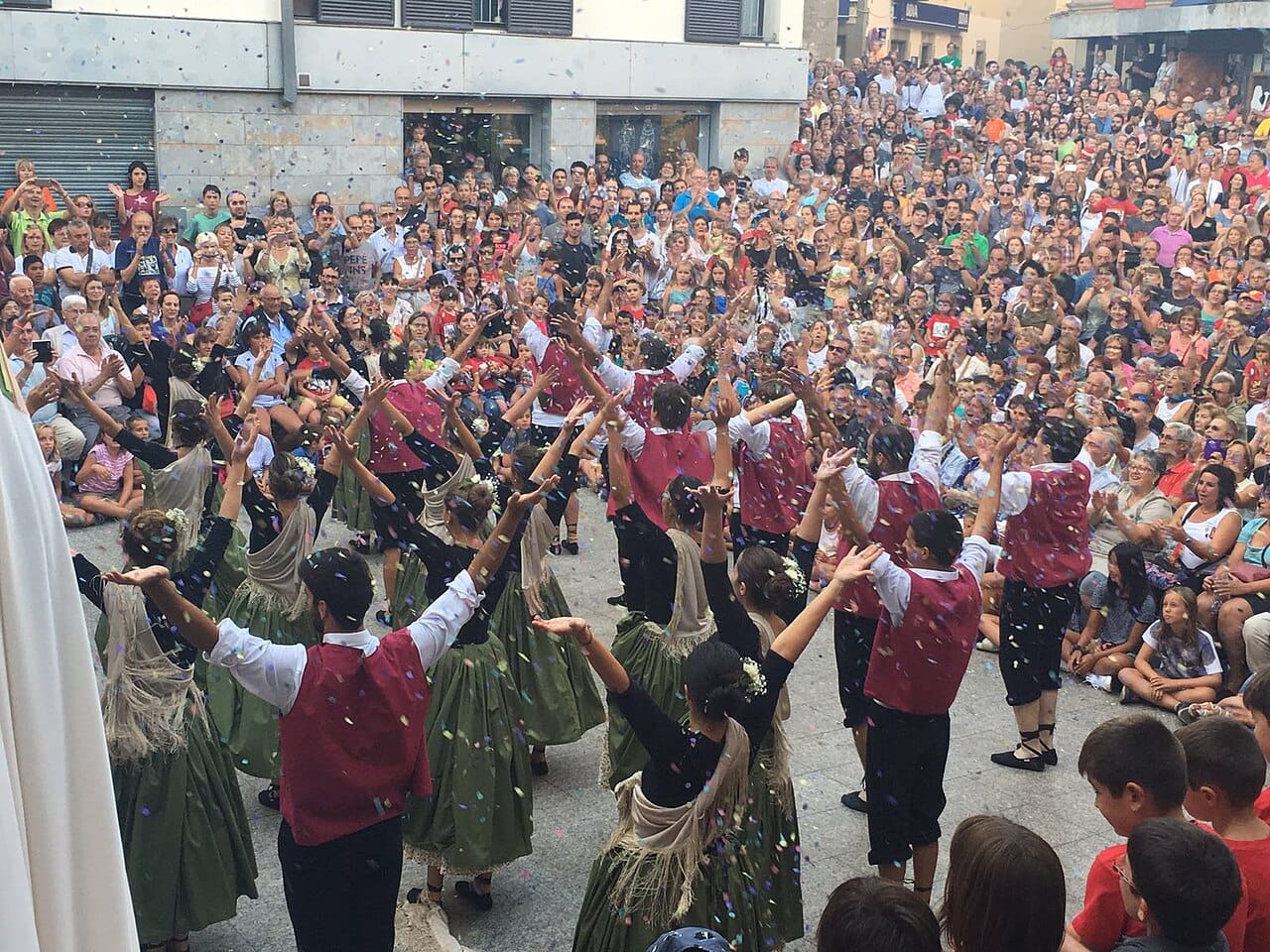
Gràcia was an independent town until Barcelona absorbed it in 1897, and its festa major, documented since 1817, remains the city's biggest neighbourhood festival by some distance. For one week in mid-August the Vila de Gràcia, the grid of narrow streets between Avinguda Diagonal and Travessera de Dalt, closes to traffic and turns itself into a stage: concerts in the squares, street dinners, castellers, sardanes, a closing correfoc, and above it all the decorations. It is run by the Fundació Festa Major de Gràcia and the individual street committees rather than an events company, and it shows. Entry to everything in the street is free; you pay only for food and drink.
The decorated streets competition
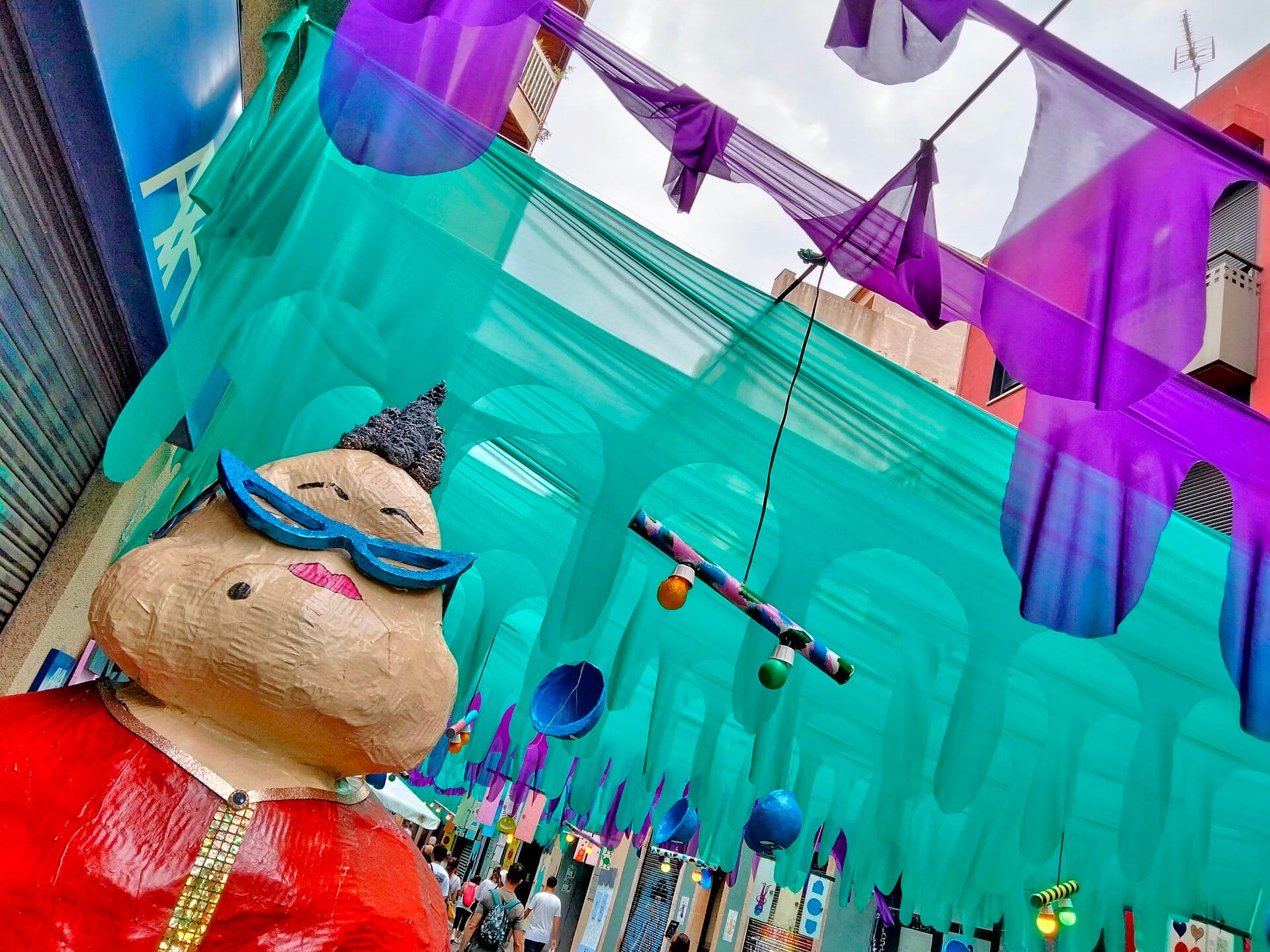
This is what Gràcia is famous for, and it deserves a proper explanation. Each participating street or square has its own committee of residents who choose a theme, keep it quiet, and spend most of the year building the decorations by hand: papier-mâché figures, canopies of painted bottles and egg boxes, entire ceilings of folded paper. The materials are largely recycled and the budgets are small; the labour is the point. On the eve of the festival the streets are dressed overnight, and on the opening day a jury walks every one of them and ranks the results. The prize brings no money worth mentioning. What it brings is a year of bragging rights, and the rivalry between veteran streets is entirely sincere.
The 2026 line-up, as listed by the Fundació, is Berga, Ciudad Real, Fraternitat de Baix, Fraternitat de Dalt, Jesús, Joan Blanques de Baix, Joan Blanques de Baix de Tot, Llibertat, Lluís Vives, Mozart, Perill, Perla, Plaça del Nord, Plaça del Poble Gitano, Plaça de la Vila de Gràcia, Plaça Rovira i Trias, Placeta de Sant Miquel, Progrés, Providència, Puigmartí, Tordera, Travessia de Sant Antoni and Verdi. There is one genuine novelty this year: five of them have agreed to build a single shared theme across their stretches, each handling a different passage in its own style. It is the first coordinated guarnit in about a decade, and it is the thing to walk if you have seen Gràcia before.
Walk them in daylight if you want to actually see the work; walk them at night if you want the party. Carrer de Verdi is the best known and gets uncomfortably full at peak times: see it before 19:00, or save it for a weekday.
This year's poster
The 2026 cartell is by Kota, the working name of the illustrator Pol Lupiáñez Ortega. It is drawn in Chinese ink on a tight palette dominated by orange, and its subject is people dancing under the decorations: a deliberate nod back to the festa's origins as a neighbours' party rather than a spectacle for visitors.
What happens each day and night
The daily rhythm is consistent. Mornings and early afternoons belong to families and to the neighbours themselves: children's workshops, foam parties, vermut sessions and communal meals under the decorations. Late afternoon brings the traditional culture: sardanes, gegants and castellers. At night, every square and most of the decorated streets run their own stage, with programming that covers Catalan pop and rumba, rock, jazz, ska and DJ sets, generally winding up around 02:00. Recent editions have also set aside one designated quieter night, with amplified music scaled back.
Which streets and squares matter
Plaça de la Vila de Gràcia, under the clock tower, is the institutional heart: castellers, official acts and one of the main stages. Plaça del Sol is the late-night square, dense and loud, and is where much of Barcelona under 30 will be standing at 01:00. Plaça de la Virreina is the gentler alternative, with a stage that leans towards singer-songwriters and family concerts. Plaça del Diamant and Plaça de la Revolució sit somewhere in between.
Where it is
The Vila de Gràcia is the grid of narrow streets between Avinguda Diagonal and Travessera de Dalt, an independent town until Barcelona absorbed it in 1897 and still the part of the city that behaves least like the rest of it. For one week in August the whole of it closes to traffic and the decorations go up overhead.
Metro: Fontana (L3), Joanic (L4), Diagonal (L3, L5).
What to plan around
 Berthold Werner / Public domain
The programme, day by day
The full programme is not published yet. The Festa Major de Gràcia programme is set by the street commissions and released by the organisers a few weeks before the festa, and it reaches the city's open event feed only after that. As of 27 October 2026 it had not.
Rather than guess the times from last year, this page lists only what is confirmed for 2026. The day-by-day listing appears here automatically once the programme lands, the same feed that powers our What's On in Barcelona pages.
Practical
Getting there. Metro Fontana (L3) drops you in the middle of it and is extremely busy at night; Joanic (L4) is the smarter exit for the eastern streets, and Diagonal (L3 and L5) is a ten-minute walk from the southern edge. FGC trains from Plaça de Catalunya stop at Gràcia station on Plaça de Gal·la Placídia. Do not attempt to arrive by car: the whole Vila is either closed or gridlocked.
Timings. For the decorations, come in daylight, on a weekday if you can. For families, any day before about 21:00 works, and the children's correfoc is a better bet than the adult one. For the full night-time version, arrive by 22:00; the squares are at their fullest between midnight and 02:00.
Heat. Mid-August in Barcelona regularly sits above 30C, and the decorated streets are narrow and roofed over with material, which traps it. The district has been planning around heatwaves for the past few editions. Carry water, use the shaded squares in the afternoon, and treat the middle of the day as downtime rather than sightseeing time.
Noise and sleep. If you are staying inside the Vila that week, accept the arithmetic: music until about 02:00 most nights and street noise well beyond it. Light sleepers should book elsewhere and visit.
Toilets and money. Portable toilets are set up near the main squares; bars expect you to buy something if you use theirs. Bring some cash: the committee-run street bars are the cheapest option, and their takings fund next year's decorations.
Families versus late night. The festival is genuinely family-friendly until mid-evening and genuinely not after midnight. Both versions are the real thing; pick the one you came for.
Where to check the programme
Programmes are published late and change. These are the sources we track, and we re-check them twice a day.
- festamajordegracia.catthe Fundació Festa Major de Gràcia, who run it
- Cultura Popularthe council's record of the festa and its history
The rest of the calendar
Still to come
- Christmas in Barcelona28 November 2026 to 6 January 2027To confirm
- New Year's Eve in Barcelona31 December 2026
- Three Kings in Barcelona5 to 6 January 2027
Already held this year
- Festa Major del Poble-sec17 to 26 July 2026
- Festes de Sant Roc12 to 16 August 2026
- Festa Major de Sants22 to 30 August 2026
- Festa Major de la Bordeta2 to 12 September 2026
- Festa Major de Vallcarca3 to 10 September 2026
- Festa Major d'Horta4 to 13 September 2026
- Festa Major del Farró5 to 13 September 2026
- Festa Major del Poblenou10 to 20 September 2026
- Festa Major de Vallvidrera10 to 20 September 2026
- Diada Nacional de Catalunya11 September 2026
- Festa Major de Verdun15 to 20 September 2026
- La Mercè23 to 27 September 2026
- Festa Major de la Barceloneta25 September to 4 October 2026
The complete festa majors guide has the full 2026 calendar, and What's On in Barcelona covers everything else in the city this week.
Some ticket links are affiliate links: Barna.News may earn a small commission if you buy through them, at no extra cost to you.