
Festa Major de la Barceloneta 2026: dates, the cannon and what to expect
Last updated 27 October 2026
This year's festa has finished. The Festa Major de la Barceloneta ran 25 September to 4 October 2026. The programme below is kept as a record of what was on, and this page is updated when next year's dates are confirmed. Next up is Christmas in Barcelona, 28 November 2026 to 6 January 2027.
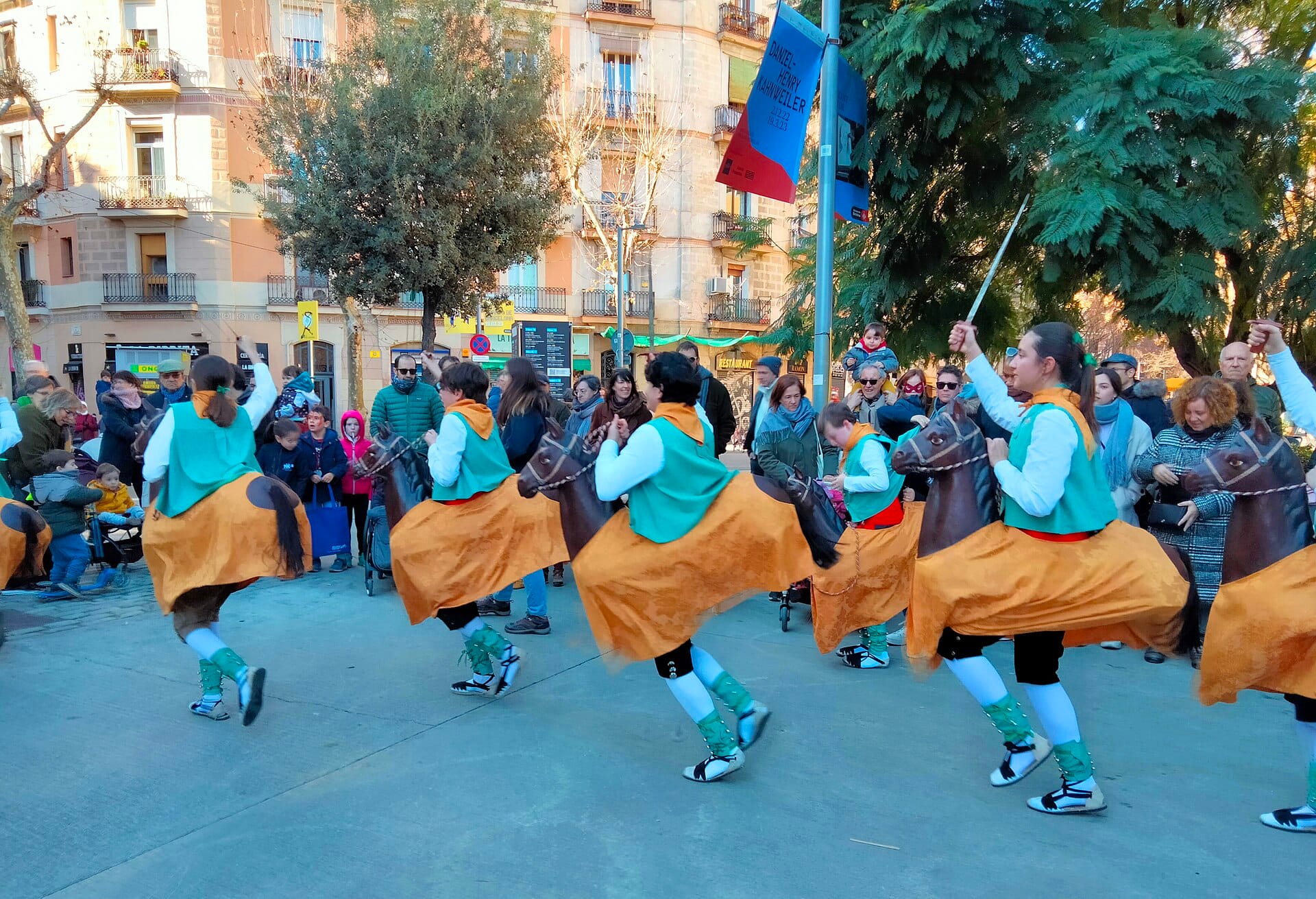
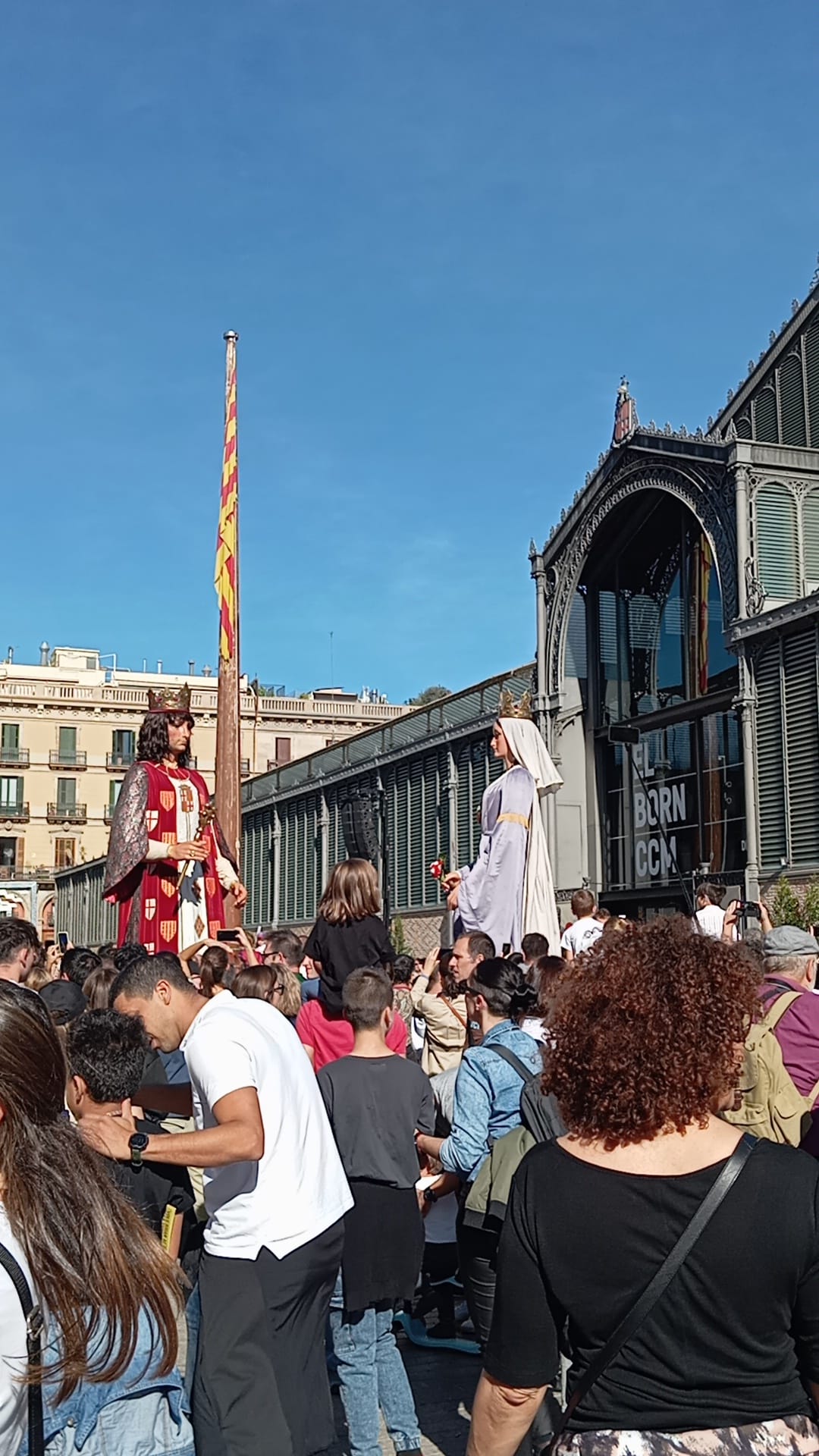
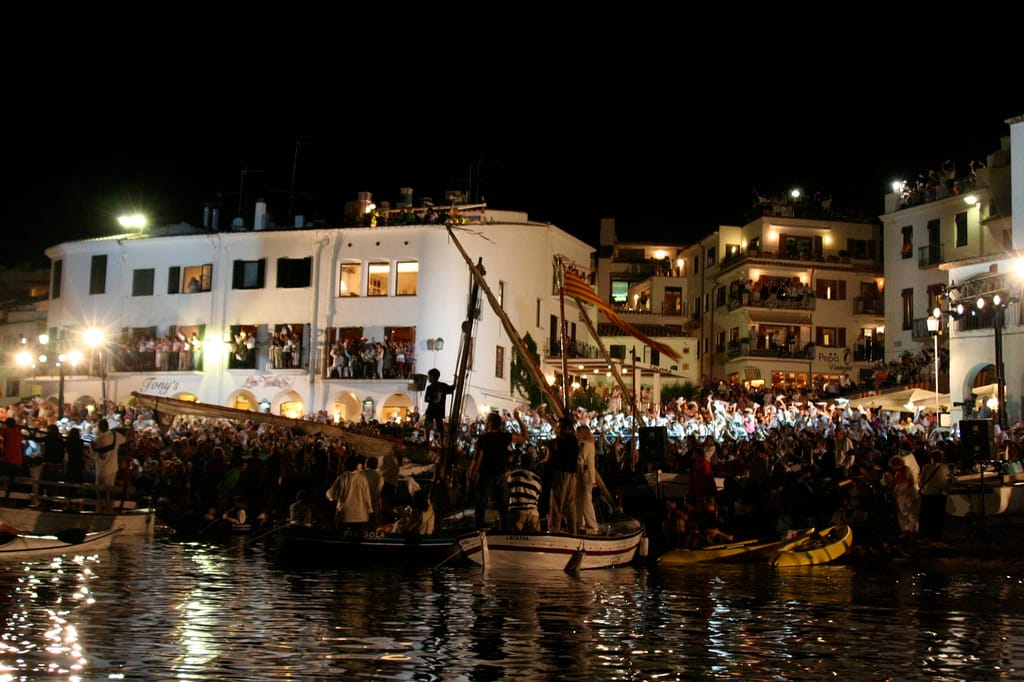
The Festa Major de la Barceloneta 2026 ran from Friday 25 September to Sunday 4 October. The seafront barri's own festa for its patron saint, Sant Miquel: a cannon that fires sweets, giants, decorated streets, a correfoc and havaneres sung on the sand. Free, small and almost entirely for the neighbours.
What it is
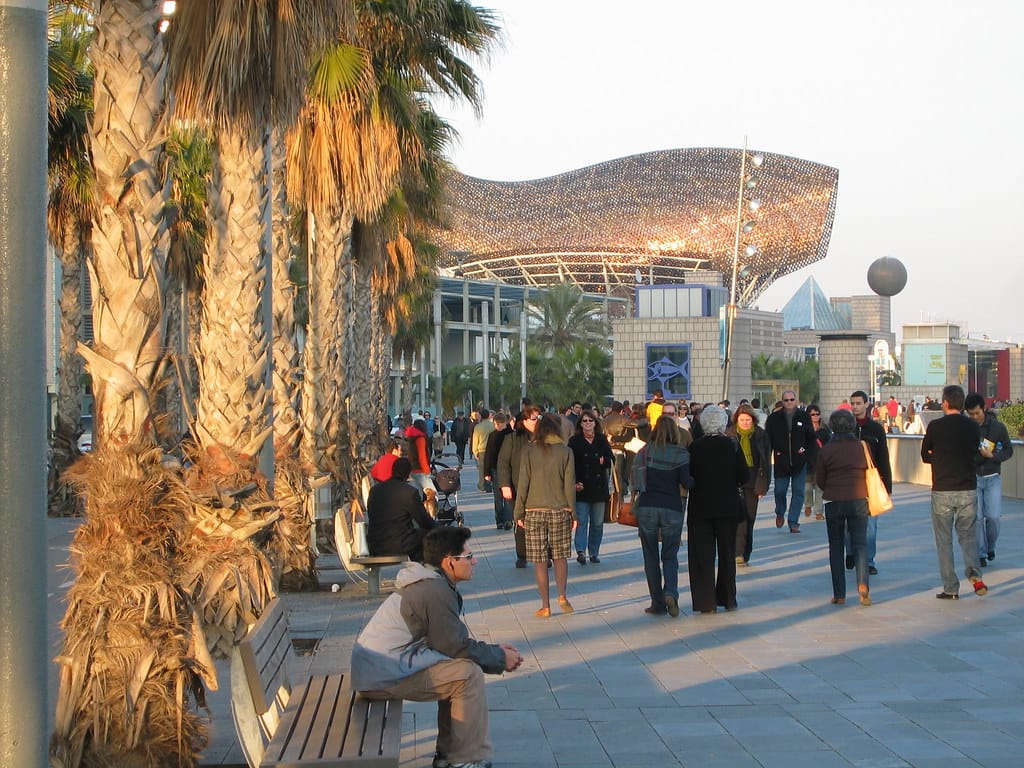
La Barceloneta is the only neighbourhood in Barcelona built to a single plan and then never allowed to grow. It was laid out in 1753 on reclaimed ground beside the port, to rehouse the families whose homes in the Ribera had been demolished to clear a field of fire for the Ciutadella fortress. The blocks are long, straight and shallow, the flats are famously small, and the sea is at the end of every street. It became the fishermen's quarter, and the festa is still recognisably a fishermen's festa.
The patron is Sant Miquel, whose parish church stands on the Plaça de la Barceloneta, so the festa falls around his day at the end of September. Records of it as an organised event go back to 1855, when the neighbourhood marked the centenary of its own construction. What began as religious services plus street dances turned, over the following decades, into the familiar kit: street committees, decorations, a pregó, brass bands, choirs, and the cannon.
The cannon
The Canó de la Barceloneta is the thing that makes this festa unlike any other in the city. It is a festive cannon, wheeled through the streets by a neighbour dressed as a Napoleonic general, and it fires sweets. Children follow it, and when it goes off they throw themselves theatrically to the ground before getting up to collect the sweets.
It was introduced around 1912 by Pancraç Farell, a Barceloneta resident who worked as a die-maker at La Maquinista. He had spent time in his wife's family village in France, seen something like it at their festival, and decided the barri should have one. There is an older and less certain account that traces it back to the mock naval battles staged near the church at Corpus, in which case the general is a survivor of those. Either way it has been going for more than a century, and the district's own description of the festa puts it on the streets at nine in the morning on Sant Miquel.
Why this one is worth the trip
The barri is about four streets wide. That changes what a festa feels like: a parade does not pass a crowd so much as pass through everybody's front room, and the sea is never more than a couple of minutes away, so the havaneres genuinely are sung on the sand rather than on a stage dressed to look like it.
It is also small, and shrinking in one respect. Fewer streets decorate themselves each year than once did, something the city's own cultural-heritage description says plainly. It has none of Gràcia's scale and none of its crowds. If Gràcia is the festa you go to in order to see something spectacular, this is the one you go to in order to see a neighbourhood being a neighbourhood.
One practical consequence of the calendar: several days of it overlap with La Mercè, the city's own festa major. Locals treat that as a point of pride rather than a clash, and it does mean you can put both into one trip.
Where it is
The barri is a triangle of narrow streets wedged between the port on one side and the beach on the other, with Passeig de Joan de Borbó running down the middle of it. It is about four streets wide, which is why a parade passing through is unavoidable rather than something you go and watch.
Metro: Barceloneta (L4).
What to plan around
The programme, day by day
The full programme is not published yet. The Festa Major de la Barceloneta programme is set by the street commissions and released by the organisers a few weeks before the festa, and it reaches the city's open event feed only after that. As of 27 October 2026 it had not.
Rather than guess the times from last year, this page lists only what is confirmed for 2026. The day-by-day listing appears here automatically once the programme lands, the same feed that powers our What's On in Barcelona pages.
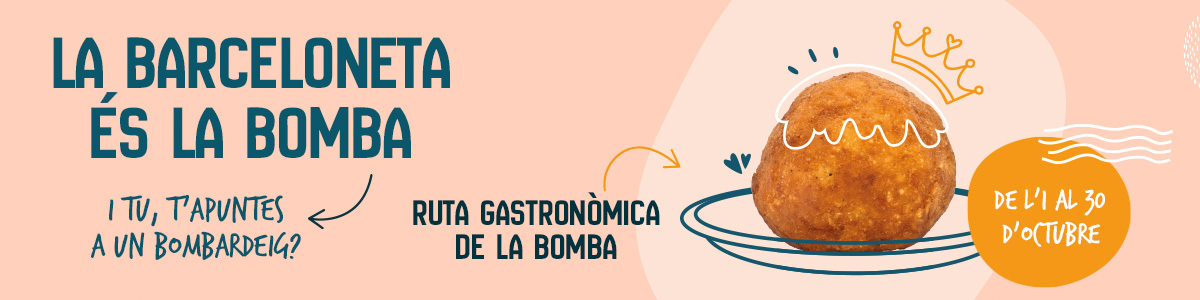
What the city's feed already carries for this festa: Exposició 'Receptes del passat per a salvar el futur' (10 September, 16:00); 6a edició de la Ruta Gastronòmica 'La Barceloneta és la bomba' (3 October).
Practical
Getting there. Metro Barceloneta on L4 puts you at the inland end of the barri, by the port; from there everything is within about ten minutes on foot, because there is not much more of it than that. Coming along the seafront from Ciutadella | Vila Olímpica, also L4, works well if you want to arrive by the beach. Do not plan on driving: the streets are narrow at the best of times and close for the parades.
What it costs. Nothing for the street programme. The parades, the cannon, the correfoc and the havaneres are all free, as is the music the street committees put on under their own decorations. You pay for food and drink, and generally at bars the committees run themselves.
Eating. This is one of the few parts of Barcelona where the seafood restaurants are the obvious choice and also the expensive one. The neighbourhood alternative is a vermut at one of the old bars inland of Passeig de Joan de Borbó, or whatever the street committees are cooking, which is usually the better story.
The beach is not the festa. La Barceloneta beach in late September is still busy with visitors who have no idea anything is happening two streets inland. The festa is in the grid, not on the sand, apart from the havaneres.
Correfoc rules, as everywhere. Cotton clothing with long sleeves, closed shoes, a hat if you have one, and keep your mouth closed. The streets here are narrower than in Gràcia or Sants, so there is less room to step out of the way.
It is a small barri with a lot of residents. The flats here are among the smallest in the city and the streets among the narrowest, so noise carries and patience is finite. The festa is theirs. Behave like a guest and you will be treated like one.
Where to check the programme
Programmes are published late and change. These are the sources we track, and we re-check them twice a day.
- Ciutat Vella districtthe district page for the barri's festa
- Cultura Popularthe council's record of the festa and its history
The rest of the calendar
Still to come
- Christmas in Barcelona28 November 2026 to 6 January 2027To confirm
- New Year's Eve in Barcelona31 December 2026
- Three Kings in Barcelona5 to 6 January 2027
Already held this year
- Festa Major del Poble-sec17 to 26 July 2026
- Festes de Sant Roc12 to 16 August 2026
- Festa Major de Gràcia15 to 21 August 2026
- Festa Major de Sants22 to 30 August 2026
- Festa Major de la Bordeta2 to 12 September 2026
- Festa Major de Vallcarca3 to 10 September 2026
- Festa Major d'Horta4 to 13 September 2026
- Festa Major del Farró5 to 13 September 2026
- Festa Major del Poblenou10 to 20 September 2026
- Festa Major de Vallvidrera10 to 20 September 2026
- Diada Nacional de Catalunya11 September 2026
- Festa Major de Verdun15 to 20 September 2026
- La Mercè23 to 27 September 2026
The complete festa majors guide has the full 2026 calendar, and What's On in Barcelona covers everything else in the city this week.
Some ticket links are affiliate links: Barna.News may earn a small commission if you buy through them, at no extra cost to you.