Update, 6th November 2026: The ministry’s impact assessment estimated storage costs between €9.24 million and €11.68 million, to be borne by olive mills, including around 265 in Catalonia. Unió de Pagesos argued the policy benefited large packaging firms buying oil below €3 per litre and highlighted Spain’s annual imports of 300,000 to 400,000 tonnes from non-EU countries like Morocco. The Siurana PDO called for urgent talks with the Catalan Ministry of Agriculture. Diari ARA reported.
Government Orders Temporary Withdrawal of 188,000 Tons
The Spanish government has mandated the temporary storage of 12% of olive oil production declared monthly by mills from November 2026 onward, in a move to prevent a market collapse due to oversupply. The measure, published in the Official State Gazette (BOE) on Friday 6th November 2026, marks the first time such a withdrawal has been applied on a mandatory, nationwide basis. According to the Ministry of Agriculture, Fisheries and Food, the withdrawal targets around 188,000 tonnes of oil. This action responds to forecasts of a 2026/2027 campaign yield exceeding 1,602,596 tonnes, a 23% increase from the previous year, combined with 357,040 tonnes carried over in stock, well above average.
Storage Until September 2027, Excluding October Production
The stored oil must remain off the market until 30 September 2027. Mills are required to withhold 12% of their accumulated monthly production from November onward, with oil produced in October excluded from the measure. Facilities may choose which category, such as extra virgin, virgin or other, to withdraw and whether to store it in-house or in external facilities. Mills must declare their production and stock volumes via the Olive Oil Markets Information System (SIMO) and retain documentation for verification. The Ministry will coordinate with regional authorities on inspections to ensure compliance.
Catalan Producers Express Concern Over One-Size-Fits-All Rule
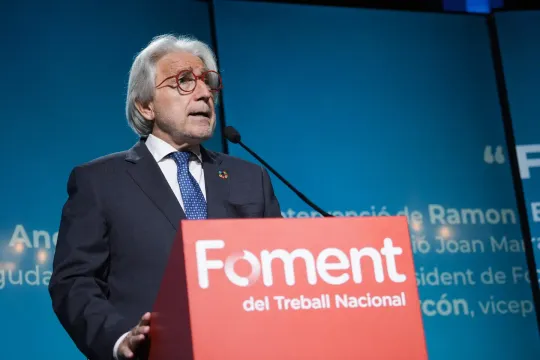
The regulation applies uniformly across Spain, despite differing regional conditions. In Catalonia, where olive yields are lower this year, producers argue the policy does not reflect local realities. Enric Dalmau, head of the Protected Designation of Origin (PDO) Les Garrigues, stated the law was designed for Andalusia’s surplus, not Catalonia’s smaller-scale output. He warned the rule could leave small Catalan producers with unsellable oil at home by mid-2027. Pere Albà, president of PDO Siurana, echoed the concern, saying the measure would not benefit Catalan producers and should first apply to imported oils from Tunisia, Portugal and Morocco. Lluís Cardona, vice-president of PDO Oli del Baix Ebre-Montsià, urged caution, noting the regulation is untested. While acknowledging current low prices, down 6% in the past month, he said it was too early to assess the impact.
Competition Watchdog Warns of Consumer Impact
The National Markets and Competition Commission (CNMC) has raised concerns that restricting supply could raise consumer prices and reduce product variety. Supermarket prices for extra virgin olive oil currently average €3.20 per litre, down from €5.00 a year ago, according to the Infaoliva Observatory. The Ministry may review the 12% threshold from 31 December 2026 and adjust it if market conditions change. The measure was triggered under EU and national rules allowing mandatory withdrawal when stock and projected output exceed 120% of the six-campaign average, a threshold now met.
What it means for you
- When: The measure takes effect from Friday 6th November 2026 and the oil must be stored until 30th September 2027.
- Where: The regulation applies throughout Spain, including Catalonia.
- Who is affected: Olive oil mills across Spain are required to store 12% of their monthly declared production.
Sources: 3Cat, elconstitucional.es.