Tax Deflation and Fiscal Relief Called For
Catalan business organisations Foment del Treball and Pimec have jointly called for the deflation of personal income tax (IRPF) to prevent inflation-linked salary increases from pushing workers into higher tax brackets. The demand, made on Friday 6th November 2026, forms part of a broader set of 1,129 policy proposals presented ahead of the upcoming general election on 29th November. Foment del Treball, led by president Josep Sánchez Llibre, has put forward 729 measures across 28 policy areas, while Pimec, under Antoni Cañete, has proposed 400 initiatives for the 2026–2030 legislative term. Both groups agree on the need for an annual legal update to IRPF tax bands and personal and family allowances, aligned with the revaluation rate applied to contributory pensions.
We need a simpler, more predictable system that favours productive activity.
, Mar Alarcón, Vice President, Foment del Treball
Key Proposals from Foment del Treball
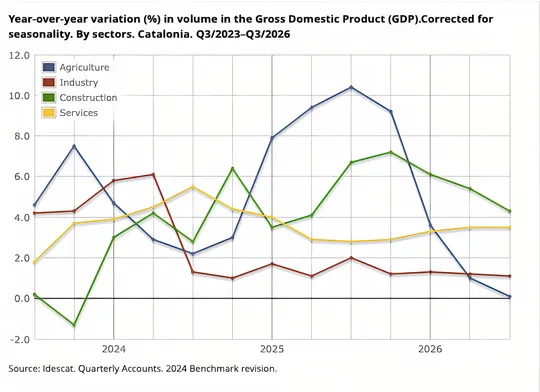
Foment’s fiscal platform includes abolishing the wealth tax and solidarity tax on large fortunes, reducing inheritance and gift taxes, and strengthening tax incentives for business profit reinvestment. The organisation also advocates for restoring objective dismissal for absenteeism and increasing the role of mutual insurance companies in managing medical leave processes, including diagnostics and rehabilitation. In infrastructure, Foment calls for an additional annual joint investment of at least €1.5 billion from the Spanish state and the Generalitat de Catalunya to address the region’s accumulated deficit. It proposes establishing a joint consortium to oversee project delivery. On energy, the group supports extending the operational lifespan of nuclear power plants where necessary for supply security and calls for a stable industrial policy to raise industry’s share of GDP to 20%. It also urges a state-level agreement to accelerate housing construction and urban planning permits.
Pimec’s Priorities for SMEs
Pimec’s 400-point programme, presented in Madrid, is structured around ten priorities and 22 action areas. It includes a proposed Business Growth and Dimension Law to remove regulatory penalties that apply when small firms increase turnover or staff. The association supports the same IRPF indexation mechanism as Foment and proposes tax incentives for profit reinvestment and business capitalisation. It also calls for a 35% reduction in administrative costs for SMEs over the next legislative term, to be achieved through a regulatory pause, procedural simplification, and mandatory impact assessments for new regulations affecting small businesses. Other demands include a legal framework to penalise late payments, a pact to improve employment stability, and improved access for SMEs to artificial intelligence, digital tools, and competitive energy pricing. Pimec also seeks a law on business representativeness to ensure that the most representative regional and SME-specific organisations have guaranteed roles in social dialogue, following its recent withdrawal from Conpymes amid institutional turmoil.
Sources: ABC, Generalitat de Catalunya, sitiosespana.com.