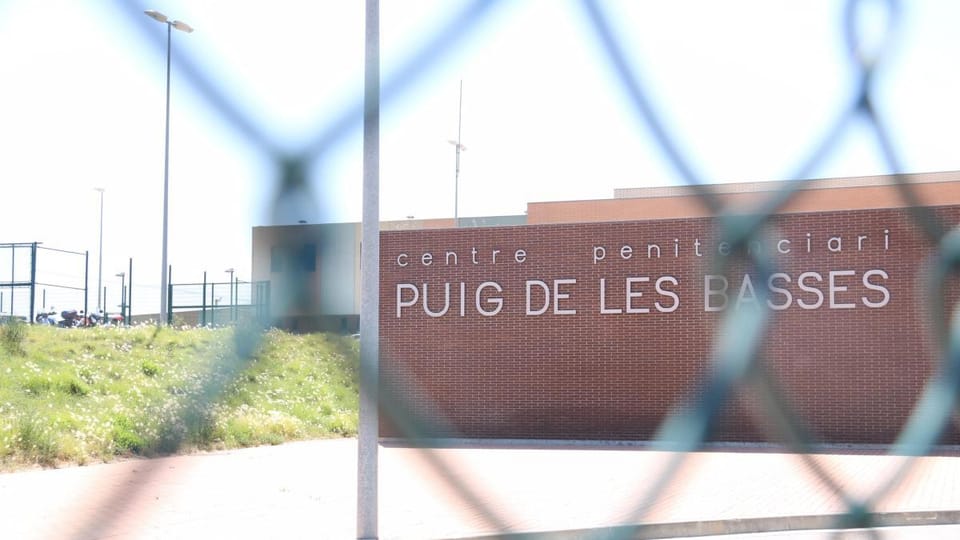
Jordi Oliveras has resigned as director of Puig de les Basses prison in Figueres, Girona, following a crisis of prisoner suicides within the Catalan penitentiary system. Five inmates have died by suicide across Catalonia this year, with three occurring at his facility.
Director's Resignation Becomes Effective
The Departament de Justícia i Qualitat Democràtica announced it would name a replacement in the coming days. Sources from the Conselleria explained that Mr Oliveras offered his resignation to the Secretaria de Mesures Penals i Reinserció several days ago. His resignation became effective recently.
Prison sources told La Vanguardia that the number of inmate suicides in Catalan prisons this year prompted Mr Oliveras's decision. "The director considered it honest to offer his resignation to the Secretariat, and both the Secretariat and the Department saw the change as appropriate," these sources indicated. The Departament de Justícia i Qualitat Democràtica and the Secretaria de Mesures Penals i Reinserció thanked Mr Oliveras for his years of service at the prison.
Recent Suicides in Catalan Prisons
The most recent suicide at Puig de les Basses occurred on Monday, 27 April. A 28-year-old man, serving a three-year sentence for assaulting an authority figure, died. This inmate was in the special closed-regime department and would have completed his sentence in January 2028, the Govern confirmed.
Judicial authorities have opened an investigation to clarify the circumstances of his death. The prisoner did not have a suicide prevention protocol activated at the time, as no indicators had been detected to justify it, the same source stated. This raises questions about the identification of at-risk inmates.
A Series of Tragic Incidents
The first prisoner suicide in Catalonia this year happened on 20 February, also at Puig de les Basses. A 42-year-old man, a bar owner from El Port de la Selva, Girona, had been arrested for fraud, El País reported. The second occurred on 3 March, again at Puig de les Basses.
On the same day, 3 March, a third suicide took place at Quatre Camins prison in La Roca del Vallès, Barcelona. This 24-year-old inmate had attempted suicide just two days prior in his cell, according to Público. The fourth incident happened in the early hours of 16 April at Ponent penitentiary centre in Lleida.
A 79-year-old man, who had allegedly murdered his son-in-law, a member of the Mossos d'Esquadra Catalan police force, in October, took his own life inside his cell. The fifth and most recent suicide was the one on Monday at Puig de les Basses. These incidents highlight a disturbing trend across the region's correctional facilities.
Context of Catalan Prison System
Catalonia's prison system, managed by the Generalitat, houses over 8,000 inmates across its facilities. These prisons face ongoing challenges, including overcrowding and mental health provision. The high number of suicides highlights significant concerns for inmate welfare and the effectiveness of current prevention measures. This situation affects not only inmates and their families but also the staff working within these demanding environments.
According to the latest annual prison statistics report (SPACE) published in 2024 by the Council of Europe, six prisoners died by suicide in Catalonia in 2023. This figure was part of 41 suicides across Spain. This represents a decrease from 2022, when 13 inmates died by suicide in Catalonia and 48 nationwide.
Fluctuating Suicide Rates
In 2021, 11 prisoners died by suicide in Catalonia (46 in Spain), and another 11 in 2020 (62 across Spain). Consequently, the suicide rate per 10,000 inmates has also varied. The same source reported Catalonia's rate as 7.5 in 2023 (7.2 in Spain).
The rate was 16.8 in 2022 (8.6 in Spain), marking the worst year since 2020 for these figures. In 2021, the rate stood at 14.3 (8.3 in Spain), and in 2020, it was 14 (11.3 across Spain). These statistics show a fluctuating but persistent challenge within the prison system, demanding continuous attention and reform.
Looking Ahead for Catalan Prisons
The incoming director will face immediate pressure to address the rising suicide figures and review existing prevention protocols. This situation highlights the urgent need for enhanced mental health support and improved inmate monitoring across all Catalan correctional facilities. Effective strategies are critical to ensure the safety and well-being of prisoners in the region.
Come and join our Barcelona English Speakers community on WhatsApp.
Originally published by La Vanguardia Catalonia. Read original article.