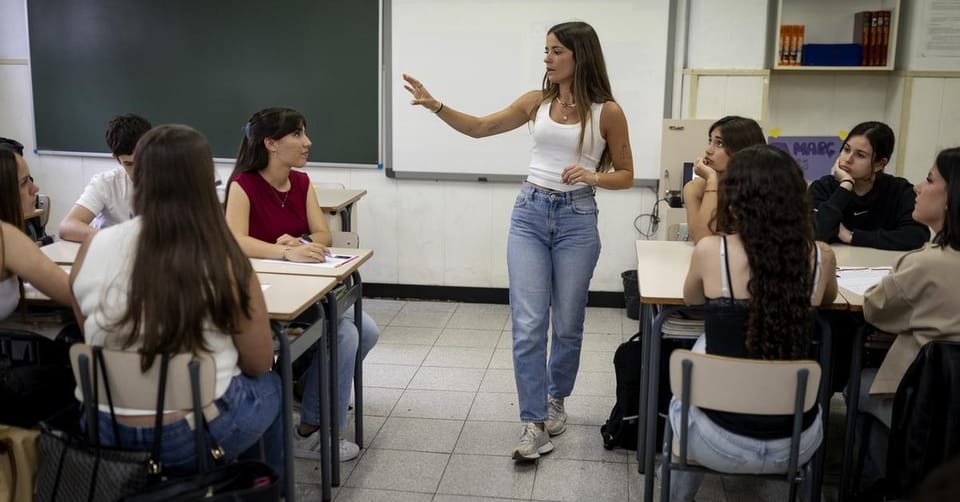
Nadia Casanova, a teacher at Col·legi Liceu Castro de la Peña in Barcelona, observes how seemingly harmless playground comments can escalate into serious school bullying, stressing the often-overlooked power of words. She notes that verbal aggression, such as "You're useless" or "You play like a girl," can significantly damage a student's self-esteem.
Casanova explains that many bullying incidents arise from a lack of boundaries in common student jokes. These comments often reflect racist, homophobic, and sexist content students see on social media, fostering stigma. She points out that there is very little awareness of the power words hold.
Addressing Verbal Harassment in Schools
Casanova emphasises that playgrounds and class changes are common settings for unfiltered, impulsive comments. Students feel freer in these spaces and do not always consider their words. She advocates for teaching respect and assertive communication before bullying becomes entrenched.
"It's not only important to act when there's a serious and real incident, but also to make them understand beforehand that how they communicate has a consequence for others," Casanova stated. This proactive approach aims to prevent harm before it escalates.
The Somos Únic@s Programme in Catalonia
Casanova participates in the "Somos Únic@s" programme, which trains students in bullying prevention. This initiative started in the 2022-2023 academic year. Casanova joined for the 2025-2026 academic year when the programme expanded to secondary schools.
Her school is one of 102 Catalan schools involved, reaching 8,524 students. Data from Fundació ColaCao and Universidad Complutense de Madrid indicates that nearly two students per class experience bullying across Spain.
Building Self-Esteem and Reporting Incidents
The "Somos Únic@s" programme uses group dynamics and teaching materials to address self-esteem, peer pressure, and fear. It encourages students to express their thoughts and to speak up if they witness bullying. Casanova highlights a common barrier: "Many times they feel that if they tell teachers things, it's because they are 'snitches'."
She added, "We try to make them understand that when you explain something, it's to ask for help." This preventive work also helps with general conflict resolution in the classroom. The programme focuses on creating a supportive environment where students feel safe to report issues.
New Challenges from Online Bullying
Casanova has noticed increased difficulty in addressing modern adolescent influences. She cited the rise of private, anonymous social media accounts used for offensive comments as a new dynamic. These online behaviours have sometimes overwhelmed educators, though prevention efforts continue.
"It's also true that I think there's more awareness now, and that means more things are explained than before," she admitted. This increased openness helps identify problems earlier. However, the digital landscape presents ongoing challenges for schools.
With the education sector under pressure, including the recent announcement of plainclothes Mossos d'Esquadra in fourteen schools and institutes, Casanova questions the effectiveness of relying solely on authority figures. She recalled the "COCOBE" figure, designed years ago to promote emotional well-being, coexistence, and group conflict resolution, as a well-conceived alternative. This approach focused on internal school dynamics rather than external policing.
Come and join our Barcelona English Speakers community on WhatsApp.
Originally published by Ara Cat. Read original article.