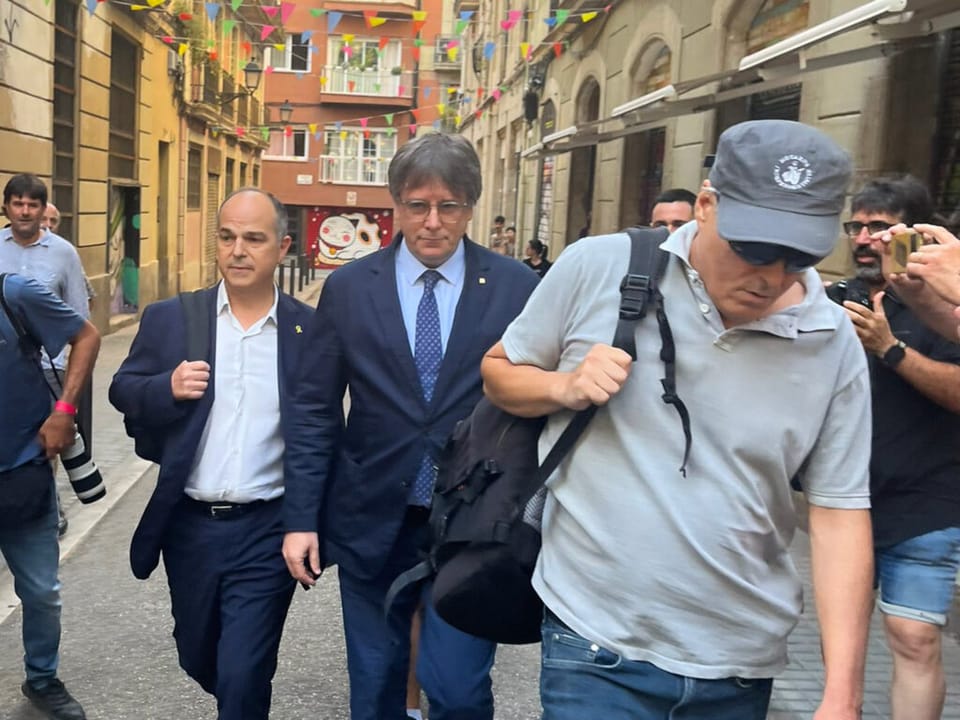
A Barcelona judge has archived the 20-month investigation into three Mossos d'Esquadra agents accused of helping former Catalan President Carles Puigdemont during his return to the city on 8 August 2024. Judge María Antonia Coscollola closed the case this week, finding no evidence that the officers committed a crime of concealment. This ruling ends a period of intense scrutiny and disciplinary action for the agents.
Disciplinary Action and Public Scrutiny
The investigation began after Puigdemont's brief reappearance in Barcelona, following his exile. Prosecutors accused the three agents of actively assisting Puigdemont to avoid arrest. The agents had reportedly provided protection to Puigdemont, a right he holds by law, but which the Spanish state has denied.
However, the judge's decision contradicts earlier statements made by the Mossos d'Esquadra's leadership. Former Chief Commissioner Eduard Sallent stated at the time that the agents had shown "reprehensible and unacceptable behaviour" and "did not deserve to wear" the uniform. He claimed they had "hindered the force's actions." The Mossos' internal affairs division immediately opened disciplinary proceedings against them. This led to the suspension of pay and employment for two agents, and the reassignment of the third, according to Catalan independence movement context. This situation lasted for months until their eventual readmission and temporary suspension of the internal file.
Far-Right Involvement and Arrests
The agents faced public stigmatisation, with their identities, careers, and personal affiliations reportedly leaked to right-wing and far-right Spanish media. Their arrests on 8 and 9 August 2024 were described as harsh, including vexations. Images circulated showing them near Puigdemont, which, combined with their ideological affinity, made them suspects. One agent was arrested in the morning, another in the afternoon, and the third the following day. Police detained them at their homes or holiday locations.
The judicial process was largely driven by far-right organisations, including Vox and Hazte Oir, using the figure of "popular accusation" in the Spanish legal system. This mechanism allows private entities to participate in criminal proceedings. The Mossos d'Esquadra also provided reports and photographs, at times reportedly pressuring the judge to expedite the investigation. They requested the interception of the agents' mobile phones to check for communications with Puigdemont.
Judge Finds No Evidence of Wrongdoing
However, investigators found no evidence of such contact. The judge's ruling states that the mere "circumstantial presence" of the agents with Puigdemont does not constitute concealment. She found no active conduct by the agents aimed at "hiding, providing material aid in the escape, or eliminating evidence." Furthermore, the judge found no abuse of public functions, meaning they did not use their positions improperly.
Crucially, the ruling highlighted that none of the three agents were on duty at the time of the events. One was on holiday, another on sick leave, and the third was on days off. "They were not exercising their functions nor did they have direct competence to act," the judge noted. This means they received no direct order to arrest Puigdemont that they could have disobeyed. The judge's decision directly refutes Sallent's claim that they "hindered the force's actions."
Broader Context and Future Steps
The atmosphere surrounding Puigdemont's return was tense. The "Operation Cage" deployed to try and arrest Puigdemont was disproportionate. Police also used charges and pepper spray against demonstrators attempting to access Ciutadella Park. A suspicious leak of a non-existent arrest warrant against Jordi Turull added to the confusion.
This case echoes previous situations involving Mossos agents linked to the independence movement. Sergeant Lluís Escolà was eventually amnestied after facing charges. Two other Mossos, Xavi and Carles, who accompanied Puigdemont during his arrest in Germany, were acquitted after a lengthy process in the Spanish National Court. These officers also faced constant repression and public targeting.
While the archiving of the case is a significant step, it is not yet definitive. Far-right accusations could still appeal the decision. Moving forward, the Mossos d'Esquadra must decide whether to permanently close the internal disciplinary files against the three agents. Many observers believe the agents deserve recognition and reparation, not only for being cleared of wrongdoing but also for highlighting what some consider an anomalous functioning of parts of the Spanish judiciary.
Sign up for our new entrepreneurs community Bizcelona, now accepting our second wave of applicants.
Originally published by VilaWeb Feed. Read original article.