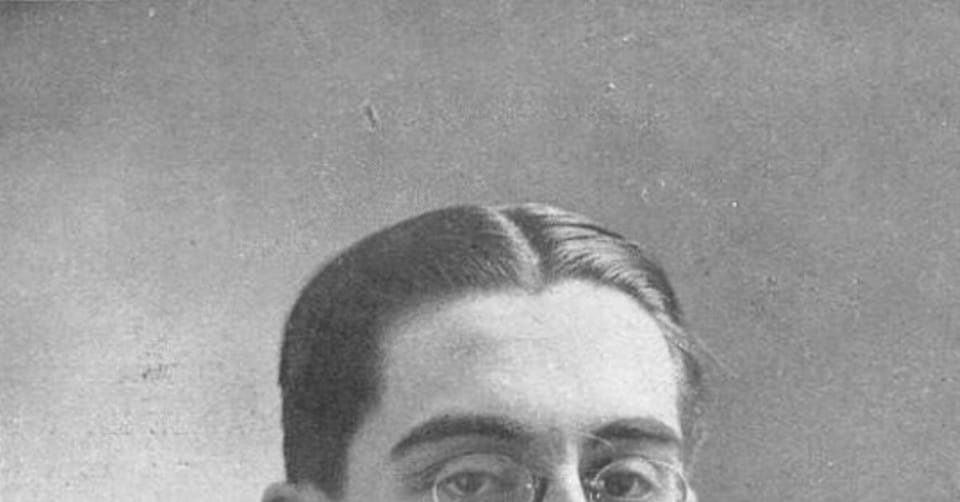
Edicions de la Universitat de Barcelona has published "Teatre inèdit de l'exili" (Unpublished Theatre of Exile). This new volume features three previously unperformed plays by Ambrosi Carrion. Carrion was a prominent Catalan playwright who lived in exile. The publication aims to revive the legacy of a writer. His extensive work remained largely in the shadows for decades.
Carrion (Sant Gervasi de Cassoles, 1888, Cornellà de Conflent, 1973) produced over 30 literary works. These included 15 unpublished stage texts. Despite his prolific output, only one of his plays written during exile, "La dama de Reus", saw a Catalan stage production. This happened in 2008 at the Teatre Nacional de Catalunya. Josep Camps Arbós and Francesc Foguet Boreu, professors, prepared the new volume. They highlight Carrion's importance.
"Carrion was already a prominent author during the Modernist period," Foguet states. "His work continued through the interwar period and into exile. He must be a classic." Foguet places Carrion alongside major Catalan figures. These include Àngel Guimerà, Josep Maria de Sagarra, and Ignasi Iglésias.
Carrion's theatre often explores passionate conflicts with tragic outcomes. His works are preserved at the Biblioteca de Montserrat. His characters frequently face complex moral dilemmas. "He wanted to bring universal values to Catalan theatre," Foguet explains. "He aimed to make it comparable to contemporary European theatre." Foguet adds that a defining aspect of Carrion's work was his boldness. He addressed themes considered difficult for the morality of his era. The newly published volume includes "Els camins d'Antígona" (1939), "Nit d'embruixament" (1945), and "L'àngel negre" (1959). These three texts represent Carrion's trajectory. They also show high quality.
Daring Themes from Exile
"Els camins d'Antígona" features a protagonist with an obsessive love for her father. She re-enacts the Antigone myth and ends in self-immolation. "Nit d'embruixament" takes place on St. John's Eve. A soldier returns from war and faces a death sentence for desertion. This play conveys a pacifist message. It is set within the context of the Second World War. "L'àngel negre" offers stark realism. It centres on Father Ramon, a luxurious and reactionary priest in Alp. He obsesses over destroying the Republic. He also tries to separate Maria, a refugee woman, from Arnalot, the man she loves.
Writing from exile allowed Carrion complete creative freedom. "The great positive aspect of writing from exile is that he did so with total freedom," Foguet says. "If it had been written from Catalonia, 'Els camins d'Antígona' would most likely not be so daring." Professor Camps notes that "the first page of 'L'àngel negre' would not have passed censorship. However, Carrion did not want to lower his standards." Before his exile, Carrion already tackled sensitive subjects for the time. These included clandestine abortions.
A Life Dedicated to Catalan Culture
Carrion never stopped writing. He always hoped for a return to Catalonia. He refused opportunities to publish his texts in Spain without a guarantee against censorship. He also declined to return to Catalonia when he could have. He stated he did not want it to be "in a Francoist Spain," Camps explains. Catalanism and cultural activism shaped the playwright's life. He published articles in the Catalan press across France and America. He presided over the Casal de Catalunya in Paris from 1964. In 1967, he delivered the opening speech for the first Catalan Book Festival in the French capital.
The last 30 years of Carrion's life passed in a concierge's lodge. This was near Odéon Square in Paris. "The concierge was his wife; he helped her," Camps recounts. "They lived in a small apartment, full of Catalan books. It had a death mask of Iglésias and a large painting of Guimerà." People who knew his pre-war importance were surprised. They saw him living in such precarious conditions. Until recently, Carrion's burial place remained unknown. "A couple of years ago, we discovered his tomb is in Prada de Conflent," Camps adds. "It is very close to Pompeu Fabra's."
Future for Carrion's Works
Carrion's widow played a key role in bringing "La dama de Reus" to the stage. "She decided to donate her husband's legacy to Catalonia," Camps explains. "But she asked for a Carrion play to premiere at the TNC in return." Ramon Simó directed the production. Maria Molins and Manel Barceló starred in it. Foguet and Camps detail the plots and main aspects of the unpublished works in "Teatre inèdit de l'exili". All of Carrion's works are well-preserved at the Biblioteca de Montserrat. "There are no excuses not to perform them," Camps concludes. He suggests a future for these rediscovered plays on Catalan stages.
Come and join our Barcelona English Speakers community on WhatsApp.
Originally published by Ara Cat. Read original article.