Bar La Plaza, a historic literary hub in Barcelona's Eixample district, has permanently closed its doors after 54 years. This closure marks the end of an era for a significant gathering place, once frequented by the city's 'Eixample Bloomsbury group' of writers and intellectuals.
The bar, located at number 4 Plaça Tetuán in the Eixample Right neighbourhood, opened in 1970. Its second-generation owners recently retired, leading to the establishment's closure, Metrópoli Abierta reported. For decades, it served as a central meeting point for many prominent figures in Catalan literature and journalism.
Carrer Bailén and its surrounding streets formed the core of this literary circle, often compared to London's original Bloomsbury Group. No other street in Barcelona has seen such a concentration of authors living in close proximity. This area fostered a unique intellectual community.
A Literary Gathering Place
Many notable writers resided in the same building at Carrer Bailén 37. These included Víctor Mora (1931-2016), creator of the popular comic character Capitán Trueno, and the feminist writer Montserrat Roig (1946-1991). Journalists Gregorio Morán (born 1947) and Antonio Rubio (born 1951) also lived there. Further along, at the intersection with Gran Via, lived Xavier Vinader (1947-2015), a symbol of free expression. This spot is notably opposite where a tram fatally struck Antoni Gaudí.
Manuel de Seabra (1932-2017), a translator of Catalan and Portuguese literature, resided on the other side of the intersection. Higher up Carrer Bailén, the critic and editor Josep Maria Castellet (1926-2014) lived. He proudly declared himself an "Eixample resident from a Bailén corner. I am from Bailén." His neighbours included playwright Benet i Jornet (1940-2020) and novelist Juan Marsé (1933-2020).
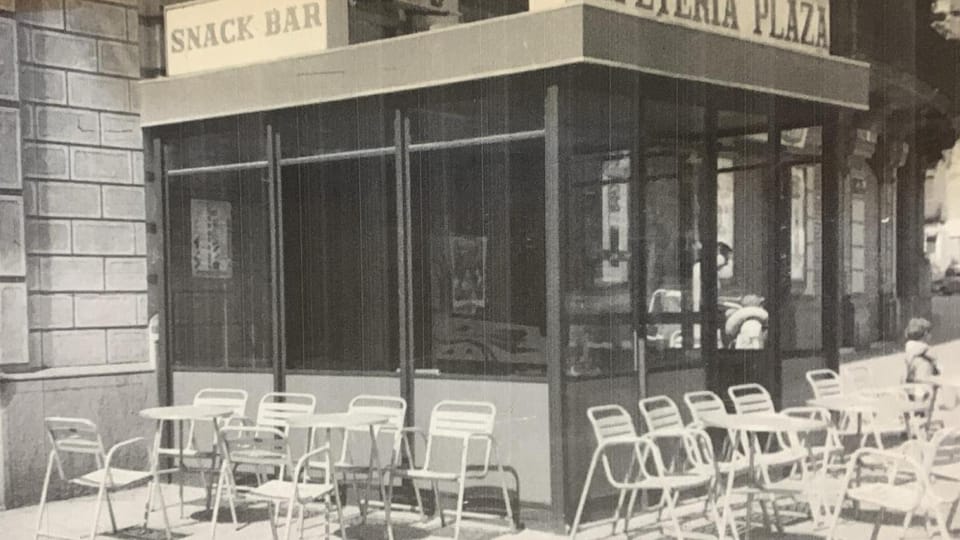
Many other friends and colleagues also passed through the area. These included singer-songwriter Ovidi Montllor (1942-1995), the versatile writer Terenci Moix (1942-2003), and journalists and novelists Maruja Torres (born 1943) and Rosa Montero (born 1951). The bar itself featured a beautiful canopy, offering prime views of Gran Via, Plaça Tetuán, and Passeig de Sant Joan. It evoked the atmosphere of Parisian cafés, reflecting Barcelona's historical admiration for Paris.
Changing Urban Landscape
However, the urban landscape around Bar La Plaza began to change significantly in 2004. Mayor Joan Clos and his urban planners ordered the removal of canopies across the city. Subsequent City Councils replaced these with temporary terraces and umbrellas. Many found these new structures unattractive and uncomfortable. They often placed tables next to busy roads, rubbish bins, and cycle lanes, creating ongoing disputes with local guilds, businesses, and residents.
Valencian couple Vicent Benavent and Amparo González originally established the Cafetería Snack Plaza. Their son, Josep Lluís, and his wife, María José Barduena, then ran the bar until its recent closure. They served as valuable chroniclers of that bygone era. The bar offered family-style, practical cuisine and provided a welcoming space for literary discussions.
Josep Lluís recalled the past splendour of Plaça Tetuán. He stated, "There were fancy restaurants, an antique shop, a bookshop, a gambling venue, a pastry shop, a luxury car dealership, a classic grocery store, a frame manufacturer..." Only their small bar remained from that vibrant past. The opening of the new Vila Olímpica as a centre for fashion and leisure drew people away, starting the decline of this elegant part of the Eixample.
A Legacy of Nostalgia
Montserrat Roig once warned that "something is being lost: the forms, the elegance and the correctness." Plaça Tetuán held many personal memories for residents. Josep Lluís remembered, "It's where all the girls on this side had their first kiss. It's a square with a lot of personal history. We used to pass around photos of the Beatles or Paul Anka..."
Despite the deep affection for the past, Roig also wrote, "Nostalgia is very beautiful, but it only serves for literature." The closure of Bar La Plaza represents a tangible loss of a piece of Barcelona's cultural heritage. Its final days saw embraces, flowers, photographs, and María José's last secret lemonade, marking the end of an important chapter for the city's literary community.
Sign up for our new entrepreneurs community Bizcelona, now accepting our second wave of applicants.
Originally published by Metrópoli Abierta - Urban Life. Read original article.