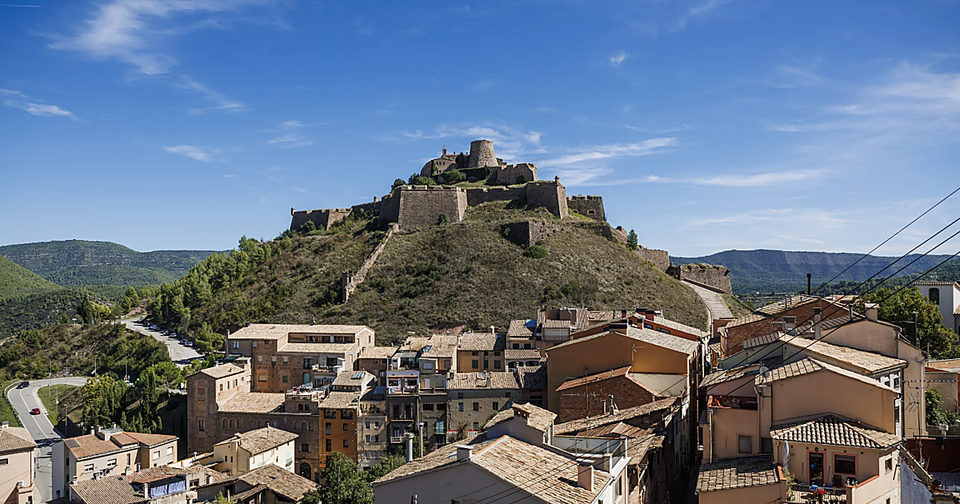
Cardona, a medieval town in the Bages comarca, offers a compelling day trip from Barcelona, featuring one of Catalonia's most imposing castles and a unique Salt Mountain. This historic destination, located approximately 90 kilometres from the Catalan capital, once served as a filming location for Orson Welles' acclaimed movie, "Chimes at Midnight."
The town's historic centre, recognised as a National Cultural Asset of Interest, extends at the foot of the castle. Narrow streets, charming squares, and ancient buildings reflect Cardona's centuries-long importance as a strategic point. The main feature of any visit is the Castle of Cardona, considered one of Catalonia's most significant fortresses. Its commanding position offers panoramic views of the surrounding landscape.
During the Middle Ages, the castle was home to the powerful Lords of Cardona, who were known as the "Kings without a Crown" due to their vast wealth and influence. Inside the castle walls, visitors find the Collegiate Church of Sant Vicenç, a notable example of Catalan Lombard Romanesque architecture, according to Cardona Castle Wikipedia article. This church dates back to the 11th century and showcases impressive structural and decorative elements.
Orson Welles' Filming Location
The castle also holds a special connection to cinema history, drawing film enthusiasts to the area. In October 1964, the legendary director Orson Welles filmed parts of "Chimes at Midnight" there. Welles himself considered this adaptation of Shakespeare's Falstaff stories his masterpiece. The arrival of the American filmmaker and his crew transformed Cardona, turning the castle into a large period film set for several weeks. This event brought international attention to the quiet medieval town. Today, guided tours specifically focus on anecdotes from that famous shoot, allowing visitors to walk in Welles' footsteps.
The Unique Salt Mountain
Beyond the castle, Cardona also attracts visitors with its Salt Mountain, a distinctive natural phenomenon. This geological wonder is one of the municipality's main attractions, formed over millions of years. The former mining area now functions as a cultural park, offering an educational and visually striking experience. Here, visitors can enter a gallery deep inside the mountain and explore the unique shapes, vibrant colours, and intricate veins of the massive salt deposit. The constant geological movement continues to shape the mountain, making it a living landscape.
Getting to Cardona from Barcelona
Cardona sits just over an hour's drive from Barcelona, making it an accessible destination for a day trip or a short break. The usual route involves taking the C-58 motorway towards Terrassa and Manresa. Drivers then continue on the C-55 directly to Cardona. According to Cardona Tourism, the journey covers about 90 kilometres from the Catalan capital. This convenient distance allows for comfortable travel, enabling visitors to explore the town's attractions and return to Barcelona within the same day.
For public transport, Cardona does not have a train station, but visitors can reach it by bus. The regular Barcelona-Andorra line stops directly in Cardona, with several daily services operated by ALSA. This provides a direct link from the city centre. Another option involves travelling by train or FGC (Ferrocarrils de la Generalitat de Catalunya) to Manresa first. From Manresa, local connecting buses provide onward travel to Cardona, ensuring a smooth journey for those without a car.
Cardona offers a rich blend of history, culture, and natural beauty. Its well-preserved medieval charm and significant cinematic legacy provide a memorable escape from city life. This accessible destination continues to draw those seeking a deeper understanding of Catalonia's past and unique geological landscapes.
Come and join our Barcelona English Speakers community on WhatsApp.
Originally published by ABC Cataluña. Read original article.