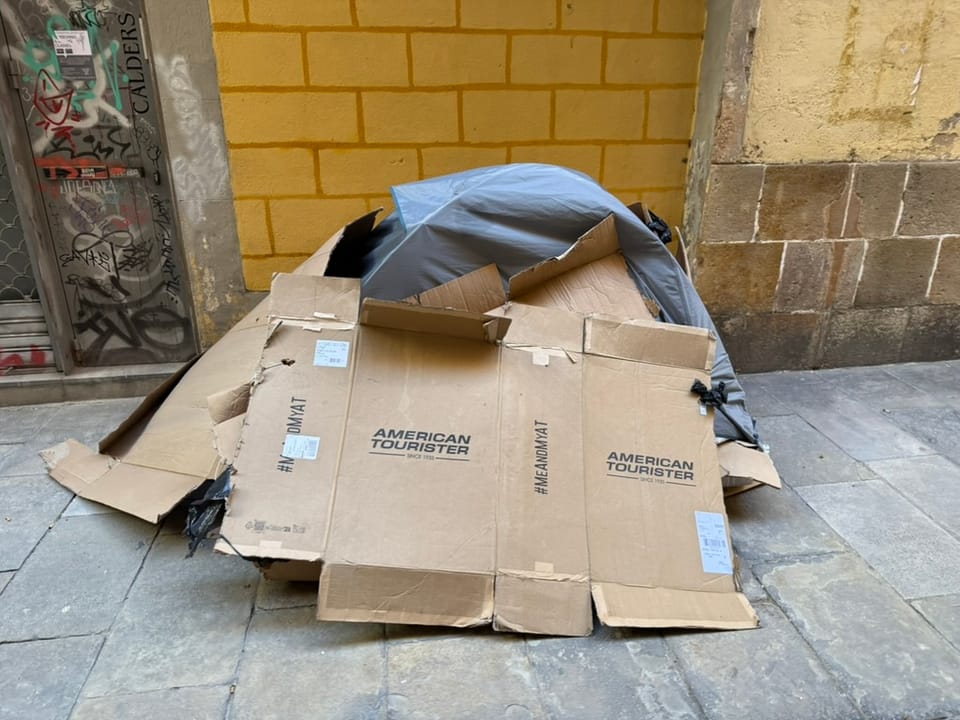
Barcelona’s ombudsman, David Bondia, has launched a pilot initiative called the Zero Street Plan aiming to substantially reduce the number of people sleeping on the streets within 18 months. The plan will be tested in one neighbourhood in Barcelona and one in L'Hospitalet de Llobregat, with the goal of demonstrating a replicable model to achieve zero rough sleeping.
Bondia, who began his second five-year term in July 2026 after being reappointed by the Full Council with support from Junts, PSC, BComú, and ERC, presented the plan to Mayor Jaume Collboni and municipal groups. The initiative calls for coordinated action between housing and social services, civil society organisations, and the private sector, including engagement with PIMEC, the Barcelona Bar Association, and La Caixa Foundation.
Under the plan, a unified census of homeless individuals across Catalan municipalities is required, ensuring data protection while enabling better coordination. Each person would be assigned a personal support manager within 48 hours to help access housing, benefits, and administrative services. A shared list of available protected housing units, drawn from public, private, and non-profit sources, would allow individuals to use existing benefits for social rent.
Mediation and Critique of Fines
Bondia has also been active in mediating housing conflicts, including ongoing negotiations involving tenants at Bloc Sant Agustí and Bloc Papallona with the investment fund New Amsterdam Developers. He stressed the need for the city to act preventively, warning that unresolved cases could drag into 2027.
We understand that eviction is necessary because a settlement is substandard housing and entails security problems for those who live there, but you have to offer something better than what they have. And that is not happening.
He criticised the city’s civility ordinance, stating that imposing street fines on homeless individuals “is a mistake” and urging exploration of alternative, supportive measures instead of sanctions.
Call for Systemic Change
Bondia called for a broader reflection on housing policy, particularly the role of investment funds in acquiring residential properties for non-residential use. He highlighted neglected areas like Besòs and Trinitat Vella, arguing that recovery and rehabilitation of existing housing stock are as vital as new construction.
The ombudsman’s office has issued formal recommendations against evicting informal settlements without providing adequate alternatives, including a recent resolution concerning a settlement in La Sagrera. Bondia insists that temporary removals without long-term solutions only perpetuate instability.
Sonia Fuertes, Barcelona’s Commissioner for Social Action, acknowledged the importance of the Zero Street Plan, stating it “must be analysed and, if necessary, implemented,” while affirming the city’s social services’ expertise.
Primary sources: Barcelona City Council. Reported by naciodigital.cat, beteve.cat, barna.news, elnacional.cat, elperiodico.com, en.ara.cat, elpais.com, ara.cat.