Barcelona's emergency medical service, Sistema d'Emergències Mèdiques (SEM), has cancelled a shuttle bus service connecting its former headquarters to its new central building in L'Hospitalet de Llobregat. The decision came after the service averaged just four passengers daily during its trial period. This move prevents a potential expenditure exceeding 700,000 euros.
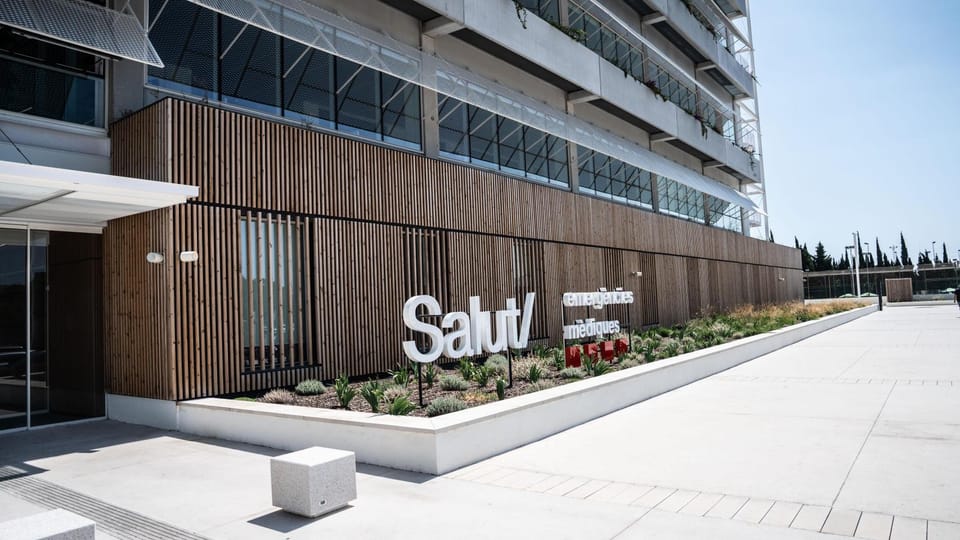
The shuttle service operated between 27 November and 25 February, a period of full occupancy at the new facility. CatSalut initially introduced the service to address mobility needs for approximately 1,400 workers. These employees were consolidating from two metropolitan centres into the new 22,500 square metre building. The new site is located within the Duran i Reynals hospital complex in the Biocluster of Innovation and Health.
Concerns about limited parking around the new L'Hospitalet site prompted the shuttle's introduction. The works council also criticised the Conselleria, led by Olga Pané, for not providing a dedicated car park at the new centre, according to Barcelona Public Transport Operator. However, data collected during the trial showed minimal worker uptake.
Low Ridership Prompts Cancellation
The public body withdrew the service after its trial, managed through emergency contracts. Usage data from the first weeks of full building occupation revealed the contract's impracticality. In total, the service recorded only 312 journeys across its four available shifts. This represents a mere 0.38% of the vehicle's total capacity. Despite 356 workers registering for the application, the average daily usage was just four seats. The 02:15 shift, intended for early morning staff, remained completely empty on every occasion.
An internal report issued by CatSalut, seen by Metrópoli, stated, "The service does not respond to a real public utility that justifies its long-term contracting." This assessment underscored the lack of demand. The report further highlighted the financial implications of continuing the service.
Initial Parking Concerns Proved Erroneous
The shuttle's route was a circular return journey with nine stops. It connected five key locations. These included the Fira de Barcelona car park and SEM's former headquarters on Pablo Iglesias street. Other stops were Plaza de la Cultura and the Rodalies de Bellvitge-Gornal station. The route ended at the new central building.
CatSalut's report, however, acknowledged that initial parking forecasts were "erroneous in practice." It noted that private vehicle congestion only occurred during weekday mornings. The Conselleria's text explained, "The natural adaptation of workers and the availability of spaces in the area have caused the shuttle service to lose its original logistical purpose." Workers found alternative parking solutions.
Avoiding Significant Public Expenditure
Given the minimal worker use, SEM decided against awarding the long-term contract. The estimated value of this contract, including potential extensions, exceeded 700,000 euros. The CatSalut report concluded, "Maintaining the awarding of a service with practically zero use would mean a waste of budgetary resources." This decision reflects a commitment to responsible public spending.
The new SEM headquarters in L'Hospitalet de Llobregat represents a significant investment in the region's healthcare infrastructure. L'Hospitalet, Barcelona's second-largest city, is home to over 260,000 residents. The Biocluster of Innovation and Health aims to consolidate medical research and emergency services. This centralisation was intended to improve efficiency for the entire metropolitan area.
Impact on Local Transport Planning
The initial planning for such a large facility naturally considered employee access. Public transport links in the area are generally strong, with Rodalies and metro services available. However, specific concerns about car parking for a large, shift-working staff prompted the shuttle proposal. The rapid adaptation of staff to existing parking options or alternative commuting methods quickly rendered the dedicated shuttle redundant. This outcome highlights the importance of real-world data in public service planning.
The Conselleria will now inform the five bidding companies of the cancellation. These companies are Transportes Gilsan, Irubus, Autocares Julià, La Hispano Igualadina, and Autocares Canals. The move prevents unnecessary expenditure on a service with no real demand. It also demonstrates the public body's responsiveness to actual operational needs.
Sign up for our new entrepreneurs community Bizcelona, now accepting our second wave of applicants.
Originally published by Metrópoli Abierta - Urban Life. Read original article.