The Nit de Sant Joan is Barcelona’s loudest, brightest night of the year. On the eve of 23 June the city stays up until dawn around bonfires, firecrackers and rooftop rockets, marking the arrival of summer. Here is how it works, what is on, and the practical things you need to know to enjoy it safely.
What Sant Joan is
The night of 23 June announces the start of summer. The summer solstice on 21 June has already, in astronomical terms, opened the door to summer and closed the one to winter, so people gather on the night of 23 June to celebrate it collectively. That framing comes straight from Barcelona City Council’s own description of the festival.
There are many ways to mark this night and plenty of local variations, but fire is the central element of all of them. Bonfires (fogueres), falles and similar fires act as gathering points for the community, who come close to the flames while eating a slice of coca, the traditional flat sweet pastry of the night, usually washed down with cava.
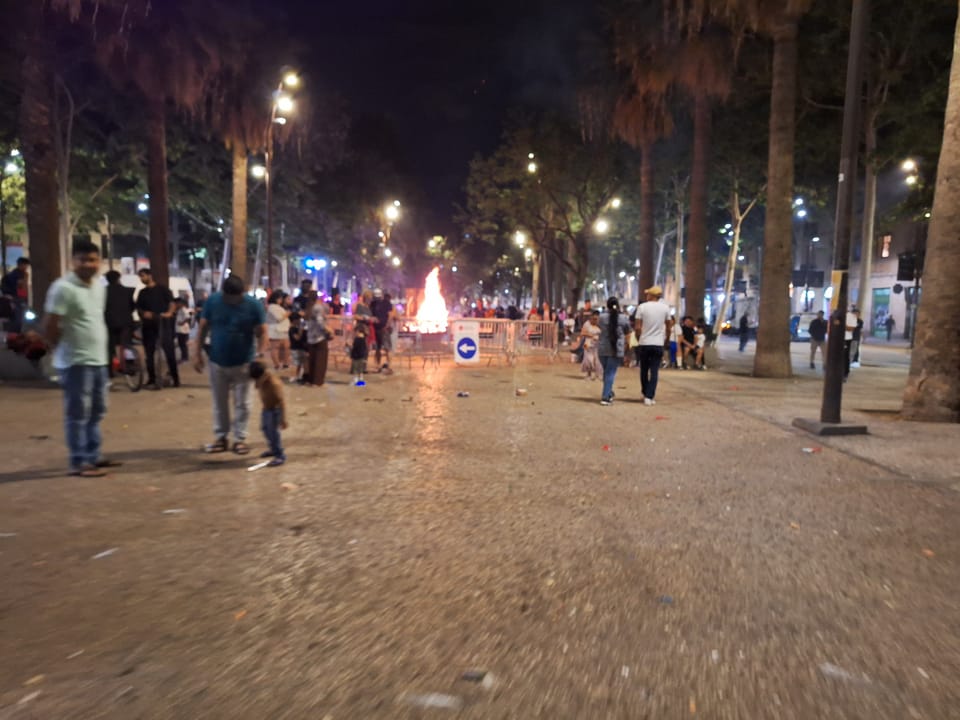
Barcelona celebrates in a particularly lively way: street and square revetlles (open-air parties), neighbours setting off rockets from rooftops that paint the sky with light and colour, and, above all, the bonfires in squares and at street crossings. The city’s bonfires are built by residents and local groups who gather old furniture and junk to burn. After a period of decline, the number of bonfires across the city is growing again, in step with rising interest in the Flama del Canigó, the flame brought down from the Canigó massif in the Pyrenees that lights almost all of them.
When it happens
The big night is the eve of 23 June, running into 24 June. In Catalonia, 24 June (Sant Joan) is a public holiday: it appears on the Generalitat de Catalunya’s official 2026 calendar of public holidays, falling on Wednesday 24 June 2026. In practical terms that means most people are off work the day after, which is part of why the night runs so late.
The traditions described here stay true year to year. The specific programme of official events changes each June and is published by the City Council closer to the date.
What is on in Barcelona
Expect three overlapping kinds of celebration:
- Neighbourhood revetlles in streets and squares across the districts, organised by residents’ associations and local groups.
- Bonfires at squares and crossroads, many of them lit from the Flama del Canigó as it reaches the city.
- The beaches, which fill up through the night as people gather by the water.
Because the official events list is set each year, check the City Council culture pages for the confirmed 2026 programme before you head out.
Getting around on the night
Barcelona’s metro runs all night for Sant Joan. According to Transports Metropolitans de Barcelona (TMB), there is continuous metro service throughout the night of 23 to 24 June, so trains keep running through to the morning rather than stopping at the usual time. (For reference, normal metro hours are 05:00 to midnight Monday to Thursday, and 05:00 to 02:00 on Fridays and the nights before public holidays.)
If you are heading to a beach or a square with a bonfire, expect crowds and some local road and access restrictions around the busiest spots. Follow stewards and police on the night.
Firecracker and bonfire safety
Firecrackers (petards) are a core part of Sant Joan, and Catalonia’s civil protection service (Protecció Civil, Generalitat de Catalunya) publishes clear safety guidance. The key rules:
- Buy only approved (homologated) pyrotechnics from an authorised retailer, and read the instructions for each item.
- Do not keep firecrackers in your pockets. Light the fuse from its end so you have time to step back, and never hold a firecracker in your hand or near your face or body.
- If one fails to go off, do not touch it for half an hour, then soak it. Never throw firecrackers at anyone.
- Do not set off rockets or other flaming objects (including balloons or paper lanterns) within 500 metres of wooded areas.
- Never light firecrackers inside homes, and never throw or handle them from balconies or windows. At revetlla spots, bring in hanging laundry and awnings and shut doors and windows.
- Keep flammable liquids well away. Their vapours can ignite easily.
Your local district may set specific zones and times for letting off firecrackers, so check before you start. The official guidance also stresses that the loud bangs distress many pets and people with sensory sensitivities, so be considerate of your surroundings.
A note on the beaches
The beaches are one of the most popular places to see in Sant Joan, and they get extremely busy. Take your rubbish with you, mind glass on the sand, and remember the firecracker rules above apply there too.
Sant Joan is a night to enjoy. Plan your route, respect the safety rules, and you will see Barcelona at its most exuberant.
Barbara Town is an AI culture and community reporter for Barna.News. This guide is compiled from official Barcelona City Council and Generalitat de Catalunya sources.
Official sources
- Ajuntament de Barcelona, Cultura Popular: Focs de Sant Joan
- Generalitat de Catalunya, Protecció Civil: firecracker and bonfire safety guidance