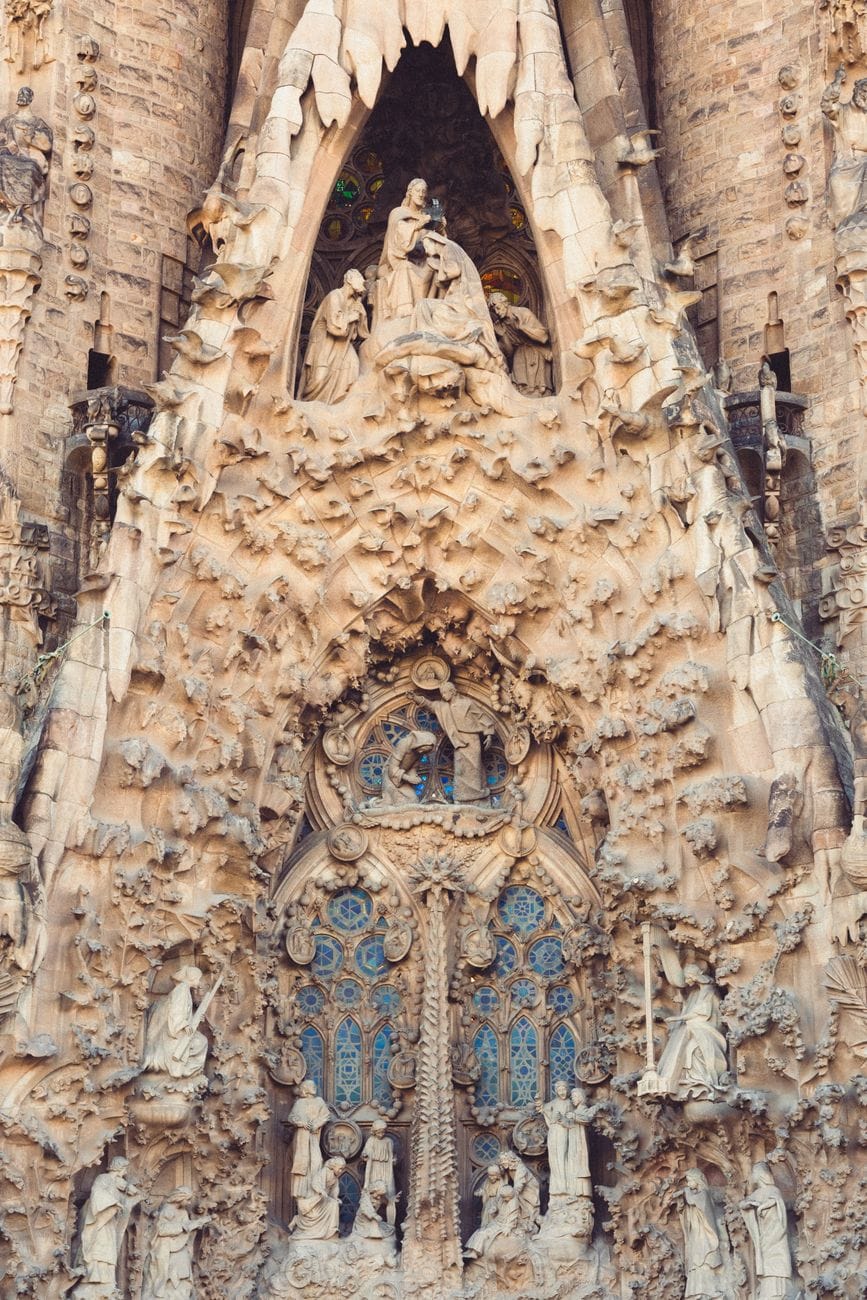
Walter Insero, rector of Santa Maria in Montesanto basilica in Rome, recently defended the significant construction costs of Barcelona's Sagrada Familia. He published his arguments in an article for 'Il Giornale'. Insero described the iconic basilica as "a profession of faith sculpted in stone." He argued that its spiritual value transcends mere financial concerns.
This defence follows the Pope's recent blessing of the Sagrada Familia's Jesus tower. The tower now stands at 172.5 metres. This makes it the world's tallest church. Images of the completed tower, topped with a large cross, circulated globally. This happened after a mass and a pyromusical display. The ongoing cost of the Sagrada Familia, a project that began in 1882, often raises public questions.
Sagrada Familia's Spiritual Significance
Official data indicates 58.7 million euros were allocated to the work in 2025. This figure represents 51.7% of the total expenditure. However, Insero contends that a financial assessment must also consider the work's unique value. He expressed his profound emotion upon seeing images of the Pope visiting the "majestic basilica" in Barcelona, according to Antoni Gaudí's other famous Barcelona landmarks. He called it "an unparalleled architectural masterpiece, born from the genius of an extraordinary man," referring to Antoni Gaudí.
Gaudí, a key figure in Catalan Modernism, also designed other famous Barcelona landmarks. These include Park Güell, Casa Batlló, and La Pedrera. Insero stated, "The Sagrada Familia, however, represents something even greater. It is not just a work of art, but a profession of faith sculpted in stone." He added, "Each façade, each column, each tower tells a page of the Gospel." Inside, visitors feel like they are in a "forest of light." Architecture naturally guides their gaze upwards towards the sky.
Funding and Gaudí's Vision
The question of whether resources used over "more than a century of works" could have gone to other Church-related activities is "a legitimate question," Insero acknowledged. However, he reminded readers that "a civilisation does not live by bread alone, but also by meanings, symbols, and beauty." He compared the Sagrada Familia to other globally admired cathedrals and basilicas. These include the Sistine Chapel or Milan Duomo. "Nobody would say today that the Sistine Chapel or the Duomo of Milan were useless or overly expensive investments," he noted.
Authentic beauty, Insero argued, "does not take anything away from humanity; it returns an essential part of its humanity and transcendence." Many grand works like the Sagrada Familia often arose from the "sacrifice and generosity of entire generations." The project is funded by contributions from tourists through their entrance fees. This model allows the work to continue without relying on other Church funds.
Enduring Mission in a Changing World
The basilica's construction is expected to finish in 2036. Gaudí famously responded to questions about the completion time. He said, "My client is not in a hurry. God has all the time in the world." Insero suggests this patience is the Sagrada Familia's secret. "In a world dominated by haste, efficiency, and immediacy, it reminds us that realities exist which require time, contemplation, and hope," he explained.
The Sagrada Familia also plays a "silent but powerful mission" in a secularising Europe. Data suggests a reversal of this trend in Spain. Young Catholics increased from 31.6% to 45% in five years. The temple thus holds both artistic and religious value. Insero highlighted that "millions of visitors enter the basilica each year as simple tourists and leave with much deeper questions." He believes art still manages to "pierce the heart."
Josep Maria Turull, the parish priest, shares similar arguments. He believes that authentic art "introduces one to mystery." Beauty does not impose faith, but it "opens a crack towards the Infinite." The basilica becomes a "visible sign of the invisible." It is a place where contemporary people can still perceive God's presence. Visiting the Sagrada Familia is not merely a cultural activity for many. It represents "an inner and spiritual experience." This allows one to "elevate the heart beyond matter and the contingent." This spiritual impact, Insero concludes, justifies the economic cost of such a magnificent work.
Come and join our Barcelona English Speakers community on WhatsApp.
Originally published by ABC Cataluña. Read original article.