Video: <a href="https://www.instagram.com/p/DfCE-PHoyRH/">@bluetechport, @portdebarcelona, @wtcbarcelona / IG</a>
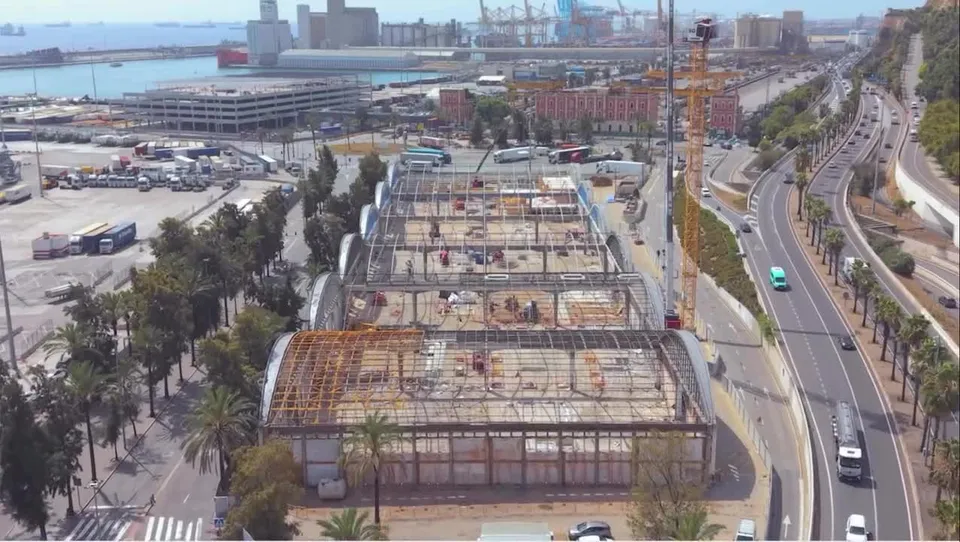
The Port of Barcelona has approved a comprehensive overhaul of its cruise infrastructure, authorising the demolition of Terminals A, B and C and the construction of a new, publicly accessible Terminal C at a cost of €104.5 million. The decision was ratified by the port’s Board of Directors on Wednesday 28th October 2026.
The new Terminal C, to be built on the site of the existing facility, will have a planned area of 11,253 square metres and is designed to meet current and future cruise demands while meeting the highest environmental standards. More than €50 million of the budget will fund the construction of the terminal building itself, which will be open for general use by all cruise operators.
The project is part of a wider agreement signed in July 2025 between the Port of Barcelona and Barcelona City Council to reorganise cruise activity and improve sustainability. Under this protocol, the number of cruise terminals on the Moll Adossat will be reduced from seven to five, relocating all cruise operations to this dock to reduce emissions in the city centre.
The concession held by Creuers del Port de Barcelona, a subsidiary of Global Ports Holding (GPH), has been revised to allow these changes. The new concession for Terminal C will now run until 2050, with an option to extend until 2053, replacing the previous agreement due to expire in 2030.
Current Terminal C will handle its final cruise on 1st November 2026 before being emptied and demolished. Once the new terminal is operational, Terminals A and B will also be demolished. Following their removal, a 660-metre stretch of the Moll Adossat, which has not been comprehensively renovated in 70 years, will undergo rehabilitation at a cost of €42 million. Tenders for this project will be launched in the coming months, with construction expected to begin at the end of 2029 and last 24 months.
The redevelopment also includes improvements to access infrastructure, including the relocation of the current roundabout access, urbanisation of access roads and intermodal areas, and construction of a new passenger boarding walkway. The Port of Barcelona aims to make its cruise facilities among the most modern and sustainable in the world, supporting home port operations that offer greater economic benefit to the city.
Sources: Metrópoli Abierta (CA), portdebarcelona.cat.