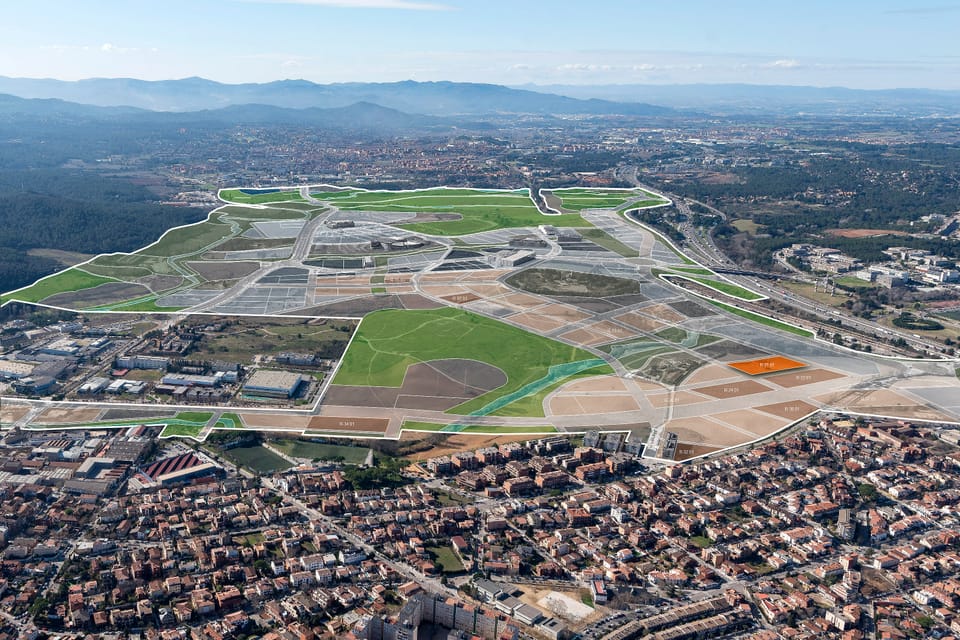
A Science and Technology Hub in Development
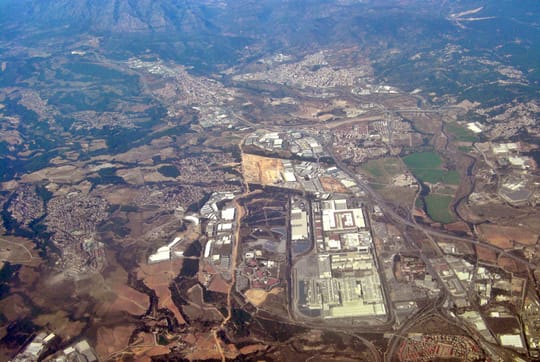
Parc de l’Alba in Cerdanyola del Vallès is set to become a major economic driver for Catalonia, with projections of up to 30,000 jobs and around 100 companies once fully developed. The 408-hectare site, named after the ALBA Synchrotron, is focused on attracting high-value industries such as science, engineering, microelectronics, data centres, and technology firms. Currently, about 1,300 people work in the park, but expansion plans aim to significantly increase employment as productive plots are occupied. The Ajuntament de Cerdanyola del Vallès envisions a model where people both live and work in the area, supported by a new residential neighbourhood planned alongside business growth.
Established Firms and Research Facilities
Companies already operating in Parc de l’Alba include fashion brand Stradivarius, cosmetics firm Natura Bissé, and engineering company Sener, which has a 7,500-square-metre facility for space and medical technology systems. The park also hosts a cluster of digital infrastructure providers, including IBM, T-Systems, SILC (La Caixa), and ADAM. The ALBA Synchrotron, a fully operational scientific facility, plays a central role in attracting research and innovation. It served over 3,800 researchers in the past year, 60% from Spain, 35% from elsewhere in Europe, and 5% from other regions, and employs nearly 300 staff. More than 120 companies, half from outside Spain, currently use its facilities for R&D in pharmaceuticals, chemicals, cosmetics, food, textiles, and nanotechnology.
Having Alba as a neighbour is an exclusive advantage.
, Caterina Biscari, director of the ALBA Synchrotron
Expanding Innovation: Alba II and InnoFab
Two major projects are set to expand the park’s capabilities. Alba II will modernise the synchrotron with new high-tech beamlines and buildings, creating opportunities for local firms like Sener to collaborate on manufacturing advanced components. InnoFab aims to bridge lab research with industrial production in semiconductor technologies. Urban planner Sebastià Grau highlights the park’s strategic location between Cerdanyola and Sant Cugat, adjacent to the Universitat Autònoma de Barcelona (UAB), as key to its appeal. He notes growing demand for temporary housing linked to students, researchers, and professionals.
Focus on Knowledge Economy, Not Logistics
The mayor of Cerdanyola, Carlos Cordón, has ruled out large logistics operators for the remaining land, insisting the focus remain on knowledge-based industries. This aligns with the vision of creating a self-sustaining ecosystem where research, business, and housing converge. Sener’s corporate general director, Gabriel Alarcón, says proximity to universities and research centres like UAB and Eurecat accelerates knowledge transfer to industry. He notes the park has gained visibility as a destination for high-value industrial projects.
Need for Improved Infrastructure
Despite progress, challenges remain. Sener and ALBA Synchrotron director Biscari both stress the need for better public transport. Daily commuting from Barcelona remains difficult, and improved mobility is seen as essential to attract further investment and talent. Additional services such as catering, sports facilities, and more accommodation are also needed. A 600-room student residence is already open, with 30 places reserved for researchers, and at least two more housing projects are underway. A designated hotel plot may be developed into a co-living space.
Reported by elperiodico.com, cells.es, ddd.uab.cat, UAB - Universitat Autònoma de Barcelona, Universitat Autònoma de Barcelona, El Periódico Barcelona.