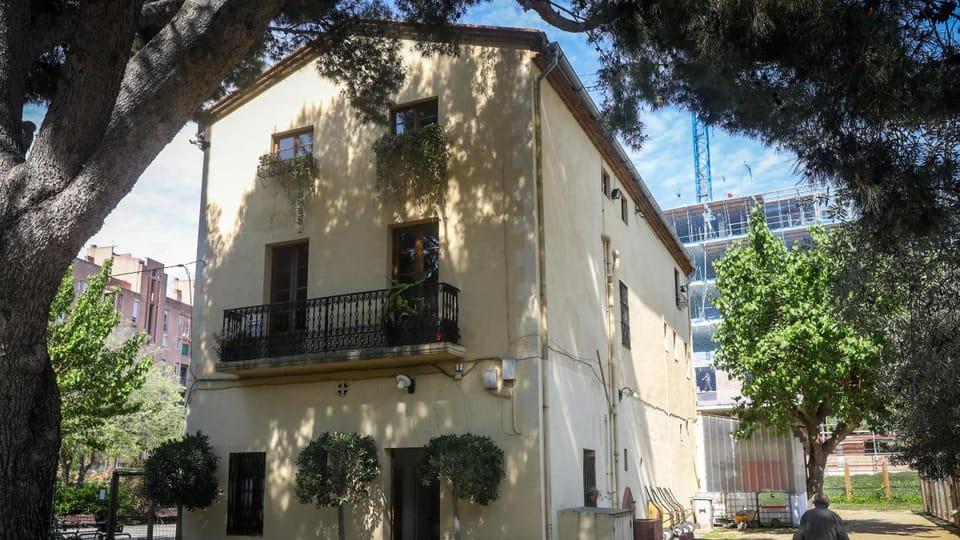
A new cultural guide has meticulously mapped nearly 100 of Barcelona's historic masías, or traditional farmhouses, revealing their surprising new roles across the city's dense urban landscape. These rural vestiges, once central to Barcelona's agricultural plain, now serve as schools, libraries, civic centres, museums, and restaurants. The association El Globus Vermell compiled this inventory, detailing the history and current uses of 69 well-preserved masías and referencing 20 others.
Mapping Barcelona's Rural Past
Barcelona once boasted over 600 agricultural estates between the 15th and 17th centuries, forming a significant part of its landscape. Today, fewer than 100 survive within the city's extensive urban fabric. Joan Vitòria, an architect from the Escola Tècnica Superior d'Arquitectura de Barcelona (ETSAB) at the Universitat Politècnica de Catalunya (UPC) and co-founder of El Globus Vermell, highlights their importance. "The masía has been a very important type of building throughout the centuries on the plain of Barcelona," Vitòria states. "Many have been demolished, but some still stand, although it is a rather unknown heritage, even little visible and recognisable, covered or hidden by buildings and streets." The new guide aims to change this lack of visibility.
The guide, produced with support from the Ajuntament de Barcelona, is available in Spanish, Catalan, and English. It can be found on the El Globus Vermell cultural association website. It will also be distributed as part of Barcelona's World Capital of Architecture initiatives, which run throughout 2026. This project aims to bring these often-overlooked structures back into public awareness and celebrate their architectural significance.
From Farmland to Urban Fabric
The arrival of the industrial revolution and rapid urban growth significantly reduced these agricultural spaces. The swift urbanisation of the Eixample district, for example, followed the demolition of the city walls in the mid-19th century. This expansion led to the disappearance of countless farmhouses that once dotted the landscape. Many masías that did survive underwent extensive reforms in the 19th century. Wealthy owners transformed them into stately homes for the bourgeoisie, often serving as summer residences away from the city centre. Vitòria notes that these renovations primarily maintained "their exterior skin, that is, the façade and the roof," while interiors changed dramatically.
Today, mountain districts retain more of these ancient rural constructions. Horta-Guinardó leads with 31 masías, making it the district with the highest concentration. Sarrià-Sant Gervasi follows with 13. Nou Barris and Sant Andreu each hold 9. Sant Martí district contains 8, while Sants-Montjuïc and Gràcia each have 7. Les Corts features 5. Notably, Ciutat Vella and the Eixample district contain no surviving masías. Vitòria explains that a no-build zone existed outside the walled city for security reasons, which prevented construction in those areas for centuries. This historical restriction contributed to the preservation of some rural areas further afield.
Preserving a Vanishing Heritage
The guide details various levels of heritage protection and architectural styles found among the masías. This rural legacy also lives on in place names across the city. Examples include Can Bruixa in the La Bordeta neighbourhood, currently awaiting rehabilitation as a public facility. Can Travi in Horta-Guinardó now operates as a popular restaurant, offering a modern use for a historic building. Vil·la Joana, the last home of writer Jacint Verdaguer, sits within Collserola Park and functions as a museum, attracting literary enthusiasts and history buffs. The 18th-century masía La Petita Maria remains disused, with only its façade still standing as a reminder of its former grandeur.
These buildings offer a tangible link to Barcelona's past, showing how the city developed from a rural plain into a major urban centre. Preserving them helps residents and visitors understand the city's unique history and architectural evolution. They represent a physical connection to the agricultural roots that shaped Barcelona for centuries.
The Future of Food Sovereignty
Vitòria strongly advocates for the protection of masías. He cites multiple reasons for their continued relevance. "It is important to conserve this heritage and highlight its value because it forms part of Barcelona's history, of our rural roots," he explains. Additionally, he stresses the importance of maintaining food sovereignty within the territory. "Now, the origin of food is increasingly distant, and we must not forget that the plain of Barcelona fed the city's inhabitants for centuries." This perspective connects the historical structures to contemporary issues of local food production and sustainability. The guide's release encourages a deeper appreciation for these unique architectural survivors and their enduring story, prompting reflection on Barcelona's past and future.
Come and join our Barcelona English Speakers community on WhatsApp.
Originally published by La Vanguardia Barcelona. Read original article.