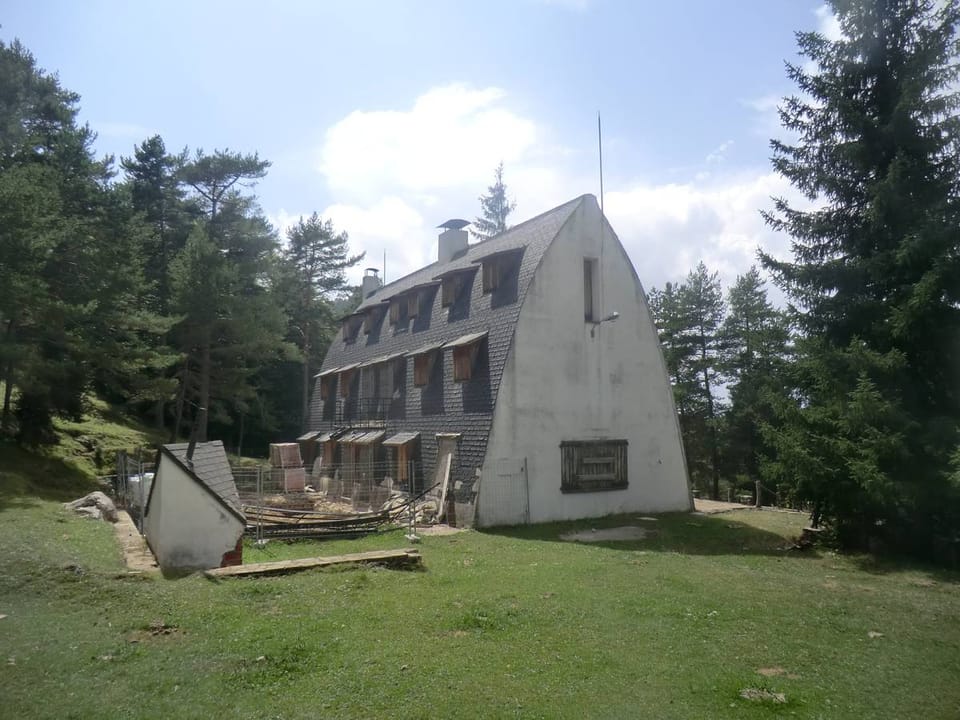
A mountain refuge in the Catalan Pyrenees, long considered a local secret, has now received official attribution as a work by Antoni Gaudí. The Xalet del Catllaràs, located in the municipality of La Pobla de Lillet, was built in 1905 and stands over 1,300 metres above sea level.
For decades, the building's connection to the renowned architect remained unconfirmed. Recent investigations and restoration efforts by the Barcelona Provincial Council (Diputació de Barcelona) have finally verified its design. This confirmation adds a significant, previously overlooked, structure to Gaudí's extensive portfolio.
Gaudí's Commission in the Pyrenees
The story of the refuge begins with Eusebi Güell, Gaudí's primary patron. In the early 20th century, the Berguedà region, where La Pobla de Lillet is situated, experienced intense industrial activity. Coal mines in the area supplied the nearby Asland cement factory, a major operation for Güell.
Güell needed accommodation for the engineers working on these projects. He turned to his trusted architect, Gaudí, to design a suitable lodging. The Xalet del Catllaràs served this practical purpose, providing a functional yet architecturally distinct space for the industrial workers.
Unique Architectural Features
The building displays Gaudí's characteristic organic geometry. Its design includes a pointed arch floor plan, which helps snow slide off the roof easily, preventing accumulation during harsh winters. This feature shows Gaudí's practical approach to mountain architecture.
While more austere than his urban masterpieces, the chalet's aesthetic echoes the style of Barcelona's Casa Milà. It blends functionality with the natural environment, a hallmark of Gaudí's work. The design adapted to the rigorous Pyrenean climate, proving Gaudí's versatility beyond city limits.
A Century of Neglect and Restoration
For over a century, the Xalet del Catllaràs suffered abandonment and unfortunate renovations that altered its original appearance. Institutional recognition also lagged, leaving the building largely forgotten. This period of obscurity obscured its true architectural significance.
However, the Barcelona Provincial Council's recent restoration work has brought the chalet back to life. Researchers compared original plans and construction techniques with other contemporary Gaudí projects. These detailed studies provided the conclusive evidence needed for official attribution. The restoration efforts recovered its iconic exterior staircase and original cladding, returning the building to its authentic form.
Gaudí's Enduring Legacy Beyond Barcelona
This official confirmation arrives at a symbolic time, looking towards 2026, a significant year for Gaudí's legacy. It reinforces that Gaudí's influence extends far beyond Barcelona's city limits. The Xalet del Catllaràs offers a unique opportunity to experience a different side of the architect, one deeply connected to nature and functional design.
The building is now open to visitors, providing a new destination for those interested in Gaudí's work. It allows residents and tourists to explore a lesser-known facet of his genius, showcasing his ability to integrate architecture with the mountain landscape. This discovery enriches Catalonia's architectural heritage and offers fresh insights into Gaudí's creative process.
Come and join our Barcelona English Speakers community on WhatsApp.
Originally published by Barcelona Secreta. Read original article.