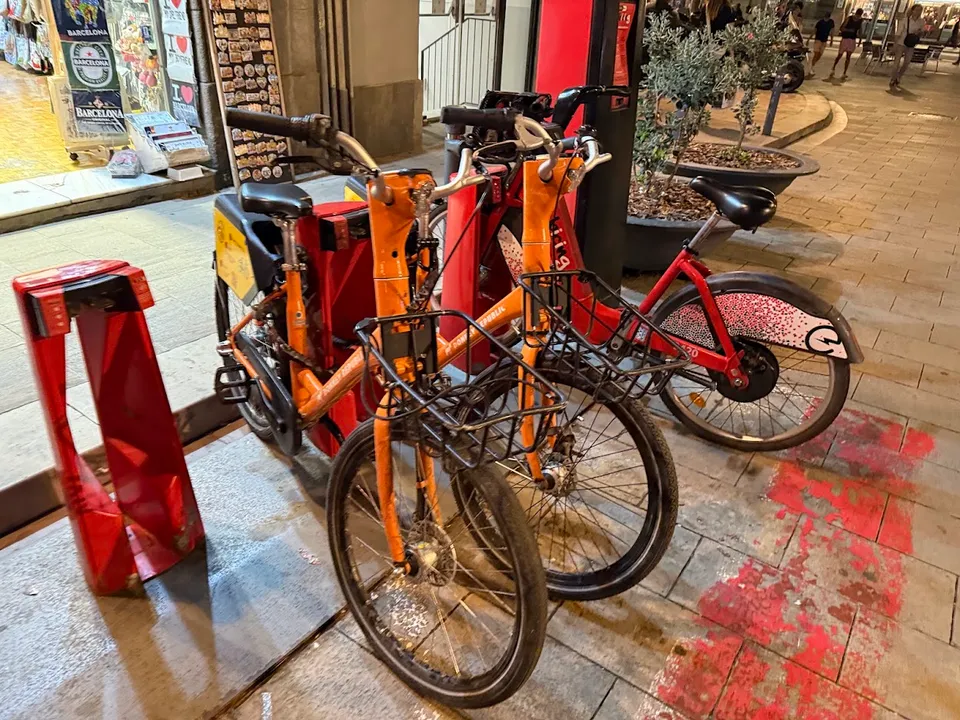
Barcelona’s seven private shared-bike operators must remove their 3,500 licensed bicycles from public streets on 1st January 2027, after the city council decided not to renew their licences. The bikes can continue operating until 31st December 2026.
For residents and visitors who use the services, the deadline means finding another way to hire or use a bicycle. The council points to Bicing, its public shared-bike scheme, as well as shop rentals, subscriptions and buying a bike.
The decision was reported on 18th November by 3CatInfo, which interviewed first deputy mayor Laia Bonet and the operators’ spokesperson, Roger Montañola. Mayor Jaume Collboni announced the removal of the private licences on 4th June, according to reporting by Nació.
Council cites parking and obstructions
Bonet, who is responsible for mobility, said many bicycles had been parked outside designated areas, obstructing pedestrians, and that users frequently abandoned them. She said operators had failed to meet the conditions of their licences, although the council recognised that some companies had tried to improve the situation.
“We cannot afford for these bicycles to have such a major impact on public space.”
According to council figures reported by 3CatInfo, 7,000 fines were issued over the past year for bikes that were badly parked or abandoned. The council also said tow trucks had removed three out of every four bikes.
The seven companies, which have provided the service since January 2025, are Lime, Cooltra, Bird, Bolt, Donkey Republic, RideMovi and Voi.
Operators ask for an extension
Montañola is asking the council to extend the licences and negotiate with the companies. He said Barcelona lacked sufficient bicycle parking, while remaining open to other options.
“This decision goes against the sustainable mobility promoted by the City Council.”
Montañola said the measure would affect thousands of users and that the ERC, Comuns, Junts and PP political groups had opposed the government’s decision.
The seven operators say their services account for one in three shared-bike trips and recorded one million trips over the past year, according to 3CatInfo. They also dispute the council’s claim that most users are tourists.
Alternatives for shared-bike users
The council has identified several options for people who currently use the private services:
- Bicing: the public scheme has 8,000 bicycles, which must be collected from and returned to its 557 stations across Barcelona.
- Shop rentals or subscriptions: the council suggests renting from a bicycle shop or using a subscription model.
- Buying a bicycle: the council also lists ownership as an alternative.
Montañola said the private operators believe Bicing is not ready to absorb the additional demand. A new Bicing contract scheduled for 2029 is expected to provide 50% more vehicles, many of them electric, according to 3CatInfo.
What it means for you
- When: The 3,500 licensed bikes will be allowed to operate until 31st December; they must be removed by 1st January.
- Where: On public thoroughfares across Barcelona.
- Who is affected: Thousands of users of private shared bicycles in Barcelona.
- What to do: Use alternatives such as Bicing, local bike rentals, or buying a bicycle.
Sources: 3Cat, Nació Digital, Metrópoli.