
Four ride apps work in Barcelona, and they are not interchangeable. Free Now connects to the regulated taxi fleet. Cabify and Uber are VTCs (the Spanish equivalent of private-hire). Bolt is the newest entrant. Each has a different coverage area, a different price logic, and a different reliability profile at 4am. Here is how to choose.
The taxi-VTC split
Barcelona has roughly 10,500 regulated black-and-yellow taxis (the ones with a green light when free) and a much smaller number of VTC licences. Catalan regulation has historically been hostile to VTC services, with rules requiring pre-booking minimums and limiting fleet sizes. That is the reason Uber pulled out of Barcelona for a stretch and why Cabify operates here with a noticeably smaller fleet than in Madrid.
The black-and-yellow fleet is a metered service. Hail one, take a rank, or call via Free Now; the meter shows the price as it rises, on a higher per-kilometre rate at night and at weekends, with supplements for the airport, the cruise terminal, Sants and the Fira. There is no luggage supplement. The VTCs are app-only, with upfront fixed pricing: you see the fare before you book.
Free Now: the taxi app
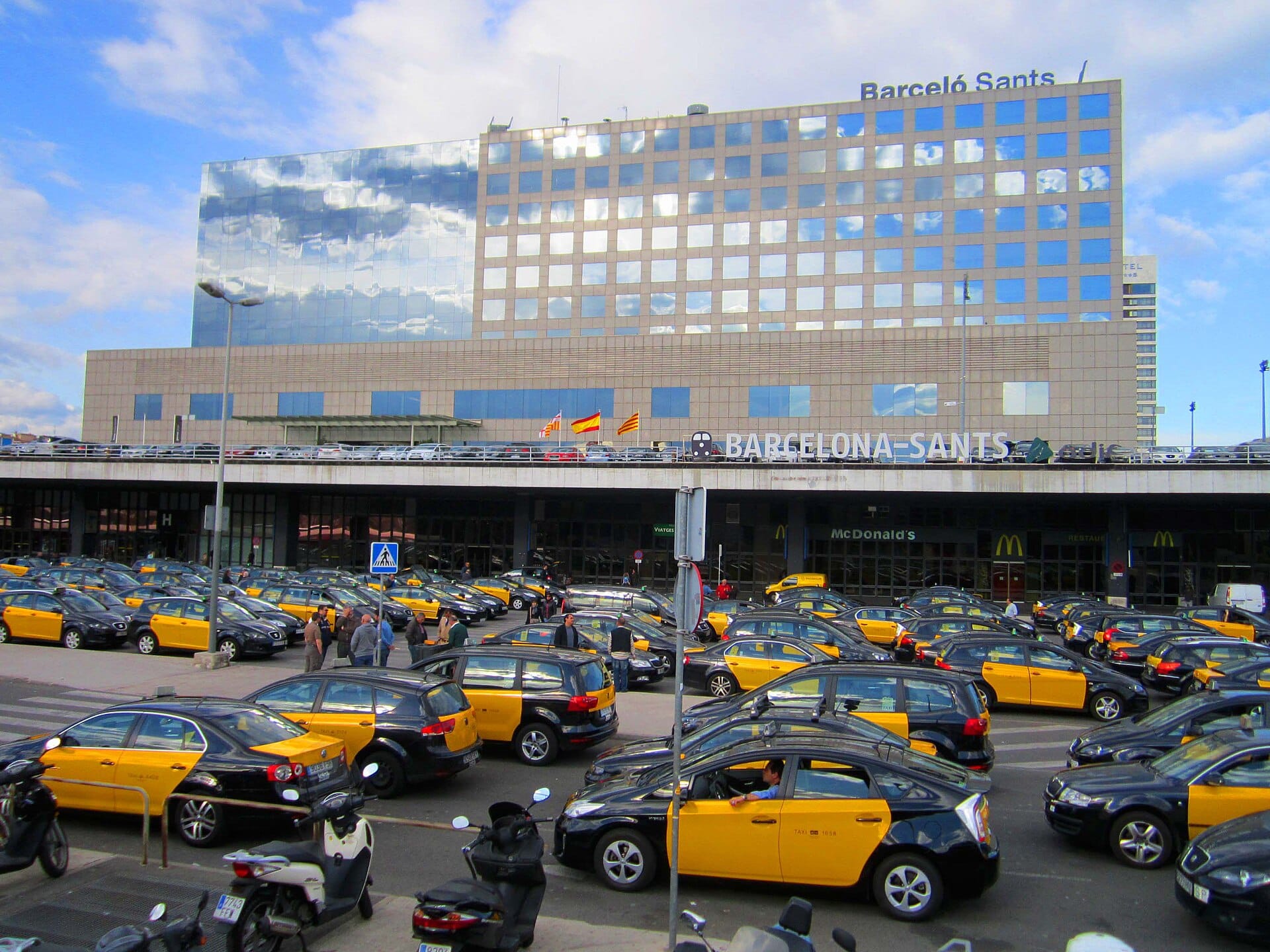
Free Now, formerly MyTaxi, connects to a large slice of the regulated Barcelona taxi fleet. Coverage is the broadest of the four apps because it is drawing from the existing taxi pool: anywhere a taxi can drive, a Free Now driver can pick you up.
That means it works in central Barcelona, across the Àrea Metropolitana de Barcelona (AMB) towns, in suburbs like Sant Cugat and Cornellà, and out to Castelldefels, Sitges and Mataró, without the geofencing problems VTCs run into outside the city.
Pricing is the metered taxi fare plus a small app fee. No surge: the price is whatever the meter says when you arrive. There is no flat airport fare to honour: the meter runs as normal, with a €4.60 airport supplement and a €21 minimum charge on any journey starting at El Prat.
If you are in a suburb, or you want predictable taxi pricing without surge, Free Now is the default app to install first.
Cabify: the workhorse VTC
Cabify is Spanish-headquartered and the most reliable VTC across the metropolitan area. The fleet is smaller than the taxi pool, so wait times in central Barcelona are typically a few minutes longer; pricing is upfront, with surge during peak times and events.
Cabify's coverage extends across most of the AMB, with expansion into Cornellà and Badalona in recent years. Outside the metropolitan area it thins quickly; do not rely on it in Igualada or Vilanova.
For airport runs at predictable times, Cabify works well. Pre-book a 4am pickup the night before and the car turns up. The Cabify Lite tier is the budget option if you do not need a premium car.
Uber: complicated
Uber's status in Barcelona has been complicated. After leaving in 2019 over the VTC regulation, Uber returned in 2021 with a partnership model (riding existing taxi licences for some services, plus VTC for others), and has continued to navigate further regulation. As of 2026 the app works in central Barcelona, but coverage is thinner than Cabify's, and the suburbs have patchy availability.
If you are a tourist used to Uber elsewhere, expect Uber to feel less mature here than in London or New York. It is a useful third option, not the default. Pricing is roughly competitive with Cabify at off-peak times; at peak, both surge.
Bolt: the newcomer
Bolt entered Barcelona later than the others. Historically Bolt was the e-scooter app in this market, but globally it has expanded into ride-hailing in many cities; the Barcelona operation has lagged the broader European rollout because of the VTC restrictions.
Coverage is thinner, fleet is smaller, prices can be lower at off-peak times if drivers are available. Worth having installed as a backup, not as your primary app. The Bolt rides app is separate from the e-scooter app; check you have the right one before you book.
Suburban coverage, in one paragraph
The honest summary. Free Now wins outside the AMB, Cabify is reliable across the AMB, Uber and Bolt are spotty.
Sant Cugat, Cornellà, Esplugues, Badalona, Sant Adrià: Free Now works, Cabify usually works, Uber and Bolt patchy. Castelldefels, Gavà, Mataró, Sitges: Free Now works, the rest do not reliably. Igualada, Vilanova, Vic: taxis only, often via local cab firms by phone (no app).
If you live or work outside central Barcelona, install Free Now first.
Airport runs
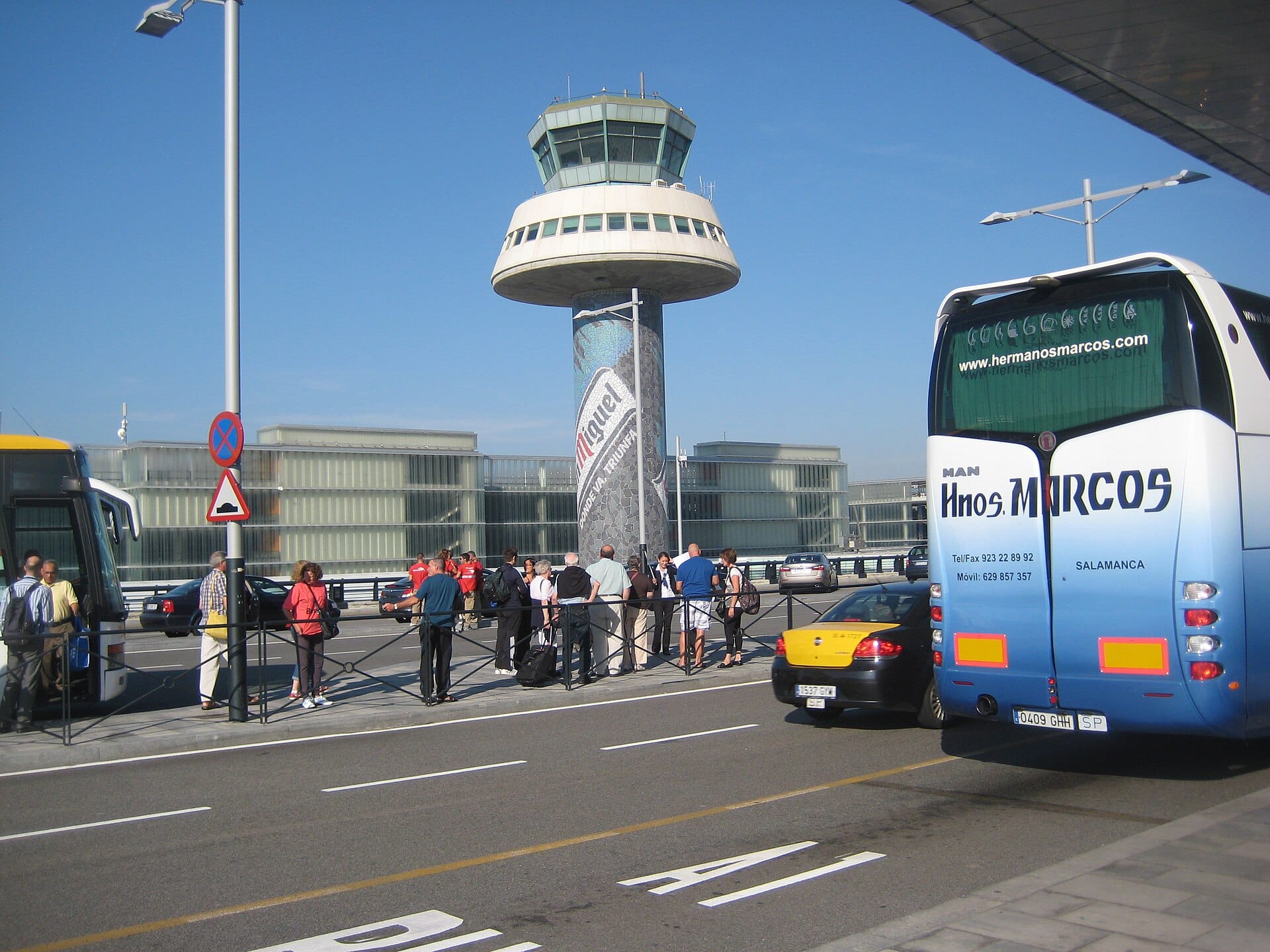
All four apps will pick up at El Prat in 2026. Free Now and Cabify are the most reliable for early morning and late-night runs; pre-book the night before for anything before 6am. Black-and-yellow taxis are at the rank at every terminal exit, and the queue moves quickly even in the busy summer months.
On trips to the airport from the centre of Barcelona there is no set price: the meter determines the cost, with a €4.60 supplement for the airport added on. Rates rise at night, at weekends and on public holidays, and there is no charge for luggage. VTCs are usually competitive but check the upfront price before you book; surge during early-morning peaks can flip the maths and a Cabify can briefly cost more than a regulated taxi.
Driver disputes and the meter
If a black-and-yellow taxi driver tries to negotiate a fare that is higher than the meter, that is not how the regulation works. The meter is the price. The single fixed fare in the AMB schedule is the €46 T-4 rate between the airport and the Moll Adossat cruise terminal, and there is no fixed airport-to-city fare at all. The Free Now app records the GPS track, which is the easy answer to any later argument.
Save the receipt. Complaints go to the Institut Metropolità del Taxi. For most disputes, the in-app summary settles it without needing to escalate.
Which app to install
If you are going to install one: Free Now. Broadest coverage, no surge, works at the airport.
If you will install two: Free Now and Cabify. Together they cover most situations, and you can compare prices in 30 seconds when the wait time matters.
If you are a frequent VTC user with airport runs and tight schedules: install all four. The ten seconds of switching between apps when one shows a 12-minute wait can save you a missed flight.
Most residents settle on Free Now plus Cabify and stop there. The combination handles 95 per cent of real-world Barcelona rides without thinking about it.
Get this in your inbox
Working out which ride app to trust at 4am is the kind of thing locals just know. For the rest of the daily puzzle of living here, from getting around to flat-hunting and meetups, come and ask the people who already have it sorted. Join the Barcelona English Speakers community, with 4,000+ members across 20+ free, moderated WhatsApp groups.