City Aims to Cut Congestion and Boost Public Transport
Barcelona City Council announced this Wednesday the launch of three new tenders to study the transformation of key access routes into the city, Porta Diagonal, northern Gran Via, and the southern section combining Gran Via and Ronda Litoral. These follow the already initiated process for Avinguda Meridiana, making four major corridors under review to tackle chronic traffic congestion. The goal is to redesign these arteries to reduce reliance on private vehicles and strengthen public transport, according to plans coordinated through Bimsa, the city’s public infrastructure company. Each corridor will be studied by multidisciplinary teams in engineering, architecture, and mobility, who must propose spatial reorganisations that prioritise sustainable travel.
Meridiana: Final Phase of Urban Integration Underway
The Meridiana corridor, which links Vallès with central Barcelona, remains one of the most critical entry points. The current project focuses on the stretch between Fabra i Puig and Pont de Sarajevo, the last segment pending reform. As reported by EL PERIÓDICO, the work aims to integrate what was once an urban highway into the fabric of the city. One key challenge is connecting interurban buses arriving from the C-58 motorway to the future La Sagrera bus station. Options being evaluated include extending the high-occupancy vehicle (HOV) lane to La Sagrera and relocating or expanding the existing Fabra i Puig bus terminal.
Porta Diagonal: Tackling Baix Llobregat Commuter Pressure
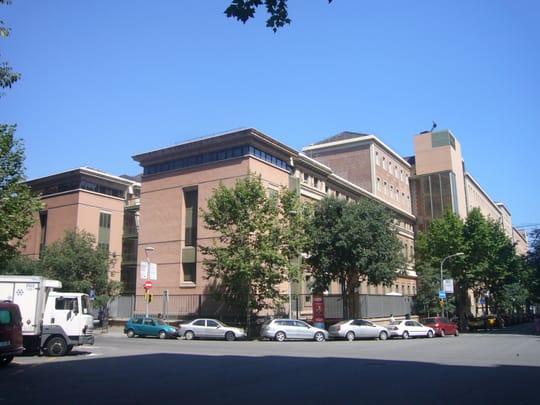
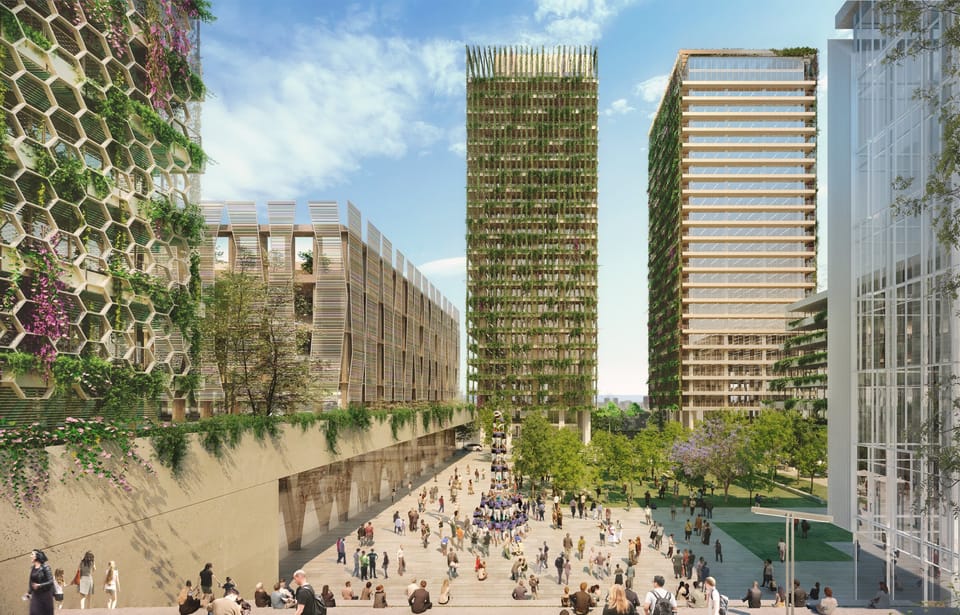
The upcoming tender for Porta Diagonal targets one of the busiest gateways, receiving heavy commuter flows from the Baix Llobregat region. Rather than simply increasing road capacity, the redesign will focus on improving multimodal connections, integrating metro, bus, rail, and active mobility options. The study must also align with the ongoing Campus Clínic development along Avinguda Diagonal, where new healthcare, research, and academic facilities are planned.
Gran Via North: From Traffic Conduit to Urban Axis
The third corridor under review is Gran Via North, the main route from Barcelonès Nord and Maresme. Originally designed to absorb large volumes of traffic, the aim now is to transform it into a more integrated urban corridor, better connected to surrounding neighbourhoods. This transformation will be coordinated with wider regeneration efforts along the Besòs River and the development of Les Tres Xemeneies in Sant Adrià. This site, acquired by the Generalitat, is set to become a hub for audiovisual, digital, and video game industries.
Gran Via South and Ronda Litoral: Balancing Mobility and Economy
The fourth and final corridor, covering Gran Via South and Ronda Litoral South, borders Llobregat and serves as a vital link for freight, port traffic, and workers commuting to Zona Franca’s logistics zones. Due to its complexity, both routes will be studied jointly. Any redesign must ensure uninterrupted daily mobility and safeguard economic activity. The study will incorporate the Nou Montjuïc urban transformation plan and the Bellvitge Campus expansion in L'Hospitalet de Llobregat, part of the BioClúster de Innovación y Salud project, which will add 75,000 square metres for hospital and research use.
All four projects must propose models where public transport plays a greater role, with measures such as reducing car lanes, creating new dedicated lanes, and introducing traffic signal priority for interurban buses.
These interventions respond to stark mobility disparities: while over 80% of trips within Barcelona are made on foot, by bike, or via public transport, dependency on cars rises sharply beyond the city. According to data presented by the council and Barcelona Regional, 41% of commuters from the first metropolitan ring use private vehicles; that figure climbs to 57% in the second ring and reaches 63% across the wider province. Rising housing costs have driven many residents to more distant municipalities, while jobs remain concentrated in the capital. Teleworking affects only about 10% of the workforce and has not significantly reduced commuting demand. As a result, roads operate at capacity, and interurban public transport networks are saturated. The proposed redesigns form part of a broader shift under Barcelona’s Urban Mobility Plan (2019–2024), which seeks to create safer, healthier, and more equitable mobility systems. Research led by the city council and the Polytechnic University of Catalonia, supported by the Generalitat’s Industrial Doctorates programme, underscores the need to address both people’s and goods’ mobility. The team highlights that pollution, road safety risks, and excessive use of public space by private vehicles are no longer sustainable.
Primary sources: doctoratsindustrials.gencat.cat. Reported by elperiodico.com, El Periódico Barcelona.