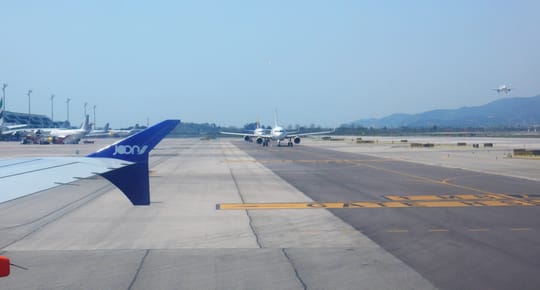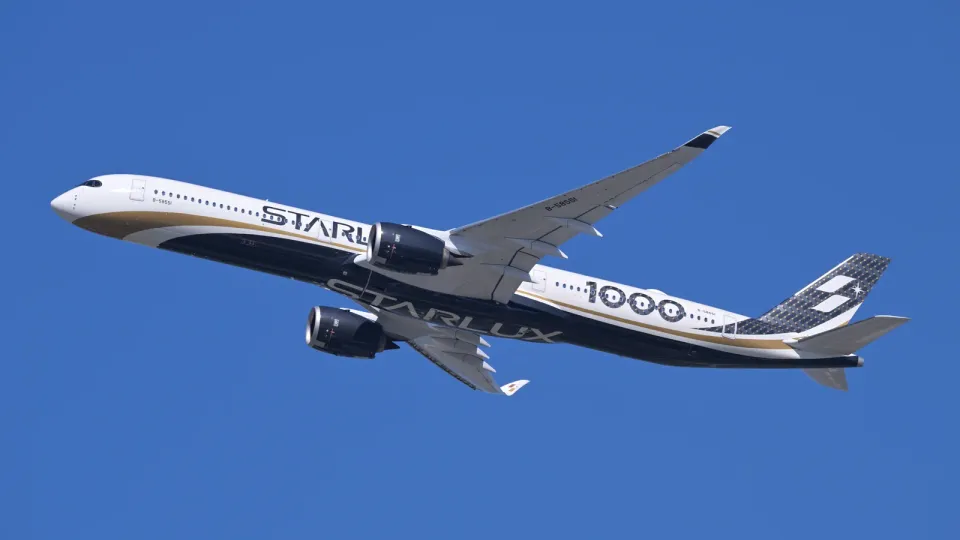
Barcelona's Josep Tarradellas Barcelona, El Prat Airport will gain a direct intercontinental connection to Asia, as STARLUX Airlines plans to launch a new route between Taipei (TPE) and Barcelona (BCN) in the first quarter of 2027. This significant development, subject to regulatory approvals, marks a major step in strengthening Barcelona's international connectivity and its economic and technological ties with Taiwan.
The Taiwanese airline intends to operate the route using its Airbus A350 fleet, including both the A350-900 and A350-1000 models. These aircraft offer a four-class configuration: First Class, Business, Premium Economy, and Economy-Tourist. This positions the new connection within the premium long-haul travel segment. STARLUX is currently the only Taiwanese airline providing First Class service.
The A350-900 model carries 306 passengers, with four in First Class, 26 in Business, 36 in Premium Economy, and 240 in Economy. The larger A350-1000 offers capacity for 350 passengers, including four in First Class, 40 in Business, 36 in Premium Economy, and 270 in Economy. This new route will expand premium connectivity options with Asia. It will also generate new opportunities for quality tourism, business, and academic exchanges.
Boosting Barcelona's Global Connectivity
The new operation represents a significant advance for Barcelona's international connections. It reinforces economic, technological, and institutional links with Taiwan, a global industrial and technological hub. The Comitè de Desenvolupament de Rutes Aèries de Barcelona (CDRA) led the sustained effort to promote and develop this route. The CDRA has engaged with STARLUX Airlines since the company's inception, intensifying discussions particularly since 2024. Their goal was to position Barcelona as a strategic destination within the airline's European expansion plans.
This work to attract and develop connectivity forms part of the CDRA's new Strategic Plan 2030. The plan prioritises strengthening long-haul connections with high-value-added markets and those with high economic potential. The Asia-Pacific region is a particular focus. The new route strengthens Barcelona's connectivity strategy with Asia, a key region for global economic development. Asia is especially relevant in high-value-added technology sectors. The connection helps consolidate El Prat Airport's role as an increasingly important long-haul infrastructure in Southern Europe.
Direct Impact on the Technology Ecosystem
Taiwan plays a critical role in the global semiconductor industry. It accounts for nearly 60% of worldwide production and over 90% of the most advanced chips. The direct connection with Taipei strengthens Barcelona's ambition to become a European hub for innovation, research, and semiconductor design. Barcelona actively works to attract design centres and activities linked to this industry. Officials consider this sector strategic for the future economy.
International scientific and technological facilities like the Barcelona Supercomputing Center (BSC) and the Institut de Ciències Fotòniques (ICFO) help position Barcelona's ecosystem. It ranks among Europe's most competitive for attracting talent, research, and investment. This new connectivity arrives during a period of strong sector growth. According to the latest Digital Talent Overview 2026 report by Mobile World Capital Barcelona, professional profiles related to semiconductors show the largest increase in demand. This demand grew by 97.01%, demonstrating the industry's development potential in Barcelona.
Barcelona's Strategic Initiatives
The Ajuntament de Barcelona (Barcelona City Council) launched an institutional and business mission to Taiwan in 2024. This mission specifically focused on the semiconductor sector. It aimed to promote technological collaborations and investment opportunities. The new air connection will help facilitate business, scientific, and institutional exchanges between both ecosystems.
The route also aligns with the Barcelona Impulsa strategy. This strategy focuses on economic diversification and attracting high-value-added activities. It strengthens Barcelona's international standing as a global city connected to key knowledge and innovation hubs. The CDRA, established in 2005, aims to promote new intercontinental routes from Barcelona Airport. The Generalitat de Catalunya, the Ajuntament de Barcelona, the Cambra de Comerç de Barcelona (Barcelona Chamber of Commerce), and Aena are all members of the CDRA.
The anticipated arrival of STARLUX Airlines in Barcelona will significantly enhance the city's global reach. It will provide crucial links to a leading technological powerhouse in Asia. This development promises to foster deeper economic ties and open new avenues for collaboration across various sectors for years to come.
Sign up for our new entrepreneurs community Bizcelona, now accepting our second wave of applicants.
Originally published by Barcelona City Council Press Room. Read original article.