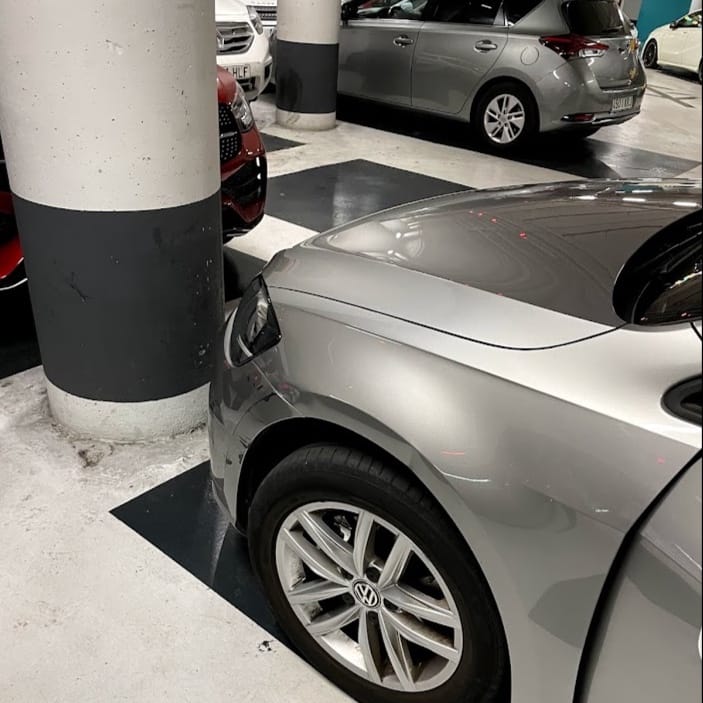
Developers of protected housing in Barcelona and L'Hospitalet de Llobregat could no longer be required to provide a minimum number of car-parking spaces, under a proposed change intended to make projects more financially viable. The reform would replace the current minimum of one space for every four homes within the area bounded by the Ronda de Dalt and Ronda Litoral ring roads.
The change forms part of a modification to the 1976 Pla General Metropolità (PGM), the metropolitan general planning framework. The Barcelona Metropolitan Area (AMB), the authority coordinating planning across the metropolitan area, gave the proposal provisional approval in late May; it still requires final approval from an urban-planning commission of the Department of Territory.
“The aim is to facilitate protected-housing developments in a housing-emergency context. Until now, many projects were economically unviable and had very difficult access to the market because of the additional cost of parking.”Xavier Mariño, AMB director of Urban Planning Policies and Natural Spaces
Different rules inside and outside the ring roads
The zero-minimum rule for protected housing would apply mainly to Barcelona and L'Hospitalet, while also covering parts of Cornellà, Esplugues de Llobregat and Sant Adrià de Besòs within the ring-road perimeter.
Protected-housing developments outside that area would still have to provide at least one parking space for every four homes. The proposed rules would also cap parking provision for protected housing in Barcelona and L'Hospitalet at one space per home.
- Protected housing within the ring roads: no minimum number of parking spaces.
- Protected housing outside the ring roads: at least one space for every four homes.
- Market-rate housing within the ring roads: at least one space for every four homes.
- Market-rate housing outside the ring roads with public transport access: at least one space for every two homes.
- Market-rate housing in more peripheral municipalities: at least one space per home.
Under the existing PGM, parking requirements depend on the size of each dwelling, ranging from one space for every four flats below 80 square metres to one space for each flat larger than 130 square metres. The proposed reform would remove that size-based system.
AMB cites transport access and housing costs
AMB planning documents describe parking spaces built into residential blocks as excessive for affordable developments because future residents do not always use them, and they may instead be sold or rented to third parties. The documents say the resulting costs can threaten a scheme's economic viability and reduce the supply of affordable homes.
For areas with less effective public transport, the AMB says minimum parking provision can help address transport shortfalls and reduce pressure on public space. Mariño said the proposal does not seek to stigmatise cars, but reflects different levels of dependence on private vehicles across the metropolitan area.
The amended PGM would replace planning-rule changes previously adopted across entire municipal areas. It applies to the 28 municipalities covered by the 1976 plan, rather than all 36 municipalities in the AMB; Barberà del Vallès, Castellbisbal and Corbera de Llobregat are outside its scope. The proposed rules will take effect only if the Department of Territory's urban-planning commission grants final approval.
Primary sources: Barcelona City Council. Reported by Manuel Arenas, catedra, GMG, lavanguardia.com, Gerard Pruna, areaverda.cat, El Periódico Barcelona.