Barcelona City Council's Presidency, Security and Interior Regime Commission has approved an integral plan to enhance security and coexistence in the Poble-sec and La Marina districts. This decision, made on Wednesday, responds to growing concerns over local issues in these Sants-Montjuïc neighbourhoods.
The plan, proposed by the Esquerra Republicana de Catalunya (ERC) municipal group, received support from the Socialist Party of Catalonia (PSC), Junts, and Barcelona en Comú (BComú). It focuses on increasing civic agent presence, improving degraded public spaces, and launching inclusion programmes for young and vulnerable residents.
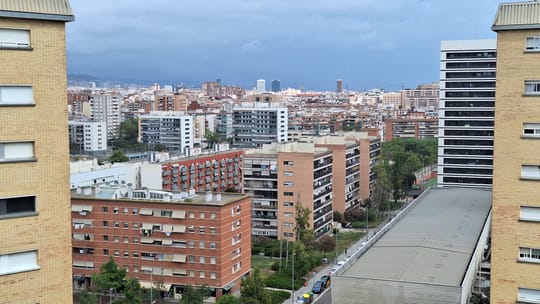
Poble-sec, known for its vibrant cultural scene and proximity to Montjuïc, and La Marina, a largely residential and industrial area undergoing urban transformation, both face unique challenges. Residents in these areas, which collectively house over 100,000 people, have voiced concerns about public safety and social cohesion. This plan aims to directly address these community needs.
Addressing Community Concerns
Jordi Coronas from ERC expressed significant concern about the current situation. He stated, "We are concerned about the current situation and the direction the Poble-sec, La Marina de Port, and La Marina del Prat Vermell districts are taking." He added that "problems" mix within these areas. Coronas highlighted recent shootings, distinguishing organised crime from the vulnerability of homeless individuals living on Montjuïc mountain.
The ERC proposal advocates for a coexistence model built on "proximity and mediation." This approach will work alongside an expanded presence of both the Guàrdia Urbana (local police) and the Mossos d'Esquadra (Catalan regional police). Coronas argued that the solution is not "exclusively more police and tougher Penal Code." He stressed the need for "going to the root" with more street teams and community engagement.
Council's Response and Political Views
Raquel Gil, the district councillor for Sants-Montjuïc, acknowledged the need for a "holistic and generous" approach to these areas. She confirmed that two existing tables, involving residents, citizens, and traders, already discuss improvement proposals. Gil admitted that "serious" shootings in La Marina contributed to a "feeling of insecurity." This occurred even though general crime data indicates a decrease in overall criminal activity.
Neus Munté of Junts described ERC's proposal as "timely." She asserted that "security and social rights complement each other." However, Munté cautioned, "talking about coexistence without effective security is frivolous." She stressed the need for increased police presence. Barcelona en Comú supported the plan, calling for an "integral" response to residents' concerns. They also criticised the current socialist mandate, suggesting Poble-sec and La Marina had "stopped being a priority" for the City Council.
Implementation and Future Oversight
The People's Party (PP) shared the diagnostic assessment but abstained from the vote. They believe the plan should place greater emphasis on police presence and sanctioning capabilities. Vox voted against the initiative, labelling the text "a catch-all." They argued that its proposed measures, while potentially useful for combating poverty, are "insufficient to combat criminal gangs."
The approved text also includes a proposal to establish a monitoring table in each district. These tables will track progress on addressing coexistence and security issues. This ensures ongoing community involvement and oversight as the plan rolls out across the Poble-sec and La Marina neighbourhoods.
Come and join our Barcelona English Speakers community on WhatsApp.
Originally published by betevé. Read original article.