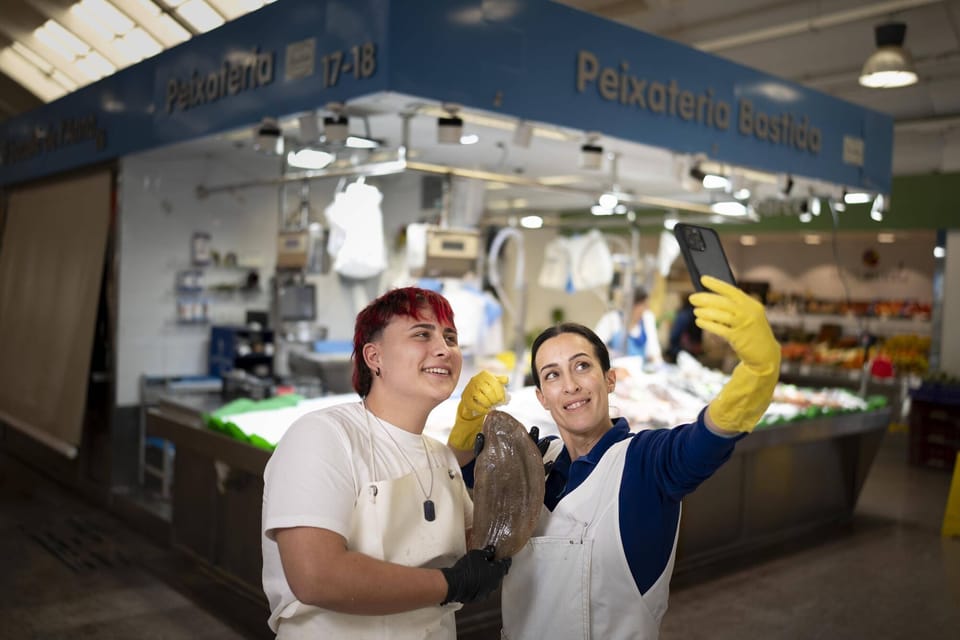
Market stallholders across the Barcelona area are transforming their traditional counters into digital studios, using platforms like TikTok and Instagram to reach new customers. This innovative approach helps local commerce adapt to changing consumer habits and combat a trend of market stall closures.
This digital shift comes as 20 of Barcelona's 91 municipal markets currently have more closed stalls than open ones. Stallholders are recording vertical videos and explaining products on camera, aiming to connect with customers who increasingly discover businesses through their phones. Ismael Salamanca, a poultry seller at Gavà Market, known online as Ismael Cocinillas, represents this transformation. "I started making recipes for customers who were at home," he explained, referring to the pandemic's early days.
What began as a useful tool for his poultry stall grew significantly, becoming a second job. Salamanca now boasts over 30 million likes on TikTok and 1.1 million followers on Instagram. He has collaborated with major brands such as Doritos, Amazon, and TGT, yet he insists his primary connection remains his market stall. Salamanca summarises his dual life: "In the morning, a poultry seller; in the afternoon, an influencer."
Digital Transformation in Local Markets
Sergi Vilamala, Manager of Commerce for the Barcelona Provincial Council (DIBA), oversees markets in 58 municipalities across the province, excluding Barcelona city. He places profiles like Salamanca's within the broader digital transformation of local commerce. Vilamala states, "Creating content or having spaces for interaction with citizens through digital platforms is basic and essential to stay current and connect with young audiences." Salamanca believes this effect extends beyond his own business. If someone visits his stall after seeing his online profile, they will likely also buy fruit, fish, or other products from the market. This idea aligns with Gavà Market's reality; it is one of the province's busiest markets, recording nearly two million entries last year, with 23 of its 24 stalls operating at full capacity.
Engaging Customers with Product Knowledge
At Bastida Fishmongers in Viladecans Municipal Market, social media addresses a specific need: explaining fish better, answering questions, and building trust. Co-owner Lorena Masedo notes that digital transformation links directly to adapting the trade to how customers now inform themselves and make purchases. The fishmongers, with over eight decades of history, already had a digital presence. However, the real push came when they realised they needed to answer many in-person questions online. Their content creation helps address common fears and doubts about buying fish. Their videos cover topics like bones, preservation, and how to introduce fish into a baby's diet. "Many people do not eat fish because they fear bones," Masedo explains.
Adapting to New Consumer Needs
This approach led to their baby-adapted fish block, catering to parents following the Baby-Led Weaning (BLW) method. This initiative arose from demand from mothers and fathers seeking safer ways to introduce fish to their children. Josep Maria Bastida, Masedo's son, joined the fishmongers a few months ago, proving crucial in this new phase. His arrival changed how they communicate about their trade. Masedo admits he brought "fresh air" to the business's communication. Bastida acknowledges he initially knew little about the sector. He had to understand the product thoroughly to explain it accurately on camera. Both agree that since they started posting more frequently, they have received messages from mothers interested in the baby line and customers visiting the market after finding them online.
New Business Models and Global Reach
In Masnou, the arrival of Foodlona at its municipal market introduces another business model to the influencer phenomenon. Foodlona is a prepared food brand that entered the market with an existing online community and a clear strategy. "Foodlona is a prepared food shop," owner Miquel Antoja summarises. The project consolidates activities he previously ran in parallel, making takeaway food the central focus. Their move into the market was not an improvised test. Antoja explains that market life "is always rewarding" because customers entering already know what they want and value quality, freshness, and craftsmanship. For Foodlona, the Masnou stall serves as a new stage and a validation space. "The market is a window to see how you work," he states. He rephrases this, saying entering a market allows them to confirm the project "fits" alongside other traders.
Antoja admits, "The main goal is to sell more" on their social media. They pursue these sales with useful content about products and preparation. "We try to transmit everything we do without filters. At the same time, we educate so that people watching the videos also understand and learn," he explains. In Masnou, where they have been established for only a few months, this intention translates into concrete measures like their own menu priced at 9.90 euros. "We came with the idea that people get to know us, try us, and return," Antoja adds.
From Local Stall to International Sensation
At Fondo Market in Santa Coloma de Gramenet, the setup created by Chen Ting and Salva Serra takes the market influencer phenomenon to an even more unique level. Ting, a Chinese tour guide based in Catalonia, increased his social media presence during the pandemic after losing his job. He aimed to show his audience more authentic Chinese cuisine and a lifestyle that, he believes, connects people through food. Salva, also known as Toto, had over three decades in professional cooking and had ended up at Punseti Offal Stall within the same market. Their connection formed around cooking, fresh produce, and cameras. They became a team that surpassed the usual logic of a stall: Ting cooks and films, while Salva provides expertise, products, and a constant presence at the offal stall.
Ting has approximately 17 million followers on the Chinese social network Douyin. His videos, which "always feature the market," gather millions of views. Salva explains that sales of 'capipota' (a pig's head and trotters stew), previously a niche item at his offal stall, have soared since it started appearing in videos and recipes shared with Ting. Both report that some of their audience visits the market after seeing them online, including visitors who travel specifically to Santa Coloma to meet them. Beyond the sales figures, the Fondo Market duo shows how content creation can strengthen a stall, reach new audiences, and project the market as a space far beyond simple shopping. This trend highlights the adaptability of Barcelona's local markets in a digital age.
Sign up for our new entrepreneurs community Bizcelona, now accepting our second wave of applicants.
Originally published by El Periódico Barcelona. Read original article.