Exclusive bays for restaurants, bars and hotels
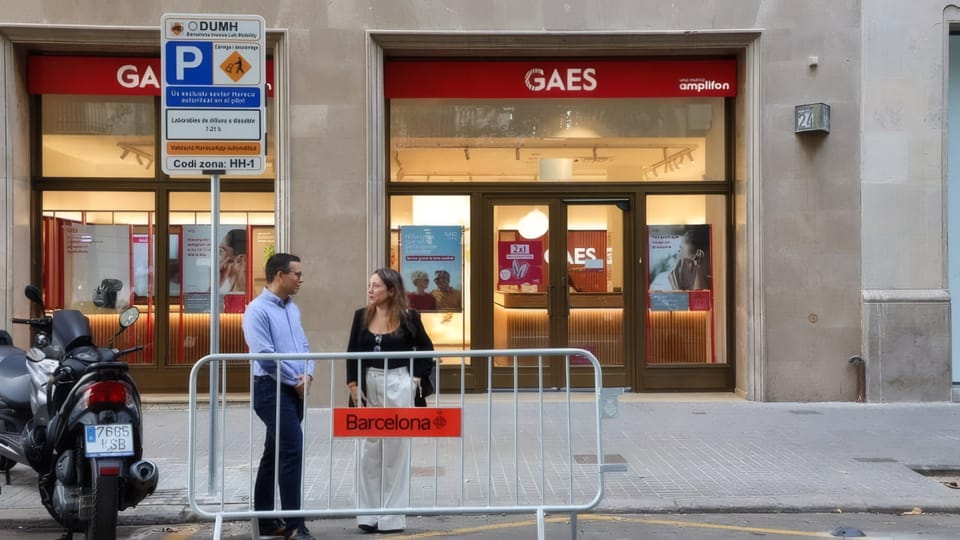
Barcelona has launched three exclusive loading and unloading bays on Friday 09 October 2026 for the distribution of goods to bars, restaurants, cafes, and hotels. The pilot project, known as HORECA HUB Barcelona, is designed to reduce unnecessary vehicle trips, speed up deliveries, and improve public space coexistence. The new bays are located at the intersection of Pau Claris and Casp streets, with one bay, and on La Rambla del Raval, with two. During designated hours, only participating distribution companies can use the spaces, which must be reserved in advance via a digital platform that assigns usage slots.
Mobile logistics hubs reduce congestion
The model transforms delivery vehicles into small mobile logistics centres. Once parked in the reserved bays, drivers complete deliveries on foot or using light transport. On return trips, they collect reusable containers, bottles, kegs, and crates from businesses, a key operational need in the HORECA sector. Seven vehicles are expected to share each bay in a coordinated manner, reducing the time drivers spend searching for parking and eliminating repeated circuits around nearby streets. According to a municipal assessment, goods distribution accounts for 17% of mobility in Barcelona and generates 31% of PM10 and 34% of nitrogen oxide (NOx) emissions.
Technology and monitoring to evaluate impact
The pilot includes a digital coordination platform developed with the Universitat Oberta de Catalunya (UOC), which will monitor reservations, vehicle arrivals, and bay occupancy times. Sensors and radio-frequency identification (RFID) technology will track deliveries and collections. The UOC’s URBANLOG research group, in collaboration with the Association of Distribution Companies for Hospitality and Food in Catalonia (ADISCAT), is providing scientific and technological support to evaluate the system’s performance over the six-month trial.
Today we have taken a very important step because we are moving from diagnosis to a real test,
Eight distribution companies are involved: DDI-Distribución Directa Integral (Damm), Disbesa, Coseral BCN, Distribuciones Serrano, Dist Crusat, Discer, Qualianza, and Euroestrelle.
Part of broader sustainable mobility strategy
The initiative forms part of the Barcelona City Council’s strategy to transform urban goods distribution (DUM), particularly in the hospitality sector, which accounts for 22.2% of city deliveries according to a joint study by the Council, Barcelona Regional, Barcelona de Serveis Municipals (BSM), and the Metropolitan Area of Barcelona (AMB). The project is led by Barcelona Innova Lab Mobility, an initiative of the City Council supported by Fira de Barcelona and Mobile World Capital Barcelona. It aligns with the city’s goal to cut emissions from professional mobility by 50% by 2030, as outlined in the new Urban Mobility Plan 2025–2030 published by the Ajuntament de Barcelona. Data collected during the pilot will include delivery times, routes, vehicle numbers, and bay usage rates. The experiences of distributors and businesses will also be assessed to determine whether the model can be expanded to other parts of Barcelona or replicated in other municipalities.
Primary sources: uoc.edu, Barcelona City Council, barcelona.cat. Reported by bsmsa.cat, dr.mobileworldcapital.com, El Periódico Barcelona.