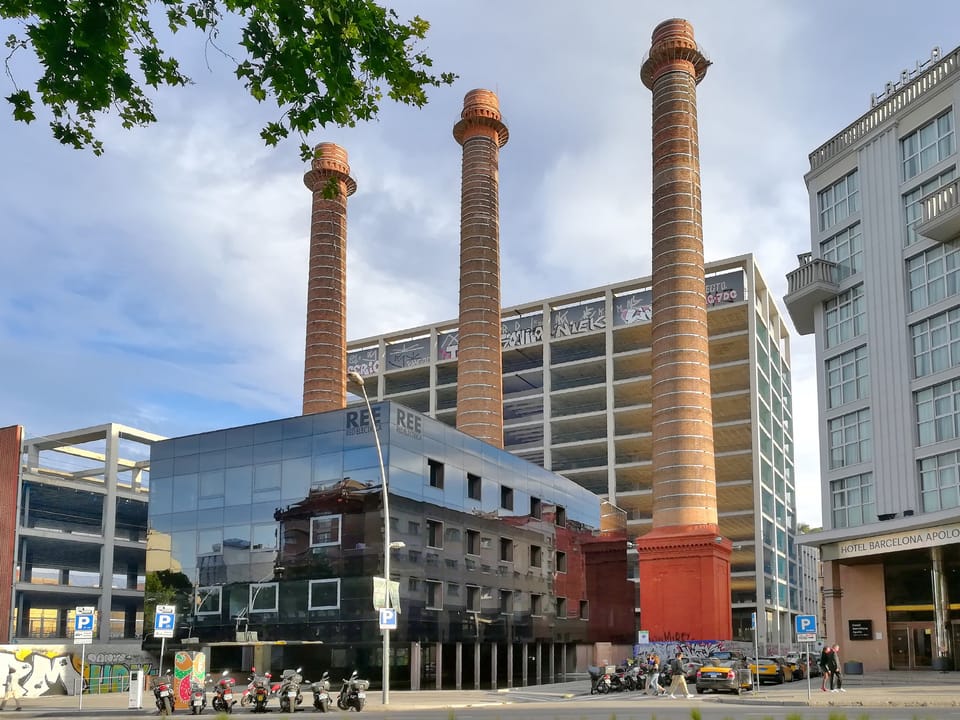
Barcelona City Council on Tuesday approved planning to relocate the city’s Operational and Emergency Coordination Centre, known as CECOR, to the Llac building at Les Tres Xemeneies on Avinguda del Paral·lel in Poble-sec. The centre coordinates responses between emergency services, and the move is expected to free the current CECOR site on Carrer de Lleida for planned housing and public facilities.
The project has a budget of €36.6 million, including €23.15 million for adapting the building. The new centre will bring together the Guàrdia Urbana, Barcelona’s municipal police; the Mossos d’Esquadra, Catalonia’s regional police; Barcelona Firefighters; and the Medical Emergency System.
According to El Periódico’s account of Tuesday’s municipal urban planning commission, PSC, Junts, Barcelona en Comú, ERC and PP backed the proposal, while Vox abstained. The council’s planning announcement sets out the transformation of the former industrial site into offices, gardens and public facilities.
“It allows a private building to be transformed into a public infrastructure at the service of all citizens, a new nerve centre for emergencies,” Deputy Mayor for Urban Planning Laia Bonet said.
Work is expected to finish in late 2028
The municipal government said in July that construction is expected to begin in early 2027 and finish by the end of 2028. The Llac building is part of the historic Poble-sec electrical-factory complex, which has been unused since 2012.
- €23.15 million: estimated cost of adapting the Llac building for emergency-service use.
- €36.6 million: total planned investment, including associated project costs.
- Early 2027: expected start of construction.
- End of 2028: expected completion date stated by the city council in July.
The redevelopment agreement with property company Conren Tramway allows the company to operate part of the complex as offices in exchange for transferring space for public services. Conren Tramway has already begun converting the main building into 22,500 square metres of offices.
Opposition parties seek guarantees on cost and timing
Opposition parties did not oppose the emergency-centre project, but raised concerns about costs, delivery dates and its effect on later construction at the current Lleida Street site.
Junts councillor Damià Calvet said the cost was “considerable”. Barcelona en Comú councillor Lucía Martín said she expected CECOR not to become operational until “2029 or 2030”, delaying public-housing construction planned at the Fira site.
ERC councillor Eva Baró called for facilities capable of managing “increasingly complex situations, climate emergencies, and technological risks”. El Periódico reported that Vox cited flood vulnerability in the area when it abstained.
Residents can follow the project through the Barcelona City Council’s Tres Xemeneies planning announcement, which covers the wider redevelopment of the site.
Can Felipa pool is also approved
The council also approved a €23.38 million refurbishment of Can Felipa in Poblenou, including a new swimming pool. The council estimates the work will last about 30 months, beginning in winter, with the facility due to open in summer 2029.
All opposition parties supported that scheme. Junts asked the PSC-led municipal government to address neighbourhood demands over relocating the civic centre currently based at Can Felipa.
Primary sources: Barcelona City Council. Reported by El Periódico Barcelona.