Update, 3rd November 2026: The Barcelona City Council selected firms Kapsch and Acisa to conduct four-month pilot tests of AI-managed traffic lights, each receiving €100,000 in funding, with deployments planned in real urban settings by the end of 2027 following infrastructure upgrades. Kapsch's Matcab system uses reinforcement learning to adapt signals in real time, while Acisa's Mobia creates a digital twin of the network using sensor and vehicle data to coordinate lights across corridors, according to La Ciutat.
Photo: Barna.News
This story was first reported by Elperiodico.
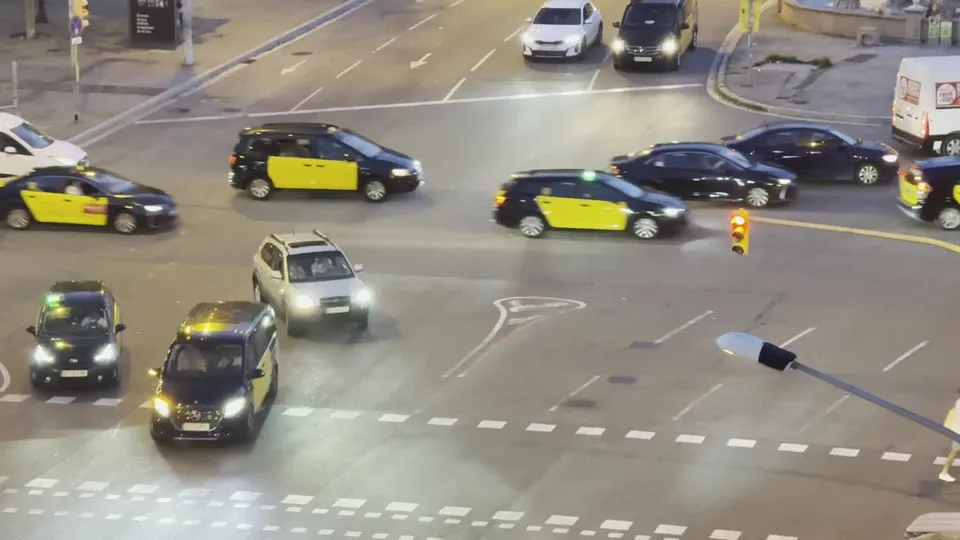
Barcelona will launch a pilot project in late 2027 to test artificial intelligence in managing traffic lights across several intersections, as Elperiodico reported. The initiative, led by Barcelona Innova Lab Mobility (BILM), a joint venture between Barcelona City Council and Fira de Barcelona, with support from the Mobile World Capital Foundation, will evaluate two AI-driven solutions to improve mobility.
Two AI Systems to Be Tested
- Kapsch (via Matcab): A demand-based system that uses AI to adapt signal timing in real time, aiming to reduce congestion by up to 10% and cut waiting times for active mobility by 5%.
- Acisa (MOB-IA): A digital twin of the road network that predicts traffic patterns and coordinates signals across corridors, potentially reducing travel delays by 10–20%.
The city will contribute €100,000 each to both pilots, part of a broader roadmap developed with UPC to gradually integrate AI into traffic management.
New Partners Join Mobility Lab
Transports Metropolitans de Barcelona (TMB) and the Autoritat del Transport Metropolità (ATM) have formally joined BILM, strengthening collaboration between public transport operators. ATM director general Manuel Valdés said: "We're not talking about lab innovation, but taking it to the streets to make it useful for users."
The trials coincide with tramway extension works along Avinguda Diagonal, requiring careful traffic reorganisation. Residents should expect updates from BILM on test locations and timelines in early 2027.
Sources: El Periódico.