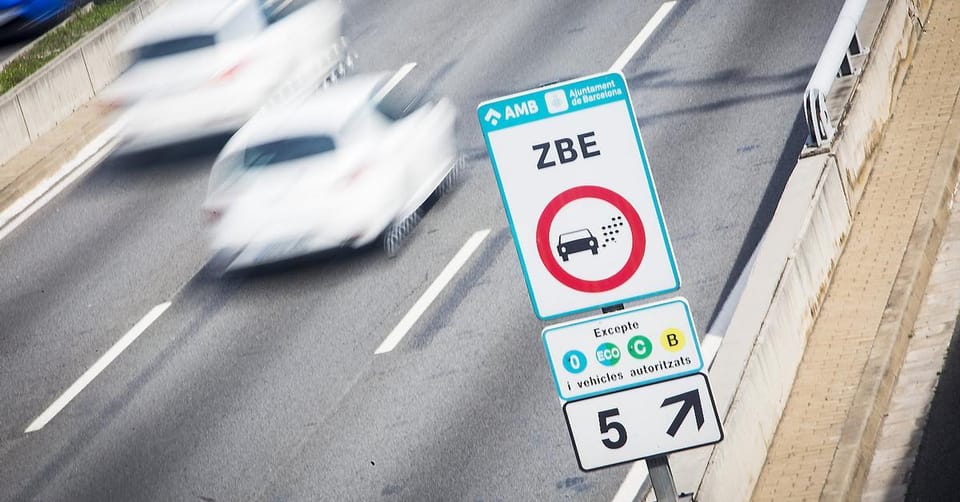
The Barcelona Metropolitan Area (AMB) council has approved a new Urban Mobility Plan (PMMU) 2025-2030. This plan aims to restrict yellow-label vehicles from low-emission zones (ZBEs) across the metropolitan area by 2028. This move targets a significant portion of the region's vehicle fleet. It will impact between 20% and 30% of metropolitan vehicles. This marks the second attempt to implement such a restriction, following an initial plan for 2022 that the pandemic disrupted.
The AMB's proposal builds on existing Generalitat de Catalunya regulations. These rules require cities with over 50,000 residents to limit older vehicles. Initially, these restrictions apply to cars and motorcycles, extending to heavy vehicles by 2030. However, the AMB itself admits it lacks direct power. It cannot compel local councils to enforce these restrictions or apply penalties.
Marc Iglesias, AMB's director of sustainable mobility, explained the delay. He stated, "the pandemic dynamited all calendars." Now, electric and hybrid car sales surpass diesel vehicle sales. This makes the 2028 target an "opportune and navigable horizon," despite recent Rodalies train service issues and uncertainty over interurban bus service contracts. These bus contracts have seen extensions for 25 years.
New Restrictions for Older Vehicles
The new plan not only sets a 2028 date for yellow-label vehicle restrictions but also expands the ZBE to new municipalities. Sant Andreu de la Barca is one such area. Additionally, the plan formally integrates municipalities already in the process of implementing ZBEs. These include Barberà del Vallès, Sant Feliu de Llobregat, Sant Just Desvern, Molins de Rei, and Sant Vicenç dels Horts.
Mr Iglesias noted, "the experience so far is between good and very good." The AMB currently operates 135 cameras within ZBEs to monitor compliance. These cameras capture over 500,000 vehicle registrations daily, passing data to the respective municipalities. The metropolitan body also receives approximately 3,000 calls each month regarding ZBE issues.
Expanding Low-Emission Zones and Cycling
Beyond vehicle restrictions, the AMB proposes accelerating the expansion of its cycling network and the AMBici shared bike service. This includes offering the AMBici service in the Vallès area. The new plan aims to complete the Bicivia network in the coming years. The AMB has already finished 78% of the main network.
The metropolitan mobility roadmap also seeks to strengthen the Bicibox system. This system provides over 3,000 secure, enclosed bicycle parking spaces across 31 municipalities. The AMB plans to include large-capacity installations to promote intermodality with other public transport options. It also aims to connect municipalities, industrial estates, and schools via cycling or walking networks.
AMBici Success and Bicing Connection
The AMB is also exploring connecting the AMBici service with Barcelona city's Bicing system. This consideration comes as the current Bicing contract ends in 2028. Any agreement will depend on the Ajuntament de Barcelona and the future management model.
Marc Iglesias highlighted the success of AMBici. He detailed, "AMBici has been a success. We currently have 24,000 users and very good acceptance, with 2,600 bikes and 8,000 daily uses." He added, "With these starting conditions, of a consolidated service, we can afford to equal the offer across the territory and expand and work with Barcelona." However, Joan Maria Bigas, AMB's director of mobility and transport, cautioned that expansion will not be easy. He stated that officials must proceed "municipality by municipality" and study aspects like unified contracts. "It must be analysed very carefully," Mr Bigas concluded.
Setback in Bus Service Management
The new metropolitan plan faces a significant challenge regarding bus service management. The AMB intended to assume control of all urban bus lines operating entirely within AMB municipalities by 2030. Many of these lines currently depend on the Generalitat, with officials expected tenders in 2028. However, the Generalitat announced an urgent decree to extend existing contracts for another six years. These contracts have already been expired and extended for over 20 years.
This decision by the Department of Territory represents a major setback for the AMB's plans, delaying its objective. Sources from Territori explained that the AMB should not worry. They stated, "the service will still have improvements." These improvements will come from operators, and the Generalitat will oversee them. Territori also noted that, if appropriate, "specific cases to separate some lines could be studied."
Sources from the metropolitan body expressed surprise. They stated they were unaware of the Generalitat's change of mind until yesterday. They added, "We must analyse and assess how the new urgent decree affects the AMB and then make any necessary adjustments." The AMB has tendered nine contracts during this term, covering the first and part of the second metropolitan ring. These actions include areas like Barcelonès Nord, Baix Llobregat, and logistics and industrial zones.
The AMB's new Urban Mobility Plan outlines ambitious goals for sustainable transport in Barcelona. Despite the unexpected challenge in bus service management, the authority remains focused on expanding low-emission zones and enhancing cycling infrastructure. Officials will now carefully review the Generalitat's bus decree to ensure continued progress towards a greener, more connected metropolitan area.
Come and join our Barcelona English Speakers community on WhatsApp.
Originally published by Ara Cat. Read original article.