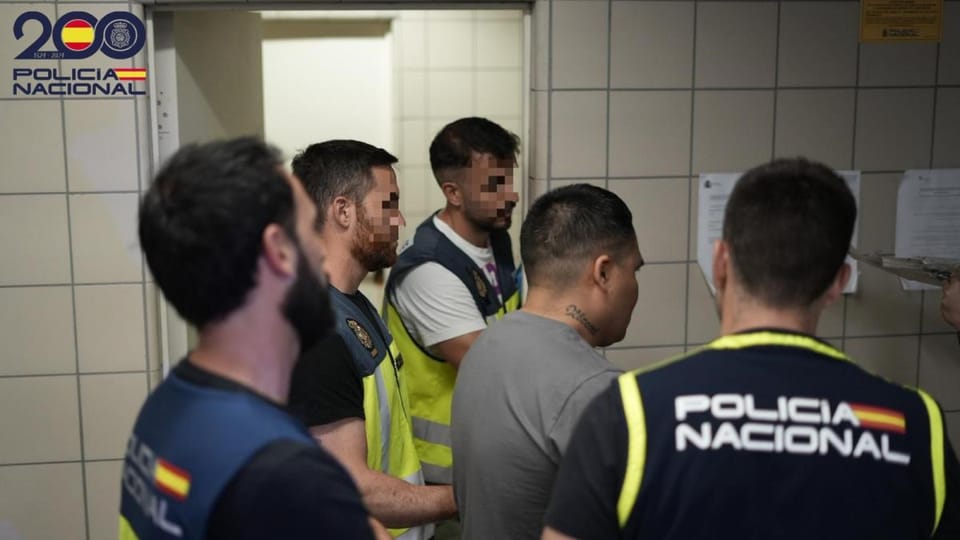
Spanish National Police recently expelled 21 repeat offenders from Spain. These individuals, responsible for over 170 police records, had committed most of their crimes in Barcelona and its metropolitan area.
Repeat Offender Profiles
The expelled individuals accumulated more than 170 police records. These included serious offences against property and people. Crimes ranged from robbery with force or violence and theft to public health offences, illegal detention, and attempted homicide. The high number of repeat offences, particularly against property, often contributes to a heightened perception of insecurity among the public in urban centres like Barcelona. Seven of these individuals also had records for domestic abuse, highlighting a broader pattern of serious criminal behaviour. One person faced charges for sexual assault, underscoring the gravity of the offences committed. Police classify these individuals as "repeat offenders" because they commit numerous crimes, mainly against property. This consistent pattern of criminal activity prompted the authorities to pursue their expulsion.
Legal Framework for Expulsion
The General Commissariat of Immigration and Borders (Comisaría General de Extranjería y Fronteras) holds exclusive responsibility for these expulsions. Its Central Repatriation Unit (UCR) carries out the forced removal of foreign nationals. This applies to those in irregular immigration status or who have committed serious infractions under Spain's immigration law, known as the Ley de Extranjería. This legal framework allows for administrative sanctions, such as expulsion orders, against individuals who pose a threat to public order or are in Spain without proper documentation. Executing these repatriations required extensive preliminary work. Officials needed to secure specific expulsion decrees from the Government Sub-delegation or obtain judicial orders from the courts.
Furthermore, authorities sought authorisation from all courts where these individuals had pending cases. This step ensures that all legal proceedings are properly addressed before an expulsion can proceed. Additionally, police worked closely with consulates to obtain necessary travel documentation for the individuals. This process can often be complex and time-consuming, requiring diplomatic coordination. Some foreign nationals were held at Barcelona's Foreigners Internment Centre (CIE) while their cases were processed. This centre, located in the Zona Franca district of Barcelona, temporarily houses individuals awaiting deportation or resolution of their immigration status. Other individuals were directly arrested specifically for their removal from Spanish territory once all legal requirements were met.
Inter-Agency Collaboration and Logistics
After securing all judicial authorisations and personal documents, authorities arranged a coordinated transfer of the detainees to Madrid. There, officials from the Central Repatriation Unit took custody of the individuals. They then carried out the repatriations via a specially chartered flight, a common method for large-scale expulsions to ensure efficiency and security. The Provincial Immigration and Borders Brigade of Barcelona (Brigada Provincial de Extranjería y Fronteras de Barcelona) handled all procedural aspects of the operation. Local police stations in Cornellà de Llobregat and Manresa also played a role, assisting with the initial stages of the operation.
Agents from the Mossos d'Esquadra, Catalonia's autonomous police force, actively helped locate foreign nationals matching the required profile for expulsion. This inter-agency collaboration was critical. It ensured the effective execution of the operation, allowing for the expulsion to be completed within 72 hours due to the fixed schedule of the chartered flight. These expulsions aim to reduce crime rates and enhance public safety in Barcelona and its metropolitan area. The operation highlights ongoing efforts by Spanish authorities to address repeat offending by individuals in irregular status, reinforcing the rule of law and improving community security.
Come and join our Barcelona English Speakers community on WhatsApp.
Originally published by La Vanguardia Barcelona. Read original article.