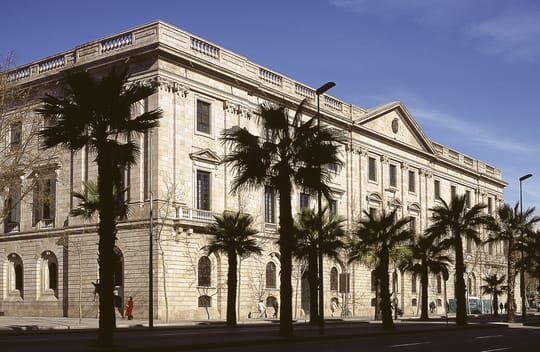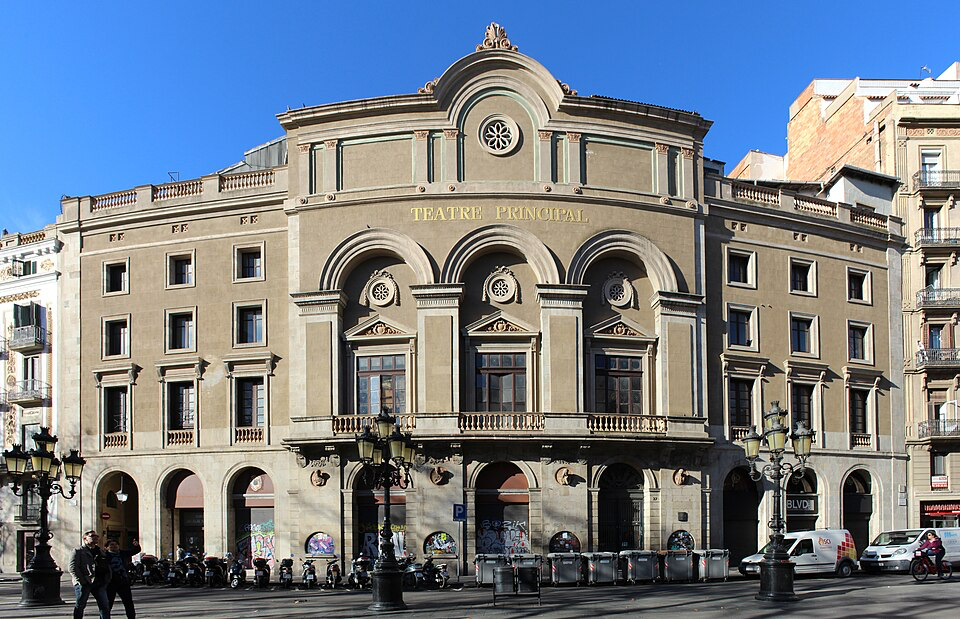
Barcelona's historic Teatre Principal on La Rambla is undergoing a significant renovation, with private investment now projected to exceed 50 million euros, aiming for an autumn 2028 reopening. This ambitious project seeks to revitalise the city's oldest theatre. It has largely remained closed for over two decades. Extensive demolition work is currently underway across all areas of the building. Tot Barcelona observed this during a recent visit.
Major Investment and Reopening Plans
Hotellier José María Trenor drives the project. He confirmed the private investment will "climb above 50 million euros, double the initially foreseen amount," according to Tot Barcelona. This increased cost reflects the full scope of the transformation required for the historic building. Trenor, founder and CEO of Atir Hospitality, expects to recover this substantial investment in 10 to 15 years. Renovation works started in February 2026, five years later than originally planned. Activity is now at its peak.
Four Distinct Performance Spaces
The renovated Teatre Principal will feature four distinct performance areas. These are designed to host a wide range of cultural activities. These include a main hall with 850 seats, suitable for conventional theatre productions. The versatile Jai Alai fronton will accommodate up to 1,500 people, offering a multi-purpose space. Additionally, the intimate Teatre Latino will cater to 250 spectators, ideal for smaller musicals and performances. The Cúpula Venus is a striking dome. It measures 14 metres in diameter and 17 metres high. It will hold up to 200 guests. This space previously hosted renowned performers such as Pepe Rubianes, Christa Leem, Loles León, and Ángel Pavlovsky.
The plan is for the Principal to host musicals, theatre, immersive activities, and various presentations and events. A restaurant and a terrace offering views of La Rambla will also form part of the new complex. All four spaces can operate simultaneously or independently, providing flexibility for diverse programming. The Jai Alai fronton spans approximately 1,500 square metres. It has two tiers of seating. The inscription "Jalai Alai Palacio" still appears on one of its walls.
Architectural Vision and Historical Preservation
The architectural firm Batlle i Roig is executing the renovation. Architect Enric Batlle detailed the façade's completion. It will finish by the first quarter of 2027. This coincides with the end of broader La Rambla renovation works. The design will restore the façade to its 1847 conception. Architect Francesc Daniel Molina, known for his work on Plaça Reial, created this design. This restoration includes an access point designed to make "La Rambla enter inside the theatre," according to Batlle. This will create a spacious lobby connecting all the building's internal spaces.
The project aims to preserve the theatre's protected elements, as the building is a cultural asset of local interest. The renovation blends tradition with modernity. One significant intervention involves opening the fronton all the way to the theatre's façade. This façade faces La Rambla and is currently obscured. Works have also uncovered surprises. These include a 1980 mural by Pilarín Bayés on one of the staircases. Workers have protected it for preservation. An unidentified photograph of a man in a tie also hangs in one of the spaces. Furthermore, sculptor Susana Solano has incorporated rubble from the Principal into an art installation. It is displayed on Avinguda de la Catedral. Two restored seats from the fronton will be exhibited at Galeria Único from 8 July.
A Rich History on La Rambla
The site of the Teatre Principal holds a deep historical significance for Barcelona. Between 1596 and 1603, a "corral de comèdies" known as Teatre de la Santa Creu was built here. This early theatre linked to the former Hospital de la Santa Creu. It used performance revenues to fund its care activities. The building has undergone multiple reconstructions throughout its long history. The Principal has suffered four fires, with one in 1787 necessitating a complete rebuild. The name Teatre Principal was adopted in the 19th century.
Francesc Daniel Molina's 1847 reform shaped the theatre's façade and the Cúpula Venus. In 1918, architect Adolf Florensa reconstructed the venue, adding the Jai Alai fronton and the Teatre Latino. Following another fire before the Civil War, the building was rebuilt with Art Deco influences. Over its four centuries, the Principal has hosted operas, theatre, concerts, dances, and Basque pelota exhibitions. It has also been the setting for significant social, economic, and political events. These include serving as the headquarters for the Ateneu Barcelonès. It hosted creditor meetings for Spain's first railway lines. It also held POUM meetings during the Civil War.
La Rambla's Cultural Transformation
The reopening of Teatre Principal is a key step in Mayor Jaume Collboni's vision to establish La Rambla as Barcelona's grand cultural axis. This initiative aims to enhance the street's cultural offerings, complementing existing major venues. These include the Gran Teatre del Liceu, the Teatre Poliorama, the Palau de la Virreina, and the Centre d’Arts Santa Mònica. Additionally, other significant cultural projects are underway nearby. The Antiga Foneria dels Canons will open in 2028 as the Digital Art Centre of Catalonia. The Club Capitol will also become a municipal property, transforming into a new theatre with two halls. This collective effort promises to solidify La Rambla's position as a significant cultural destination for residents and visitors alike.
Sign up for our new entrepreneurs community Bizcelona, now accepting our second wave of applicants.
Originally published by Tot Barcelona. Read original article.