Photographic Testimony Reveals Daily Struggles
A group of residents in the Sant Antoni area of Barcelona's Eixample district have spent months documenting deteriorating conditions on their streets, sharing mobile phone images that reveal open drug use, public defecation, and intoxicated individuals sleeping rough. The footage, reported by La Vanguardia on Wednesday 28 October 2026, shows scenes along Carrer Aldana and Avinguda Mistral, where residents say people are smoking crack cocaine in full view, often near schools and children’s play areas. One long-term resident described the situation as a descent into hell, recalling how a man living on the pavement outside a travel agency shouts at night, defecates in plant beds, and sometimes walks naked, babbling incoherently. "We leave the house and look both ways to see if he’s there," said a 29-year-old woman who has lived in the area her whole life. She added that she no longer lets her 94-year-old grandmother sit on benches due to the risk of encountering bodily waste.
Impact on Daily Life and Community
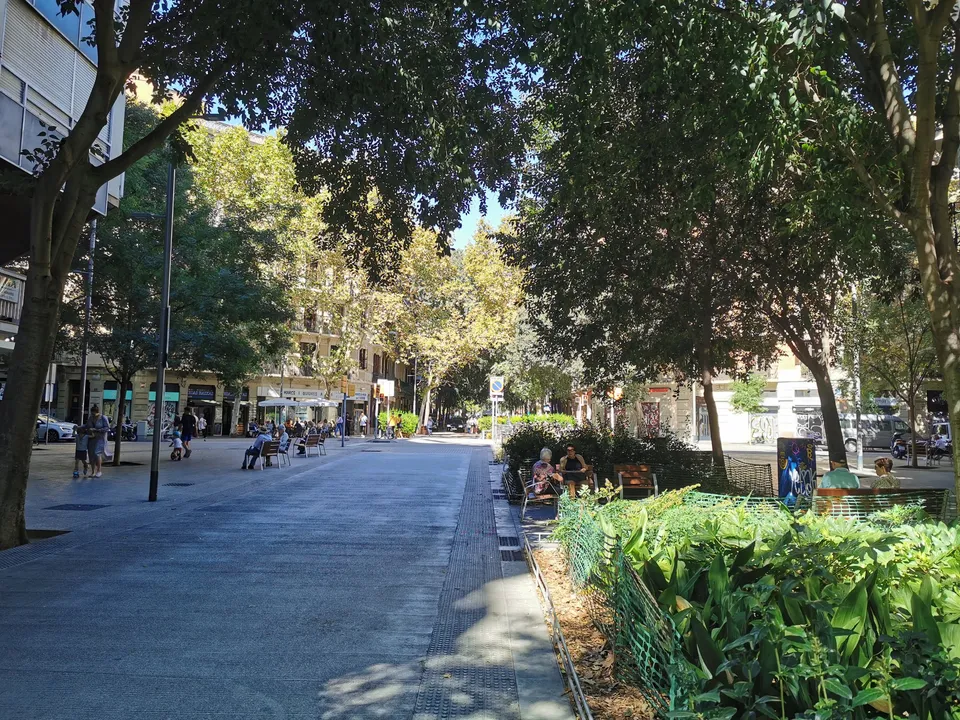
Many residents report changing their routines. A 55-year-old woman, born and raised in the neighbourhood, said she felt fear when she encountered several men inhaling nitrous oxide outside her building at 5am while leaving for the airport. She said she used to feel safe at any hour but no longer does. Another resident, 35, said that constant drinking and littering outside her home on Marquès de Campo Sagrado have led her to consider selling her flat. "It used to feel like a family neighbourhood, but now…" she said. The Sant Antoni Superilla, a pedestrianised zone designed to promote community life, has become a focal point for the crisis. Residents say that after the city removed benches near a school in September 2026, people without homes and those drinking heavily relocated to the steps of disused ground-floor units nearby.
"We met with the mayor and were told that police and Mossos d'Esquadra have shut down so many drug flats in Raval that users are now moving to our streets,"
said representatives from the local traders’ association Som Sant Antoni. They have called for more foot patrols, but say authorities cite lack of resources.
Community Responses and Ongoing Efforts
Local groups like the neighbourhood association El Cor and the NGO De Veí a Veí stress that many affected individuals are seriously ill and in need of support, not removal. They warn that social services are failing to keep pace with the crisis. "The problems of people without homes become the problems of the neighbourhood, and they grow worse over time," said El Cor. De Veí a Veí noted that some residents already provide meals and basic hygiene help to the most vulnerable, including an elderly man who has been found unconscious in urine near Avinguda Mistral. The group urged city institutions to strengthen collaboration with community organisations. A working group on homelessness, to be formed by the Ajuntament and local entities, is expected to begin soon, offering a glimmer of hope for coordinated action. Meanwhile, city council has begun construction works on Carrer Borrell and Carrer Parlament as part of a €11.5 million urban renewal project, with further works on Carrer Aldana and Carrer Parlament scheduled for tender in 2027 and expected to start in 2028 at a cost of an additional €5 million.
Sources: La Vanguardia, Ajuntament de Barcelona.