One in Five in Treatment for Work-Related Distress
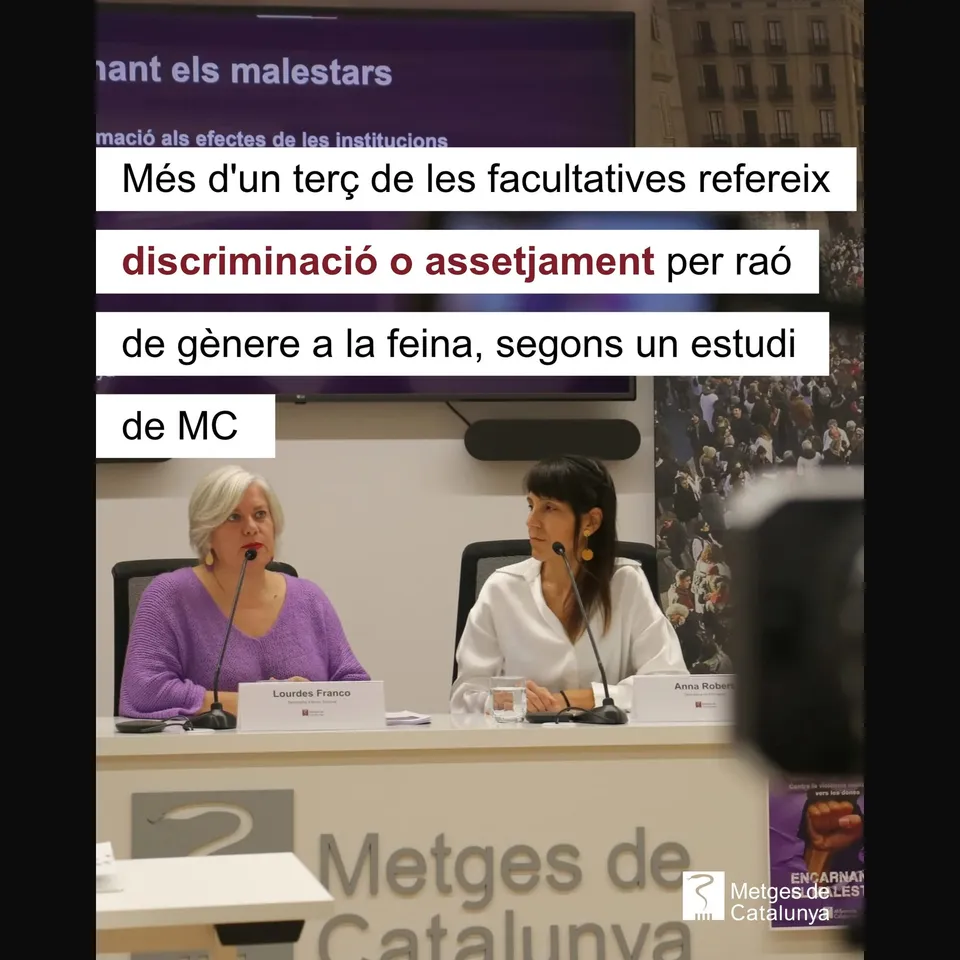
More than a third of female doctors in Catalonia have experienced gender-based discrimination or harassment at work, according to a study published on Saturday 28th November 2026 by Metges de Catalunya (MC), the physicians’ association. The report, titled Encarnant el malestar (Embodying Discomfort), combines 942 online surveys conducted between September and December 2024 with 15 in-depth interviews carried out in the first half of 2025. It finds that 36.8% of female physicians have suffered discrimination or harassment due to their gender, with 31.1% reporting verbal or behavioural sexual harassment and 7.4% experiencing physical sexual harassment. Nearly half of respondents, 47.1%, acknowledge that violence against female doctors occurs in their workplace.
Invisible Institutional Violence
The study highlights forms of institutional violence that often go unrecognised, including paternalistic or infantilising treatment, professional undermining, exclusion from decision-making spaces, and being blamed for excessive workloads. Participants also cited difficulties balancing medical careers with caregiving responsibilities and motherhood. MC stressed that the feminisation of the medical profession has not been matched by structural changes in healthcare organisations. Over 60% of respondents believe this shift has led to a deterioration in working conditions, while 58.4% feel it has increased workplace violence. Franco, a spokesperson for MC, explained the study aimed to expose systemic practices that generate inequality: "The feminisation of the medical profession has not been accompanied by any transformation of structures or power relations within healthcare organizations."
Health Impacts and Calls for Action
Work-related stress is having a direct impact on health, with 75.7% of participants reporting such effects. A total of 23.2% have taken temporary sick leave due to work-related distress, and 22.1% are currently undergoing medical treatment or monitoring for the same reason. Female doctors rated their workload an average of 7.82 out of 10 and their exhaustion level at 7.66. MC is calling for effective measures to prevent and eliminate gender-based violence in hospitals and clinics, including the integration of a gender perspective in healthcare management. Among proposed solutions, Anna Robert, MC’s training secretary, suggested exploring the installation of surveillance cameras in certain clinical areas, citing precedents in other sectors like taxi services. "We will do whatever is necessary to ensure people feel safe at work," she said. MC remains in indefinite strike and says it is ready to negotiate systemic reforms with the regional health administration to protect female healthcare workers.
Sources: CatalunyaPress, catalunyapress.cat.