Parking Shortage Hits Key Hospitals
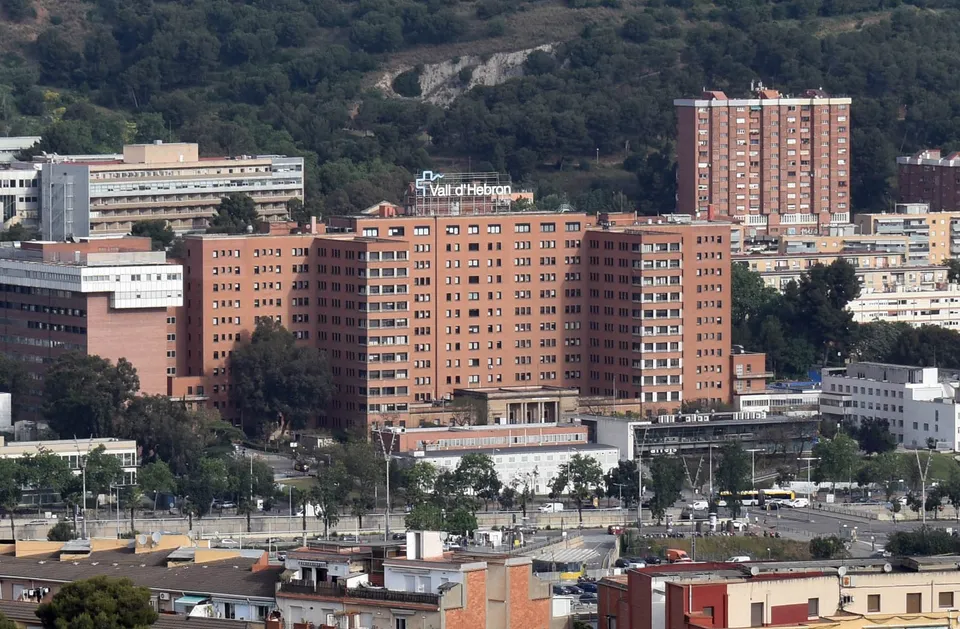
Major hospitals in the Barcelona metropolitan area are facing a growing crisis over parking availability, with staff, patients and families struggling to find spaces amid rising demand and shrinking supply. The issue is particularly acute at Hospital Vall d'Hebron, where the designated parking for 9,500 healthcare workers is already insufficient and set to be further reduced. Cristian Monclús, regional secretary of the Nursing Technicians Union (SAE) in Catalonia, warned that the worker parking area at Vall d'Hebron will eventually disappear due to the hospital’s expansion plans. Union representatives have held talks with Barcelona City Council to find a solution. Barcelona municipal sources confirmed to EL PERIÓDICO that the administration is working with the hospital on mobility and accessibility measures for healthcare professionals, especially those commuting from outside the city. These measures aim to both secure parking and reduce reliance on private vehicles.
Urban Projects Set to Remove More Spaces
The situation is worsening due to urban redevelopment. On 8th November 2026, Barcelona City Council approved a project to redevelop the block bounded by carrers de Juan de Mena and Pare Marina and the passeig de la Vall d'Hebron, affecting over 13,800 m² and costing €8.4 million. The plan, part of the city’s Climate Plan strategy, includes removing 35 car and 31 motorcycle parking spaces near the hospital to create pedestrian-friendly public space. According to Betevé, construction is scheduled to begin in spring 2027 and last until the end of 2028. The redesign will introduce ramps for accessibility, children’s play areas and improved street lighting, while banning most vehicle traffic except for deliveries and emergency services. Additionally, the open-air parking lot operated by Barcelona de Serveis Municipals (BSM) in front of Vall d'Hebron is being demolished to make way for the new Barcelona Public Health Agency building, funded with an estimated €3.2 million investment.
Transport Gaps Worsen Access
Other hospitals face similar challenges. Hospital Universitari Germans Trias i Pujol (Can Ruti) in Badalona is described by Monclús as “perhaps the worst connected,” forcing many to rely on cars. Despite plans to double its parking capacity from 1,679 to 3,338 spaces, current provision remains inadequate. Badalona’s Deputy Mayor for Territory, Daniel Gracia (PP), acknowledged the “unmanageable daily stress” caused by poor access, with the city council formally raising concerns in the Metropolitan Urban Master Plan (PDUM). At Hospital Parc Taulí in Sabadell, limited public transport options, including FGC line S2 and Rodalies [regional rail network] line R4, push workers and patients toward private vehicles.
Safety Concerns at Bellvitge Hospital
At Hospital Universitari de Bellvitge, staff and users report parking in an unpaved, poorly lit lot riddled with potholes and scrap metal, leading to frequent thefts and fires. Estefanía Iglesias, SATSE union action secretary at the site, said complaints about safety and lighting have gone unanswered, citing even a hit-and-run incident. The situation worsened after the Delta building construction, which reduced worker parking from around 80 spaces to none after the private operator increased fees and withdrew the service.
What it means for you
- When: The redevelopment of the block bounded by passeig de la Vall d'Hebron, carrers de Juan de Mena and de Pare Marina was initially approved in November 2026 and, if validated, will eliminate parking spaces.
- Where: The parking changes affect the area around Hospital Vall d'Hebron, including the block bounded by passeig de la Vall d'Hebron, carrer de Juan de Mena and carrer de Pare Marina.
- Who is affected: Workers, patients and family members visiting major hospitals in the Barcelona area are affected by the parking shortage.
Sources: El Periódico, Ajuntament de Barcelona, betevé.