If you are in Barcelona and need urgent help, the first thing to know is simple: call 112 for general emergencies, or 061 for medical advice and triage. Save both numbers now, before you need them.
112 is the general emergency line. It is free, works from any phone, and connects you to police, fire, ambulance and rescue services. It is the right number if you are not sure what kind of emergency it is, or if more than one service may be needed. The service is run through interior.gencat.cat.
061 is Salut Respon, the medical triage line. It runs 24 hours a day, 365 days a year, and the operator can put an interpreter on the line in more than 90 languages, English included. One thing to know: unlike 112, the call is not reliably free, because several telephone operators still charge for it. It is useful for medical-only situations where you want advice first. They can assess symptoms, tell you whether you need an ambulance, and direct you to the right next step. The service sits with catsalut.gencat.cat.
Both numbers are linked to the same dispatch system, so do not overthink the choice. If you call 112 with a medical issue, they can route you to 061. If you call 061 and the situation is bigger than a medical question, they can bring in 112.
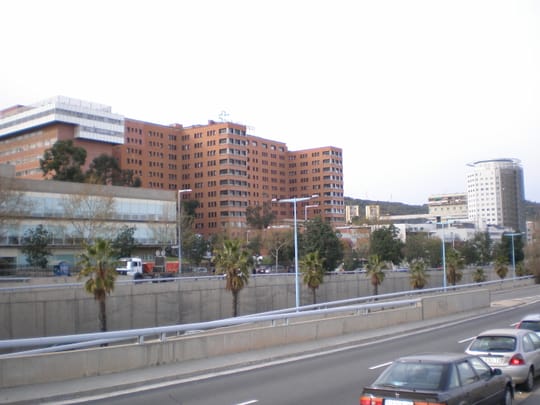
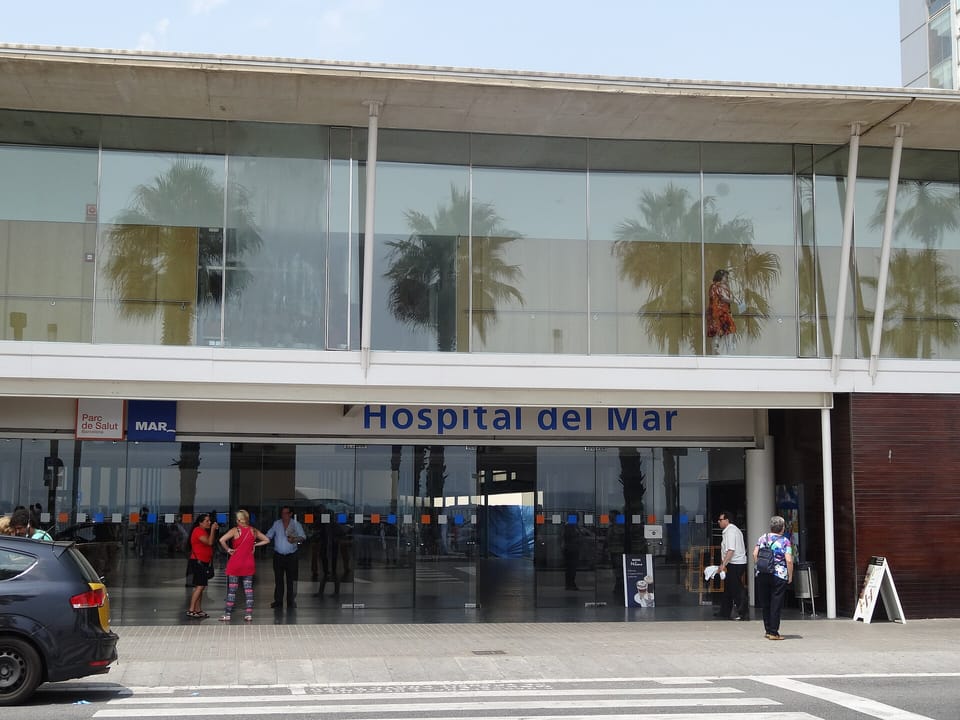
If you walk into a public hospital yourself, the nearest appropriate emergency department is usually the one to use. In Barcelona, the main public urgencias centres include Hospital del Mar for the Old City, El Born, Barceloneta and lower Poblenou, Hospital Clínic for Sant Antoni, Esquerra de l'Eixample and parts of Les Corts, Hospital de la Santa Creu i Sant Pau for Eixample dret, lower Gràcia and Camp de l'Arpa, and Hospital Universitari Vall d'Hebron for upper Gràcia, Sarrià and Horta-Guinardó.
For children, emergencies often go to Hospital Sant Joan de Déu in Esplugues. For maternity care, Clínic and Vall d'Hebron both have busy obstetric units. Private options such as Centro Médico Teknon, Hospital Quirónsalud and Clínica Mi Tres Torres are also available, but check your insurer covers urgencias at the specific centre before you go.
Public emergency care in Spain is available regardless of immigration status, paperwork or insurance. You may be asked for ID at registration, but lack of a NIE, padrón or TSI does not block treatment. If you have a TSI or CIP, bring it, as it helps link your records. Bring your passport too. If you are visiting from the UK or another eligible country, bring your EHIC or UK GHIC. If you have private insurance, bring that card as well.
At the hospital, a nurse will triage you and assign a colour. Red means life-threatening and immediate. Orange means very urgent. Yellow means urgent. Green means less urgent and may involve a long wait. Blue means non-urgent and may be redirected to a CAP. If you arrive with something minor at a busy time, waiting is normal, because sicker patients are seen first.
For smaller problems, a CAP or CUAP is often the better option. Many CAPs have urgent-care windows during opening hours, and many districts have a CUAP open evenings, weekends and overnight. For a cut that may need stitches, a stubborn stomach bug or an ear infection, 061 can point you to the nearest one. For more on local health and city services, see our Community coverage and Sport updates.