Barcelona marks Christmas in a way that sets it apart from much of northern Europe. Lights, nativity scenes and present-buying are all part of the picture, yet the season moves to a more local beat, centred on family and often more down-to-earth than visitors anticipate. For anyone living in the city or staying over the festive period, the trick is to grasp what carries weight locally: the Christmas market beside the cathedral, the caga tió custom, when the public holidays fall, and the fact that neighbourhood life carries on even while the centre seems quiet.
The most practical guideline is to organise your plans around the calendar rather than simply the atmosphere. Late December in Barcelona combines hectic shopping periods with notably quiet public holidays. Once you know when to shop for food, when to anticipate a reduced transport service and where to head for a stroll or a meal, enjoying the city becomes considerably simpler.
Fira de Santa Llúcia, what it is and how to do it well
The Fira de Santa Llúcia is Barcelona’s best-known Christmas market and, for many residents, the most recognisable sign that the season has started. It is held beside the Cathedral of Barcelona in Ciutat Vella, which means it is easy to reach but also one of the busiest places in the city in December. The nearest metro options are Jaume I on L4, Urquinaona on L1 and L4, and Catalunya on L1 and L3. Several bus routes also stop around Via Laietana and Plaça de Catalunya, but the old city streets can be slow in the evenings.
This is no ordinary market for generic presents. It is particularly handy for traditional decorations, nativity figures, greenery and Catalan Christmas goods that can be difficult to make sense of if you did not grow up with them. Stalls tend to specialise in a single category, so a quick lap before buying anything is worthwhile. Prices depend on craftsmanship and size, but small decorations are generally affordable, whereas hand-made nativity pieces can soon become costly.
For the quietest experience, aim for a weekday morning or early afternoon. Weekend evenings have plenty of atmosphere but draw big crowds, particularly in the lanes near the cathedral. As in any busy central market, pickpocketing is a risk, so keep phones and wallets zipped away. Travelling with children will slow you down more than the map implies. The Gothic Quarter is lovely in December, though manoeuvring a buggy through the busiest parts is seldom enjoyable.
For locals, the market often serves one particular purpose: picking up a handful of local decorations and then getting out of the centre fast. It works better paired with errands in the old city or a stroll through El Born than as a full-day outing.
Understanding the caga tió without being confused
The caga tió is among the traditions that most catch visitors off guard. A small log, typically painted with a face and given little legs and a red hat, it is kept under a blanket in the weeks before Christmas. Children feed it in symbolic fashion, and then on or around Christmas Day they strike it with sticks while singing, so that it ‘produces’ the presents or sweets concealed beneath it.
For newcomers to Barcelona hoping to join in, there is no need to make things complicated. Caga tió figures generally turn up at traditional market stalls and seasonal decoration shops over the Christmas period. Smaller versions are widely available and suit flats where storage space is tight. What you pay reflects size and finish: basic models tend to be fairly cheap, whereas bigger decorative ones are pricier.
What is worth knowing is that the caga tió is no niche museum custom. In Catalonia it remains part of family Christmas, particularly for younger children. As a result you will come across it in school displays, home decorations and market stalls throughout the city, from Gràcia to Sant Antoni to Eixample. Should you be invited to a family Christmas where a caga tió features, the right response is enthusiasm, not analysis.
Around nativity scenes, you may also spot another seasonal detail that is distinctly Catalan: the caganer figure. It frequently turns up at Christmas markets next to more conventional nativity pieces. For those new to the tradition, the key thing to grasp is simply that Catalan festive customs blend religion, humour and domestic ritual in a way that feels very much of the place.
What is usually open over Christmas in Barcelona
The tricky part of Christmas in Barcelona is not finding festive things to do, it is knowing what remains practical. The city does not shut for the whole period, but opening patterns change sharply around the main holidays. Christmas Day and Sant Esteve, on 26 December, are the dates when many shops and services close or reduce hours. New Year’s Day and the Epiphany period also affect opening times.
Generally speaking, supermarkets tend to be crowded in the run-up to the holidays and offer reduced service on the days themselves. Bigger grocery stores may shut altogether on the main festive dates, whereas smaller convenience shops are sometimes able to open for shorter hours, varying by neighbourhood. If you still need ingredients for a meal, avoid putting it off until the afternoon of a public holiday.
Restaurants are mixed. In central areas such as the Gothic Quarter, El Raval, parts of Eixample and around Barceloneta, some places continue to trade because there is still tourist demand. In more residential zones, especially outside the centre, choices can narrow dramatically on key dates. Booking ahead matters more than usual if you want a proper sit-down meal on Christmas Eve, Christmas Day or New Year’s Eve.
Museums, shops and shopping centres frequently follow special seasonal schedules, so do not take anything for granted and verify directly before making a journey across the city. Cinemas and certain leisure options may still be open during the festive period, which helps if you are after an indoor plan that does not involve a large meal.
Transport, neighbourhoods and how to plan the quiet days
Public transport is still the main way to get about, though timetables over the holidays may differ, particularly late at night and on public holidays. For market trips and family gatherings, the metro is normally the easiest choice, since traffic in the city centre moves more slowly in December. If your destination is Ciutat Vella, the old city, leaving the train one stop early and covering the rest on foot can save you time.
For a calmer Christmas in Barcelona, it helps to think neighbourhood by neighbourhood. Gràcia, the residential district, offers a local feel and easy walking. Eixample is a sensible option if you are after wide pavements, a predictable grid layout and a stronger chance of somewhere being open. Poblenou, the former industrial quarter by the sea, suits a quieter stroll, particularly if you want sea air without the heaviest old-city crowds. Barceloneta is lively, though it can feel more given over to visitors.
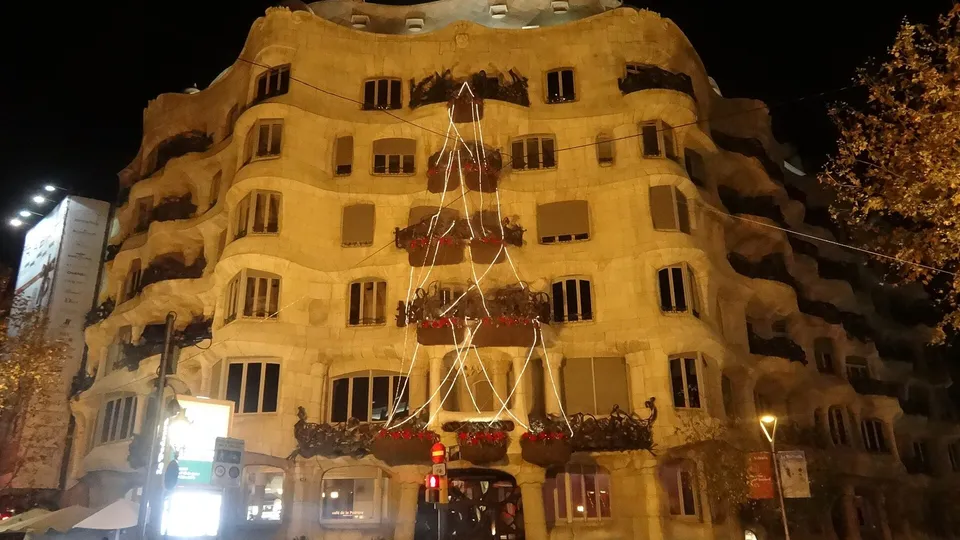
For a low-cost festive stroll, pair the city centre illuminations with a couple of practical stops instead of attempting to see everything. Plaça de Catalunya, Portal de l’Àngel and the cathedral area sit close enough to be linked on foot, though the streets grow busy in the evenings. Sensible footwear counts for more than many people anticipate, since a good deal of time is spent standing still in the crowds.
Budget-wise, Christmas in Barcelona can be moderate if you keep it simple. A market visit, metro journeys and a few seasonal decorations need not cost much. The expensive part is usually dining out on peak dates or buying artisan decorations without comparing stalls first.
The city’s Christmas is at its best when you treat it as a mix of daily life and tradition, not a nonstop spectacle. Learn the dates, buy food early, use the metro, visit the Fira de Santa Llúcia at an off-peak time and give the caga tió the respect due to one of Barcelona’s strangest and most endearing festive customs.
Next read: Free things to do in Barcelona every weekend · Christmas markets in Barcelona 2026: dates, fairs and lights · Barcelona Christmas markets open 27th November