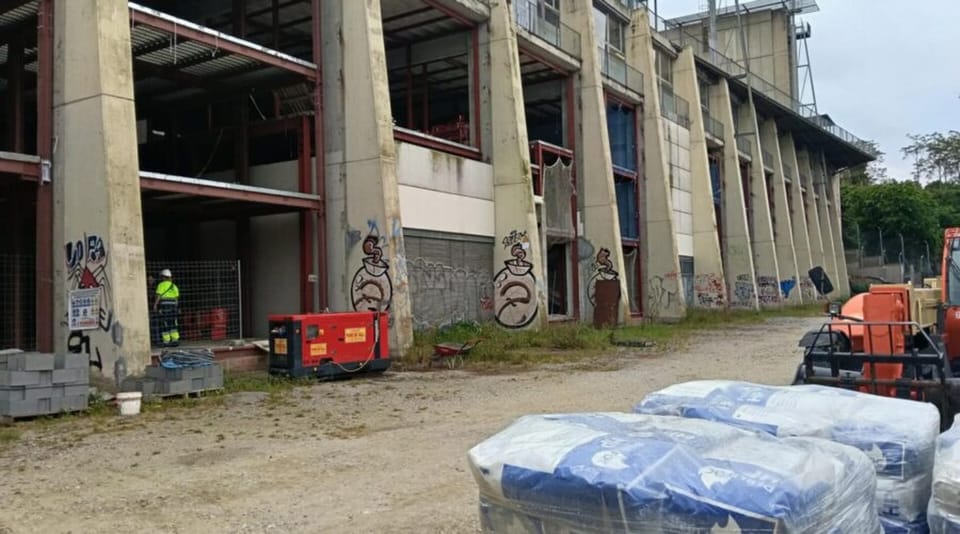
The Barcelona Sports Institute (IEB) has started the final construction phase for its new headquarters on Montjuïc, located beneath the historic Montjuïc Municipal Swimming Pools. This significant €11.3 million project aims for completion by the academic year 2028-2029. The current works, expected to last approximately 18 months, will finalise the interior spaces, installations, and exterior areas of the new facility. This move will consolidate at least six of the IEB's current 12 scattered locations into one central site at Avinguda Miramar, 31-41.
The Barcelona City Council press room reported the total investment for the project stands at €11,297,801. This figure includes €5,484,416 already spent on foundational and structural phases. An additional €5,613,385 is allocated for the current phase of construction. A further €200,000 is planned specifically for the final arrangement of the centre's exterior spaces. This substantial investment shows Barcelona's commitment to modern sports education infrastructure.
New Educational Hub on Montjuïc
The new headquarters will occupy a total built surface of 5,143.83 square metres, distributed across three floors. It transforms the space beneath the iconic 1992 Olympic diving pools into a high-quality educational centre. This presents a unique architectural challenge. It involves creating modern learning environments within a pre-existing structure. The architectural intervention focuses on the facility's facade, interior finishes, and the final adaptation of exterior areas.
The design follows the Professional Training Equipment Master Plan from the Barcelona Education Consortium. It will feature distinct activity zones. These zones are necessary to enhance the building's new role. They also characterise the centre within the sports professional sector and families. The IEB has been designed to meet the specific needs of sports training. It also supports the dual-degree baccalaureate with football that this centre offers. Classrooms will face the exterior on all floors. An internal corridor will serve these classrooms. This corridor connects the entire building from east to west. It also provides access to a double-height multi-purpose classroom at the rear. The project includes all sectorisation, distributions, services, coatings, finishes, interior and exterior carpentry, facade, installations, furniture, and equipment.
Eco-Efficiency and Accessibility Features
The project incorporates high eco-efficiency criteria. This aligns with the Consortium's commitment to purposeful educational architecture. To ensure thermal comfort and good air quality, 25 heat recovery units will be installed. These units guarantee constant ventilation and optimal air filtration. This is essential for an environment focused on physical activity. The building will be fully accessible. A new electric lift will connect all three floors. Interior ramps will also help navigate the natural slopes of Montjuïc mountain, ensuring ease of movement for all users.
Sustainable forest wood will be used for benches and elements in the agora. High-resistance, sound-insulating vinyl flooring will also be installed throughout the facility. These material choices contribute to both the building's environmental performance and its user comfort. The goal is to create a modern, healthy, and inclusive learning environment for future sports professionals.
Repurposing Olympic Heritage
Converting the Olympic pool space for educational use required complex technical reorganisation. This included relocating the swimming pool's purification facilities. It also involved adapting the transformer station that powers the entire Montjuïc sports complex. These changes freed up necessary space for the new classrooms. This careful planning ensures the new educational functions do not interfere with the existing sports infrastructure.
The Barcelona City Council states that this intervention provides Barcelona with a "state-of-the-art educational facility". It also "revalues the city's architectural heritage" by repurposing an Olympic landmark for future generations of athletes. This project highlights a successful blend of historical preservation and modern urban development.
Future of Sports Education
The Barcelona Sports Institute forms part of the Be_Pro model. This model aims to group vocational training offers within the same field into large centres. These centres are close to the professional and productive sectors. It combines initial training with continuous professional development. The IEB will offer a complete training pathway. This ranges from insertion programmes to higher-level training cycles. It also includes professional certificates for adults. This ensures the educational offer adapts to labour market and societal needs. The new Montjuïc headquarters will play a critical role in delivering this full educational vision for Barcelona's aspiring sports professionals.
Come and join our Barcelona English Speakers community on WhatsApp.
Originally published by Barcelona City Council Press Room. Read original article.