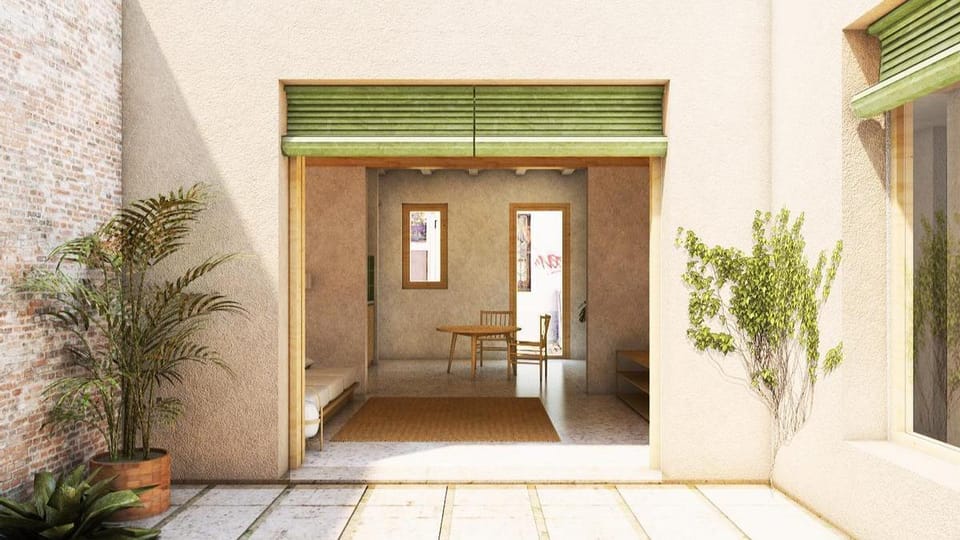
L'Hospitalet de Llobregat council and the Barcelona Metropolitan Area (AMB) started a major rehabilitation project this week. It focuses on the historic 1925 "casitas bajas" (low houses) in Pasaje de Pons, La Torrassa neighbourhood. This initiative aims to create five new social housing units, improving living conditions for local residents.
The project will restore and revalue the existing homes. It keeps their original typology, volume, and protected heritage elements. The city's heritage department catalogues these constructions as a Local Cultural Interest Asset (BCIL). The works represent an investment of 1,249,372.19 euros, funded by the Barcelona Metropolitan Area (AMB). Officials expect the rehabilitation to take 12 months.
Once finished, the L'Hospitalet Municipal Housing Service will manage the homes as social housing. This move addresses a long-standing need in La Torrassa, one of Europe's most densely populated districts. The council decided to buy these houses following neighbour complaints about their inappropriate use and their heritage value.
Preserving Heritage and Improving Homes
The "casitas bajas" are among the last "pasillos" (corridors) remaining in L'Hospitalet. These narrow, often architecturally simple constructions became common in the early 20th century. They provided homes for working-class families. Despite their basic design, the Barcelona Provincial Council's heritage record notes the Pasaje de Pons houses feature "small ornamental architectural finishing details."
The project seeks to improve habitability by combining several small existing homes into larger units. This will increase their surface area and provide necessary services. The plan respects the ornamental singularity of the facades. It also ensures their integration with the established urban environment. The L'Hospitalet council first proposed acquiring and rehabilitating these houses for social housing almost a decade ago.
The initial acquisition phase completed successfully. However, the renovation work on the property and the passage itself remained pending for years. The Barcelona Metropolitan Area (AMB), with council support, drafted the reform project. The AMB now executes the construction. These homes, built on the ground floor and arranged along interior passages, previously offered very limited and basic functional space.
Addressing Past Deficiencies
Their previous state showed construction deficiencies. It also had restricted unit sizes and poor ventilation and lighting. This resulted from their corridor layout and shared interior patios. Many local voices have urged successive local governments to speed up the recovery of these low houses in recent years. The properties hold special symbolic value as ground-floor homes in a highly dense urban area.
L'Hospitalet's Special Plan for the Protection of Architectural Heritage (PEPPA) also lists the "casitas bajas." Developers built them to meet the high demand for affordable housing. They accommodated the large number of migrant workers arriving in L'Hospitalet for the Barcelona International Exhibition. The council's decision to purchase them also responded to community concerns.
A New Vision for Urban Living
The proposal transforms the existing complex into a system of patio houses. This aims to reduce building density. It also improves environmental conditions within a compact urban setting. The project preserves the image and typological values of the "corridor houses." It corrects their previous habitability, ventilation, and lighting shortcomings.
The main strategy involves grouping existing homes to create five larger units. These new units will have a "through-unit" typology. This removes shared interior patios. They will open new exterior spaces linked to each home, ensuring proper natural ventilation and sunlight. The council states, "At a constructive scale, we propose a new structural core that reorganises the space." This core allows for flexible use and optimises distribution. It concentrates services and frees facades for the main living areas. The intervention maintains the existing volume but adapts the interior organisation to current regulations.
Sustainable and Flexible Homes
The design also prioritises passive climate comfort strategies. These follow the Barcelona Metropolitan Area (AMB) sustainability protocol criteria. Improvements include better insulation, natural ventilation, and the incorporation of vegetated, permeable patios. This approach configures more sustainable, flexible homes adapted to various living arrangements. The project ensures a future for these historic buildings while providing much-needed social housing.
Come and join our Barcelona English Speakers community on WhatsApp.
Originally published by El Periódico Barcelona. Read original article.